This story is currently available in arabisk only — a translation isn't ready yet.
Start with one Doha electrician's fuel bill. Climb from there to the Strait, the peg, and the plumbing of a global energy system that pretends the Gulf is background.
ℹ️ Nettleserstemme · KI-studiostemme kommer snart

Consider Ahmad, an electrician in the Umm Salal district north of Doha. On Saturday morning he filled his van at a price he barely noticed, because in Qatar he is not meant to notice. The pump price is administered, the subsidy absorbs the shocks, and the shocks are meant to arrive slowly, if at all. He drove to a job on the coast road, where a colleague showed him a phone video: an LNG carrier, low in the water, taking on a plume of smoke somewhere off the Omani coast inside the Strait of Hormuz. Ahmad shrugged. His day rate does not move on tanker footage. This is where every serious analysis of the past week has to begin, because the distance between Ahmad's shrug and the tremor that ran through the shipping insurance market is the actual subject.
One person. One price tag he did not see change. One street where nothing visibly happened. And yet the week's most consequential story ran directly under that street.
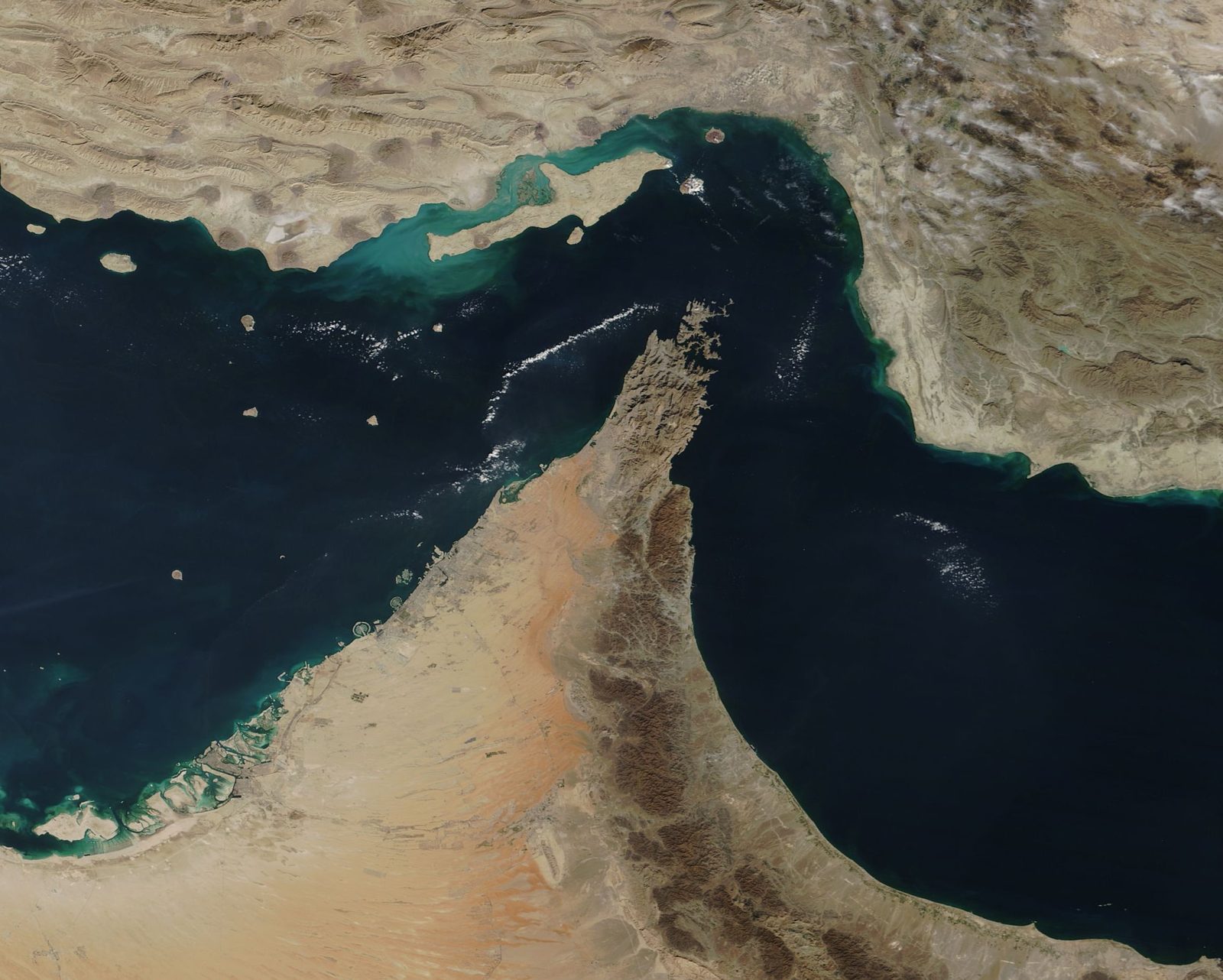
Climb one rung. The city Ahmad works in is the operational hub of the world's second-largest LNG exporter, and a Qatari-flagged cargo was struck in transit through the Strait. The wire copy is spare — a tanker carrying Qatari LNG hit while transiting Hormuz — but the mechanism it triggers is not spare at all. War-risk premia on hulls crossing that water are quoted in basis points of the vessel's insured value per voyage. When a ship is actually hit, those quotes do not drift; they reprice in a single session. A vessel worth a couple of hundred million dollars now carries an insurance line that can move by seven figures per transit. Multiply by the roughly one hundred LNG cargoes Qatar sends monthly, most of them through that same corridor, and the city — Doha, its port, its ministry of finance — absorbs an incremental cost that is real even when it is invisible to Ahmad. The subsidy that keeps his pump price flat is the shock absorber. Someone is paying for it. This week, more of them paid more.
Climb again. The country. Two countries, really, because the Strait does not distinguish between a Qatari hull and an Emirati one, and the past week has forced the UAE to make an announcement that in calmer times would have been a footnote and this week reads as a thesis statement: Abu Dhabi is overhauling how it prices all of its crude, citing big swings. Read that sentence twice. A sovereign producer does not rewrite its pricing formula because markets are behaving. It rewrites the formula because the reference barrel it has been quoting against no longer describes the risk its buyers are actually taking. When the benchmark stops telling the truth, you change the benchmark. That is what is happening. And it is happening in the same seven-day window in which a Qatari LNG hull was struck, in which Washington paused what it described as a massive attack on Iran and announced fresh talks, and in which the Houthis, per multiple regional reports, opened what one outlet called a dangerous new front against Saudi Arabia. Four separate stories. One system. The system is the plumbing that carries Gulf hydrocarbons to the world, and every joint in that plumbing was tested this week.
And the pegs sat on top of it, quiet as ever. USD/SAR at 3.7500. USD/AED at 3.6725. Not a flicker. This is the part outside readers find most confusing and inside readers find most reassuring, and both reactions are correct for different reasons. The pegs are quiet because they are engineered to be quiet; SAMA and the CBUAE hold the line by standing ready to convert dollars at the fixed rate, and the reserves behind that standing offer are the deepest they have been in a decade. But the quiet is not the same as calm. The quiet is the sound of the shock being absorbed somewhere else — in the insurance line, in the pricing formula, in the fiscal buffer, in Ahmad's untouched pump price. The peg is a promise that the currency will not carry the news. It is not a promise that there is no news.
Climb the final rung. The system. US weekly crude production printed at 13,796 thousand barrels per day for the week to 24 July — call it 13.8 million, the highest sustained level the American shale complex has ever run. In a normal week that number is the story: it caps the upside on crude, it disciplines OPEC+, it feeds the disinflation narrative that lets the Federal Reserve stay patient, and through the peg it lets Gulf central banks stay patient too, because the pegs import Fed policy whether the Gulf wants it imported or not. That is the ordinary transmission. This week the ordinary transmission ran into an extraordinary counterweight. A record American supply print should, on paper, be pressing crude lower. It is not pressing crude lower with any conviction, because the Strait is doing the opposite work at the same time. The 13.8 million barrels a day is real. The struck hull is real. The market is holding both in its hands and refusing to fully price either, because to price the first fully is to bet that the second does not escalate, and to price the second fully is to bet that the first does not matter. Neither bet is being made. So the tape drifts, and the drift itself is the tell.
Here is the asymmetry the week revealed, and it is the sentence I would ask a reader to carry into Monday. The upside case for oil buyers — that shale keeps producing, that talks with Tehran resume Monday as the White House indicated, that the Houthis are contained, that the struck tanker is an isolated incident — requires four things to go right. The downside case requires only one of them to go wrong. Markets are currently priced closer to the upside case than to the midpoint, which means the party paying for optimism is the buyer of crude at these levels, and the party that collects if optimism fails is anyone long the tail — the war-risk underwriter who has already repriced, the Gulf sovereign with a decade of fiscal buffer, the shipowner who diverts around the Cape and adds three weeks and passes the cost forward. Ahmad, of course, collects nothing and pays nothing, which is exactly what the pegs and the subsidies were built to arrange. Whether that arrangement holds through the next incident is the only question that matters, and it is not a question the tape has answered.
One more note on the UAE crude-pricing overhaul, because I suspect it will be underread. When a producer changes its formula, it is admitting that its price discovery has been compromised by volatility its old formula cannot metabolise. The admission is more informative than any speech. The speeches this week said talks resume Monday. The pricing formula said the swings are large enough to require new architecture. When words and mechanisms disagree, believe the mechanism.
Back down the ladder now, quickly, as promised. The system tested every joint in the Gulf's hydrocarbon plumbing this week and the joints held, which is why the pegs did not move and Ahmad's pump price did not move; the cost was paid in insurance lines, pricing formulas and fiscal buffers he will never see, and the only honest thing to say on Monday morning is that the buffers are finite and the week is not over.
A struck LNG tanker off Oman triggered repricing across the Gulf's energy system — insurance premiums jumped by seven figures per transit, Abu Dhabi overhauled its crude-pricing formula, and war-risk spreads spiked — yet Ahmad's fuel pump in Doha stayed flat because currency pegs and subsidies absorbed the shock invisibly. The buffers absorbing these costs are finite, and whether they hold through the next incident is now the only question that matters.
If you buy energy or live in the Gulf, the invisible cost of this week's tanker strike is already being passed to you through higher insurance, new pricing formulas, and drained fiscal reserves — costs your government absorbed to keep your fuel price and currency stable. The peg that keeps your currency and prices calm is not a guarantee; it is a promise only as durable as the fiscal buffers behind it, and those buffers are finite.