AgendaVerified
This story is currently available in engelsk only — a translation isn't ready yet.
The Strait Speaks: What a Struck Qatari Tanker Tells Us That the Rostrum Won't
A projectile in the Hormuz, a cancelled American strike, and eight dead in Gaza. Three data points, one budget line.
Hastighet:
ℹ️ Nettleserstemme · KI-studiostemme kommer snart
NV
Natasha Volkov
· 4 min read
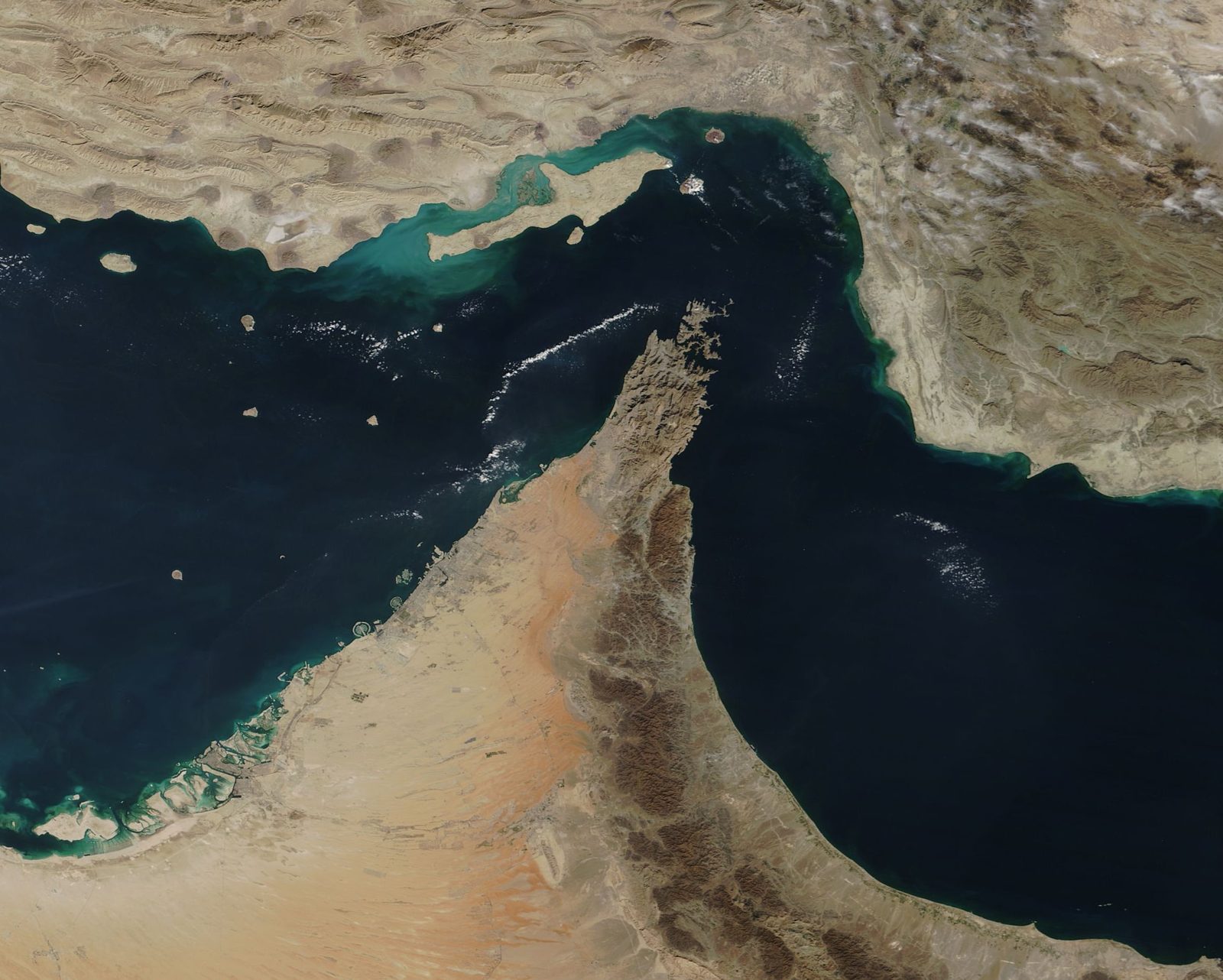
A liquefied natural gas tanker carrying Qatari cargo was hit by a projectile in the Strait of Hormuz this week, and the price of that projectile — whoever fired it — was almost certainly less than the insurance premium adjustment it triggered across every hull passing through those waters for the next quarter. That is the entire logic of asymmetric maritime pressure in one sentence. You do not need to close the strait. You need to make the underwriters believe someone might.
The decision-maker to watch here is not in Doha and not in Washington. It is whoever in the Iranian security architecture — and the honest answer is that the command chain between the Revolutionary Guard naval component and the elected government has never been a straight line — signed off on a shot that was calibrated to be deniable. A projectile, not a missile salvo. A Qatari cargo, not an American-flagged vessel. The message is legible: we can reach into the artery, we chose not to sever it, read this as restraint.
Meanwhile the American president announced he had cancelled a planned strike on Iran, citing what he called 'deal perimeters.' The phrase is worth pausing on, because it is not a term of art in any negotiating tradition I know of. 'Perimeters' suggests something drawn around a deal rather than inside it — a fence, not a text. Which is roughly where the talks appear to actually stand: nobody has agreed to anything, but everybody has agreed on the shape of the room in which nothing has been agreed. This is progress in the specific sense that shooting has not started. It is not progress in any other sense.
And yet, on the same news cycle, Israeli strikes killed eight people in Gaza homes, after Washington unveiled a plan for the disarmament of Hamas and a corresponding Israeli withdrawal. Read those two facts next to each other and you have the entire structural problem of the current American Middle East posture. The rostrum in Washington describes a sequenced de-escalation. The budget line in the Israeli defence ministry — the sorties, the ordnance, the target folders that were approved weeks ago and do not care about a press conference — describes something else. The gap between what a state says at the podium and what its logistics tail is already doing is the actual policy. Everything else is choreography.
The Egyptian president spent Saturday on the phone with his French counterpart trying to talk the temperature down, which is the diplomatic equivalent of two people holding a ladder while a third argues with the roof. Cairo has real leverage on Gaza — the Rafah crossing, the intelligence channel to Hamas, the quiet understandings with Israeli military intelligence that predate any current government — and Paris has almost none. But Paris has something Cairo needs, which is a European voice inside the room where the American plan gets rewritten, and that is the trade being negotiated in these calls. Not peace. Access.
The pattern here is older than any of the current ministers. Whenever a great power announces a framework for the Middle East, the regional actors immediately begin negotiating not the framework but their position relative to it. Qatar wants its LNG cargoes to remain the untouchable unit of Gulf commerce. Iran wants sanctions relief priced into any 'perimeter.' Israel wants the disarmament clause to be operationally meaningless and the withdrawal clause to be operationally deferrable. Egypt wants to be the address through which reconstruction money passes. The plan itself is almost beside the point. The plan is the pretext for the sub-negotiations.