Этот материал пока доступен только на языке: английский — перевод ещё не готов.
491,000 Rooms, Two Dead, One Shipping Lane Recovering: Saudi Hospitality's Stress Test Arrives Early
The GASTAT supply data is extraordinary. So is the security context arriving alongside it. A property analyst has to hold both.

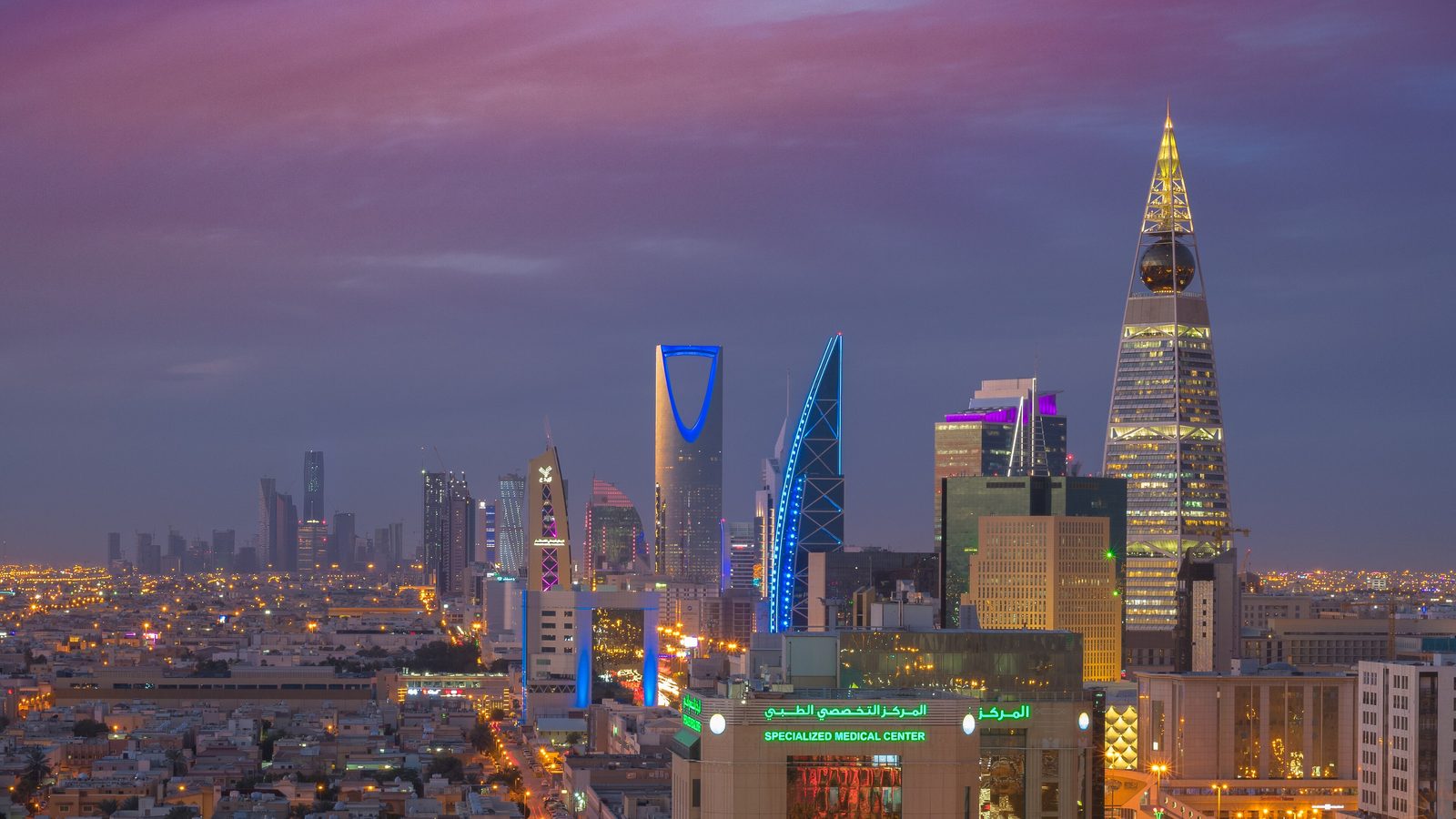
491,000 hotel rooms. That is the number GASTAT published this week, representing 23.4 percent growth in Saudi room stock across a single year. The hotel count itself reached 2,847 properties, a 31.6 percent increase over 2023. For context: no Gulf market has ever absorbed a supply surge of this velocity without a visible occupancy crater. The only question worth asking right now is whether the demand side of this equation has any chance of keeping pace — and the answer, as of this Thursday, is genuinely uncertain in ways that go beyond the usual cycle caution.
My reading is that Saudi hospitality is caught between three forces simultaneously, and the interaction of all three will determine whether the next eighteen months feel like a supply absorption story or a distressed-asset story.
The first force is the supply itself. 3,090 serviced apartment buildings carrying more than 105,000 units, 3,177 travel and tourism agencies, 141 million total passengers through 29 airports — these numbers from the same GASTAT report describe an ecosystem being built at Vision 2030 pace, not at organic demand pace. When a market adds 31.6 percent more hotels in a year, the math is unforgiving: to hold occupancy flat, arrivals must grow at least as fast. Any gap between those two growth rates is visible within a quarter in average daily rate compression.
The second force is diplomatic. Crown Prince Mohammed bin Salman received French President Emmanuel Macron at Al-Yamamah Palace in Riyadh this week, with a substantial Saudi ministerial delegation present — spanning energy, foreign affairs, commerce, national security and intelligence portfolios. The meeting reviewed bilateral cooperation and regional security coordination. High-level European diplomatic traffic into Riyadh is not incidental to hotel economics — it signals that the Kingdom remains an active hub for state-level business even as parts of its security environment deteriorate. European corporate and government travel is a real RevPAR driver; a visit of this weight is the visible tip of a pipeline of delegations, deal teams, and follow-on visits. That demand is real, but it is conference-and-MICE demand, concentrated in Riyadh's five-star corridor, not distributed across 2,847 properties.
The third force is the one the brochures do not mention. The U.S. State Department ordered non-emergency personnel and their families to depart Saudi Arabia this week, citing escalating Houthi threats against civilian airports and critical infrastructure. That order did not arrive in a vacuum. An attack on King Fahd International Airport in Dammam left one expatriate dead and eight injured. A separate drone strike on Saudi Aramco's Shaybah oil field in the Eastern Province killed two more people. Brent crude crossed 110 dollars on supply-disruption fears; WTI was trading near 98 dollars. Separately, talks between the Suez Canal Authority and Hapag-Lloyd about gradually resuming additional canal transits suggest Red Sea shipping remains in recovery mode, not yet normalized.
For a property analyst, these facts belong in the same model as the GASTAT room-count data. A U.S. government departure order suppresses one of the highest-spending expatriate segments in the market. A security premium on Saudi Arabia travel affects corporate booking windows across the board. And a Red Sea that is still only 'gradually resuming' services means that the leisure cruise and port-stopover traffic that Gulf tourism planners assumed would feed secondary hotel markets remains below its pre-disruption baseline.
Where does this place the cycle? Saudi hospitality entered 2024 in what I would characterize as late-expansion: supply growing aggressively, rates still holding in premium segments, occupancy sustained by Hajj and Umrah volumes that are structurally reliable. The GASTAT data confirms that supply addition continued at pace through that year. We have now moved into a phase where the external environment has deteriorated faster than anyone modeled eighteen months ago — the Houthi threat was a known risk, but the scale of current escalation, stretching from civilian airports to Aramco infrastructure in the Eastern Province, is beyond the scenario most operators priced into their pro formas.
This does not mean the market collapses. Hajj and Umrah are non-discretionary for millions of travelers; those bookings do not cancel because of geopolitical noise. Riyadh's government and corporate demand has genuine structural depth. And the Macron visit is a reminder that Saudi Arabia's diplomatic gravity — its energy weight, its sovereign wealth, its Vision 2030 investment pipeline — keeps drawing counterparties regardless of security headlines.
But a buyer or operator underwriting a new hotel position today cannot use 2024 assumptions. The serviced apartment stock alone — 105,000 units competing alongside 491,000 hotel rooms — means that the mid-market is already crowded before accounting for the security discount that international leisure travelers will quietly apply when booking 2027 itineraries.
The security guard doing a ninety-minute commute to a half-occupied tower on the Riyadh ring road: he is the real data point. The render showed a business district. The crane count is real. Whether the guests arrive on schedule is the variable the GASTAT report cannot answer.
My read: the premium Riyadh segment holds. The secondary-city inventory — wherever that 31.6 percent growth is concentrated outside Makkah and Madinah — faces a harder two years than its developers planned for.