This story is currently available in англійська only — a translation isn't ready yet.
ADB: 326,000 residents of Karakalpakstan receive round-the-clock water
The Asian Development Bank's $172.3 million project covered six districts of the republic; in Nukus district, access to centralized water supply rose from 68.4% to 89.7%.
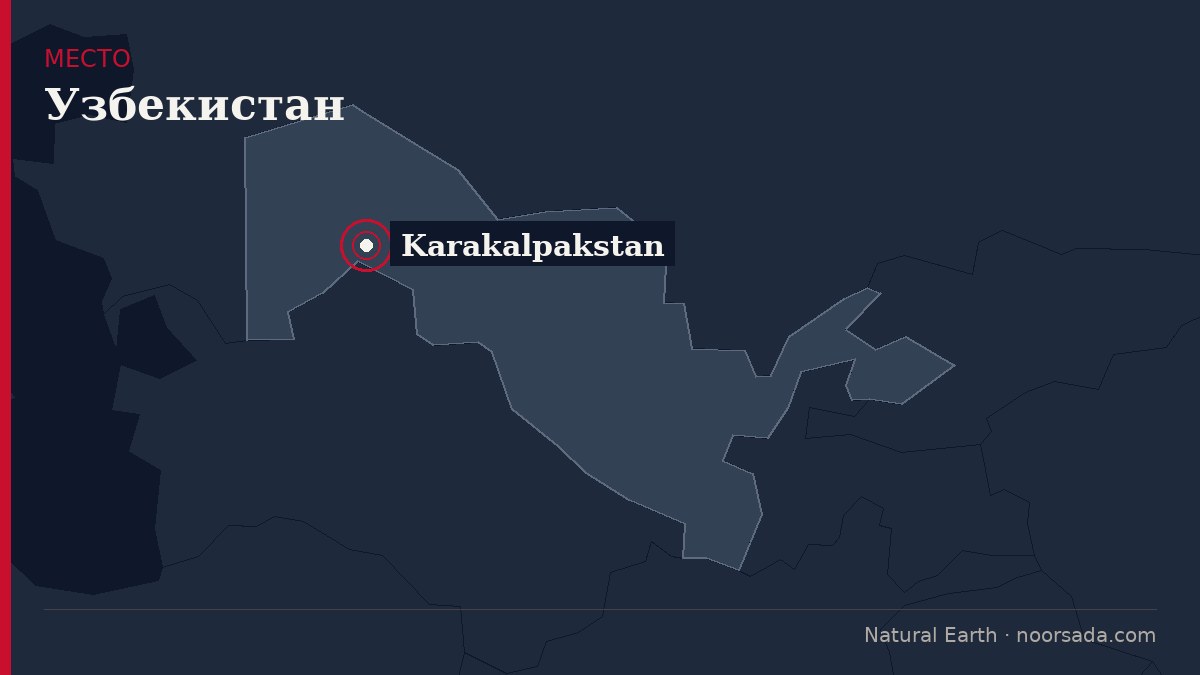
The $172.3 million Asian Development Bank project provides round-the-clock water supply to 326,000 residents of six rural districts of Karakalpakstan — Amudarya, Beruniy, Karauzyak, Kungrad, Nukus and Muynak. For many households this is the first time in history they have had access to piped water in the home.
The last settlement connected to the new system was the village of Kerder in Nukus district, where 4,000-5,000 people live. Before the project there was no centralized water supply in the village at all. Azamat Saparov, regional coordinator of the ADB project implementation group in Karakalpakstan, said that previously people drank water from the canal or from wells using hand pumps, and now they have water around the clock.
When the project was being prepared, only 36.6% of the republic's population had access to centralized water supply, and in rural areas 12.9%. About 40% of households received water for less than six hours a week, often at low pressure, and around 75% of families complained of salty and hard water. Now 75.1% of the republic's population has access to centralized water supply, said Zhamoliddin Sagatkaliev, deputy director of JSC Karakalpakstan Suv Taminoti.
The project includes nine construction contracts: four are completed, five are ongoing. Two new water treatment plants are being built and two more are being expanded. In total, the project provides for the construction or reconstruction of three water treatment plants, about 300 km of main pipelines, 28 water distribution centers and roughly 900 km of distribution networks. Laboratories for testing water quality have been set up. According to Saparov, the next stage of cooperation with the ADB will be devoted to sewerage.
In Nukus district, the $11.4 million project covered about 256 km of distribution networks and the reconstruction of the Madaniyat, Abadan and Kerder water distribution centers; the work was carried out by a contractor from Azerbaijan. Water flows from Nukus through a 400 mm diameter pipeline to the district center of Akmangit, then to Madaniyat, Abadan and Kerder. Residents of 35 settlements — 31,100 people — received centralized drinking water for the first time. Access in the district rose from 68.4% to 89.7%.
The most remote settlement — Kyzyl Uy, which is part of Kerder — has been included in a state program for 2027: 3.5 km of pipelines and a groundwater desalination unit will be built at budget expense. After that, according to Sagatkaliev, coverage in the district should reach 100%. The head of Nukus district, Ziyauatdin Zaitov, noted the project's positive effect on residents' mood and expressed hope that improved access to water will help prevent disease.
In Amudarya district, with a population of 220,000 — the most densely populated in Karakalpakstan — about half of residents are covered by centralized water supply. Two projects with a total cost of $42 million are being implemented here, which should bring coverage to 82%. Under one of them, the Mangit water treatment plant with a capacity of 40,000 cubic meters (40 million liters) per day has been built — enough for 200,000 people.
Sources — how we know this
- PrimaryUzDaily