This story is currently available in англійська only — a translation isn't ready yet.
Gold in Egypt falls 260 pounds in a week as pricing gap reaches 134.74 pounds per gram
iSagha: the 21-karat gram fell from 6,210 to 5,950 pounds between November 7 and 14, and CEO Saeed Imbabi warns of an "unhealthy" price gap.
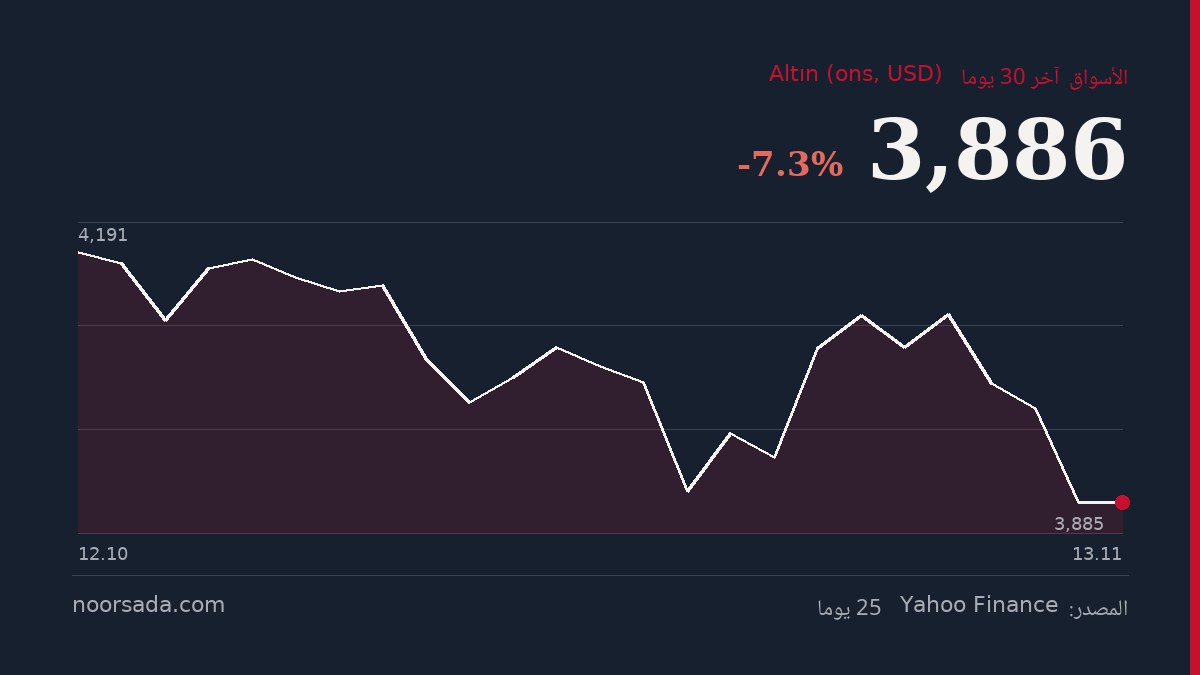
The price of a gram of 21-karat gold, the most traded in the Egyptian market, fell from 6,210 pounds on Saturday, November 7, to 5,950 pounds on Saturday, November 14, a decline of 260 pounds in a single week, according to data from the iSagha platform for gold and jewelry trading.
The platform attributed the local decline to a global drop that followed the release of US inflation data for October, which came in above market expectations, reinforcing expectations that the Federal Reserve will keep its restrictive monetary policy and possibly raise interest rates, at a time when the dollar remained strong globally.
The decline of the dollar against the Egyptian pound added further downward pressure on the local price, as the pound's appreciation lowered the metal's theoretical value.
The gap between the local price and the theoretical value calculated on the basis of the global ounce price and the exchange rate reached 134.74 pounds per gram, equivalent to 2.31%, on November 12.
Saeed Imbabi, CEO of iSagha, said the current pricing gap "is not natural and not healthy" for the market, expressing concern that it had exceeded 134 pounds per gram. He explained that the difference means consumers are not fully benefiting from the decline in global prices and the improvement in the exchange rate, but continue to pay more than the metal's theoretical value.
Imbabi stressed that the fall of the 21-karat price from 6,210 to 5,950 pounds does not automatically mean prices have become fair or that the time is right to buy, and that the more important question is not the size of the decline but how far the local price remains from its theoretical value.
He linked part of the gap to hedging by bullion traders who fear a sudden rebound in the global gold price or the dollar exchange rate, so they keep an additional margin to protect their financial positions, while stressing that this hedging should not become a permanent burden on consumers.
He called on consumers not to regard the decline as a guaranteed buying opportunity, advising them to ask about the theoretical value of the gram, compare prices from several sellers, inquire about manufacturing fees and additional charges before completing a purchase, and buy in stages and only when there is a real need.
He concluded that transparency is the solution, and that narrowing the gap is a shared responsibility among traders, trading platforms and the relevant authorities, and that a strong market is one that protects the consumer and allows the trader to manage his risks fairly.
Sources — how we know this
- PrimaryDaily News Egypt