This story is currently available in англійська only — a translation isn't ready yet.
Baghdad threatens to 'purge' Jurf Al-Sakhar... and 'Kataib' refuse to leave
Government spokesman Haider Al-Aboudi said Interior Ministry cameras supported the existence of oil smuggling, while commander Abu Talib Al-Saidi denied the account from inside the area and refused to leave
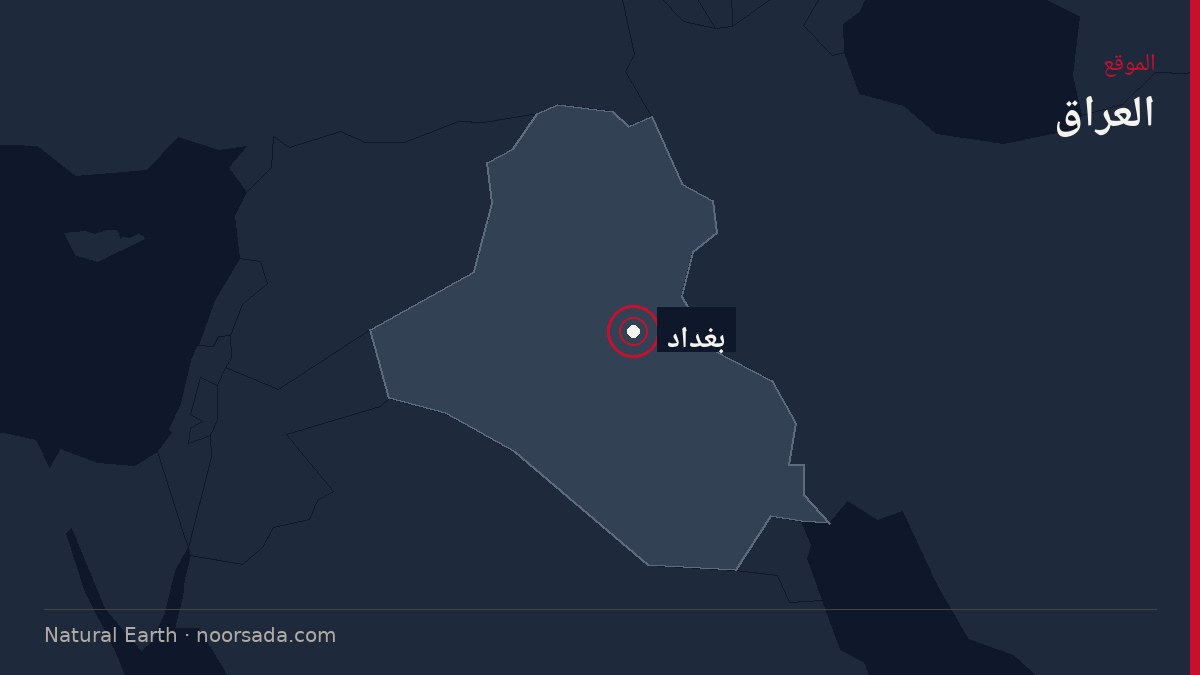
Iraqi government spokesman Haider Al-Aboudi announced on Tuesday Baghdad's intention to 'purge' the Jurf Al-Sakhar area south of Baghdad of 'any party or side tampering with this strategic wealth,' hours after a press conference held by Kataib Hezbollah commander Abu Talib Al-Saidi inside the area, in which he announced the faction's refusal to leave.
Al-Aboudi said cameras accredited by the Interior Ministry 'supported and backed' the recommendations of the investigative committee that entered Jurf Al-Sakhar, confirming the existence of 'oil smuggling and the theft of this essential resource.' He added that the Council of Ministers is set to 'purchase a drone system for the Counter-Terrorism Service to thwart any attack on refineries and vital public facilities,' alongside decisions to raise readiness and pursue smuggling across all of Iraq.
About two hours before Al-Aboudi's remarks, Al-Saidi denied the investigative committee's account, saying the oil facility the government spoke about is 'primitive and abandoned, and is 5 kilometers away from 3 oil pipelines in Jurf Al-Sakhar,' and that it is used in times of crisis to supply fuel to military units from Al-Jurf to Al-Qaim near the border with Syria. He added: 'We will not leave Jurf Al-Sakhar even if it costs us our lives,' warning that 'Iraq is on the brink of a major crisis, and it is wanted that the blood of the sons of the one homeland be spilled.' He attacked Prime Minister Ali Al-Zaidi, describing him as 'the adventurer heading toward inciting sedition.'
Jurf Al-Sakhar has been under the control of the factions since 2014, about a decade, and is believed to have turned into a strategic military base containing camps, depots and factories for rockets and drones.
In a parallel development, the commander of the Middle Euphrates Operations of the Popular Mobilization Forces, Ali Al-Hamdani, said that 'the Kataib do not object to the Energy Police of the Oil Ministry guarding the pipelines' and the oil installations in the area. Reports said that 'Kataib Hezbollah' prevented the judicial committee from entering the area, while platforms close to the faction reported that it had not reached an agreement with it, at a time when the official news agency quoted a responsible source as saying that the judicial committee, accompanied by the government committee, headed to the 'Jurf Al-Nasr' area in Babil province to inspect two sites in connection with the smuggling file.
Politically, reports conflicted over the arrival of the commander of Iran's Quds Force, Ismail Qaani, in Baghdad to mediate in the crisis, and a source close to the factions cast doubt on the visit itself, attributing the matter to 'an attempt by some parties to suggest that the Jurf crisis has ended with the presence of the Iranian general,' without ruling out 'reaching a specific formula that prevents the parties from sliding into armed confrontation.' Press reports said that Al-Zaidi and Qaani agreed on the withdrawal of 'Kataib Hezbollah' from Al-Jurf 'peacefully and on a near timetable,' without independent denial or confirmation.
According to local reports, the 'Coordination Framework' meeting on Monday evening witnessed verbal altercations and walkouts, between Al-Zaidi on one side, and the head of the 'Badr' Organization Hadi Al-Amiri and the secretary-general of 'Kataib Sayyid Al-Shuhada' Abu Alaa Al-Walaei on the other, because of the prime minister's insistence on storming Jurf Al-Sakhar by next Friday.
Sources — how we know this
- PrimaryAsharq Al-Awsat
Energy Portfolio
Check your broker for the latest on energy stocks.
View Now →