This story is currently available in англійська only — a translation isn't ready yet.
US intelligence reports Iran holds 1,500 to 2,500 missiles
US officials speaking to the Wall Street Journal said that despite heavy damage to missile production facilities, Tehran has rebuilt its arsenal.
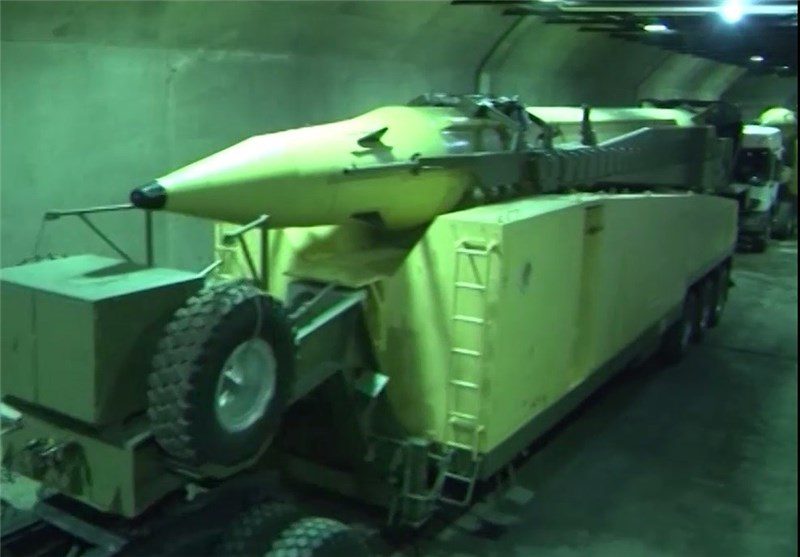
Iran continues to hold 1,500 to 2,500 missiles despite US and Israeli strikes on its missile production facilities and military infrastructure. According to the Wall Street Journal, which based its report on US intelligence sources, this picture indicates that in a possible new war, US and allied military targets in the region could be struck by Iran. Intelligence assessments present a different picture from the Trump administration's statements that Iran's military capacity had been largely eliminated.
US officials stress that it cannot be determined precisely how many of the missiles are ready for use and how many are in storage, but that Iran still has significant military capacity. According to the officials, despite the heavy damage to its missile production facilities, Tehran is continuing production at a slower pace than before the war and can produce new missiles using components it stockpiled before the fighting began. Iran also has a large number of drones and short-range missiles. Israeli military assessments estimate that Iran has more than 1,500 ballistic missiles; estimates among officials in the region differ, and the true capacity is not known with certainty.
Simone Ledeen, who served at the US Department of Defense during Trump's first presidential term, said that even at least 1,500 missiles points to a significant military recovery. According to Ledeen, this number shows that Tehran has reconstituted more than half of the missile arsenal it was estimated to have before the war. It was also stated that Iran managed to fully replenish its missile stocks in the period between the 12-day war in April and the new clashes that began in February.
It was reported that Iran continued to target US military facilities, radars and early warning systems in the region with its ballistic missiles, drones and operational tactics, and that these attacks led to some American military elements being moved to Israel, which is seen as safer. While the possibility of a new military operation against Iran is being discussed in Washington, it was stated that for now Trump prefers to continue economic sanctions and the blockade rather than resuming large-scale bombardments. It was reported that US Vice President JD Vance tried to establish diplomatic contact with a hardline official in the Iranian administration, but that Trump instructed him to end these efforts and focus on domestic policy issues.
It was stated that US allies in the Persian Gulf do not want a new war and are concerned about becoming targets of Iranian missiles. It was reported that Benjamin Netanyahu, who continues to serve as interim prime minister after the elections held in Israel last month, is pressing Washington for new military operations, and that Roman Gofman, Director of Israel's foreign intelligence service Mossad, traveled to Washington on Friday and held talks with US officials on Iran.
In a speech on Wednesday marking Veterans Day, Trump said the military victory he argues has been achieved against Iran is not yet complete: "We won. Now the question is when we want to finish it. We must achieve a complete victory, not 93 percent." In an interview with radio host Hugh Hewitt, Trump argued that if the current administration in Iran remains in power at the end of his presidential term, that would mean defeat for the US. A White House official claimed that the military operation called "Epic Fury" had neutralized Iranian forces and that the economic pressure campaign had weakened Tehran to an unprecedented degree.
Precisely calculating the number of missiles Iran holds is also a problem for US intelligence. Former CIA analyst Jim Lamson, a visiting researcher at King's College London, said that Iran's conduct of its missile program under great secrecy and the uncertainties about its production capacity make calculations difficult. According to Lamson, the presence of many different missile manufacturers in Iran and the ready components stored in underground facilities make it difficult to determine the true capacity.
A Wall Street Journal report published in April said Iran had stored thousands of short- and medium-range ballistic missiles in underground facilities. It was reported that US and Israeli bombardments caused collapses at the entrances to these facilities, but that satellite imagery obtained later showed Iran had regained access to some of them. It was stated that Tehran had made part of the underground depots usable again through debris removal and excavation work, and that an Israeli official said the missiles stored at these facilities were most likely preserved undamaged.
Sources — how we know this
7 independent sources corroborated this
- PrimaryCumhuriyet Gazetesi
- CorroboratingBloomberg HT
- CorroboratingAnadolu Ajansı (TR)
- CorroboratingAsharq Al-Awsat
- CorroboratingEkonomim (Dünya)
- CorroboratingLa Repubblica
- CorroboratingAsharq Al-Awsat (EN)