This story is currently available in англійська only — a translation isn't ready yet.
BITKIDEN President Akdag explains food emissions in Antalya
According to the FAO, agriculture and food systems emitted 16.5 billion tonnes of CO2 equivalent in 2023; BITKIDEN President Ebru Akdag considers these systems both a cause and a victim of the climate crisis.
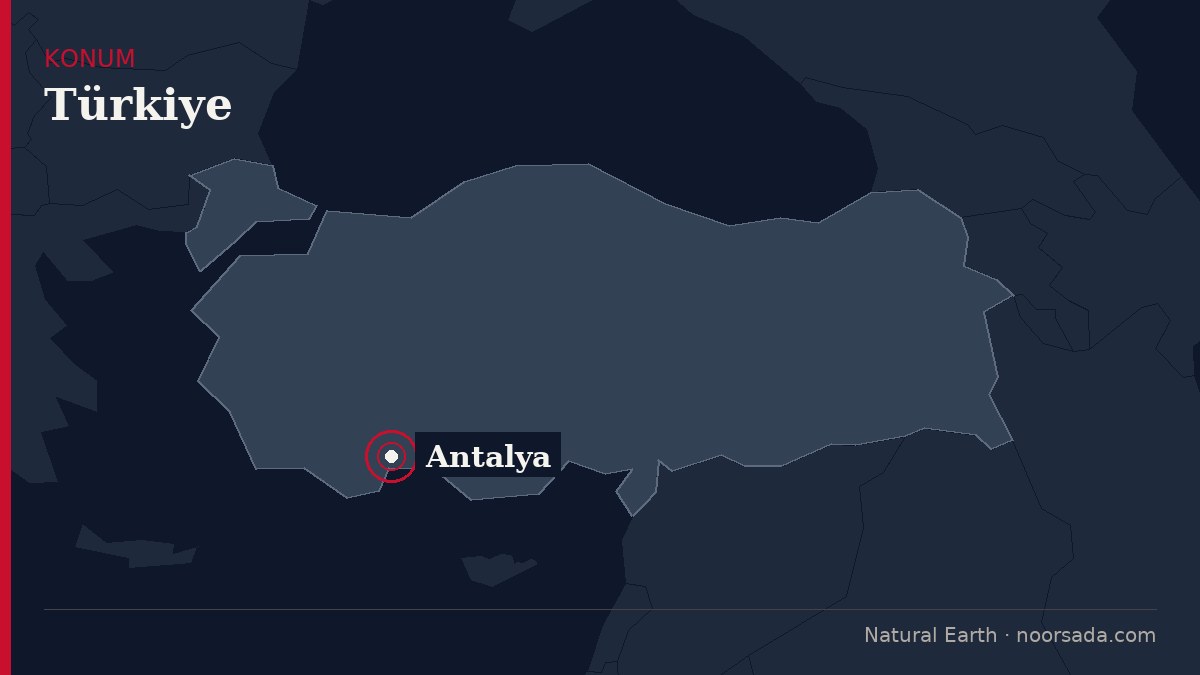
Ebru Akdag, President of the Plant-Based Foods Association (BITKIDEN), said at the COP29 Climate Summit under way in Antalya that food systems are both a cause and a victim of the climate crisis. Answering Diken's questions, Akdag spoke on the first day of the summit at a session titled "The Accelerating Role of the Private Sector in Agriculture and Food: Scaling Up Climate Action in the Food Chain," held under the theme "Food, Agriculture and Health."
Agriculture and food systems account for roughly one-third of human-caused greenhouse gas emissions. According to data from the Food and Agriculture Organization (FAO), emissions from global agriculture and food systems reached 16.5 billion tonnes of carbon dioxide equivalent in 2023 and have risen 21 percent since 2001. Their share of total emissions, however, fell from 38 percent to 32 percent in 2023.
In 2023, "farm gate emissions" from plant and animal production reached 8.1 gigatonnes of carbon dioxide equivalent, accounting for 49 percent of agri-food system emissions; this item has risen 17 percent since 2001. Pre- and post-agricultural production emissions rose 33 percent to 5.2 gigatonnes and made up 32 percent of the total. Emissions from production, transport, packaging, retail and household consumption rose by about 80 percent. Emissions from land-use change fell 6 percent since 2021 to 3.2 gigatonnes and account for 19 percent of the total. In 2023, livestock emissions were the largest single component at 4.3 gigatonnes, followed by deforestation (2.8 gigatonnes) and packaging, transport and retail (1.4 gigatonnes).
Akdag described how the climate crisis also strikes food production: changes in precipitation patterns and drought affect harvest processes and yields, while temperature increases raise the microbial load on foods. As humidity and temperature rise, the formation of harmful substances such as mycotoxins and aflatoxins increases, pesticide use grows as diseases become more widespread, and the antibiotic burden grows along with zoonotic diseases.
Among alternative proteins, cultured meat and insect proteins are not expected to come onto the agenda in Turkey in the near future; plant-based options are seen as valuable. Akdag, stating that it is not correct to say that a plant-based alternative to an animal product is necessarily better, said that a product's formulation, method of production, affordability, taste and bioavailability are decisive. The diet recommended from a sustainability standpoint is the "flexitarian" diet. According to the Boston Consulting Group report cited by Akdag, plant-based alternatives could reach an 11 percent market share in 2035 if they maintain their current growth rate; the greenhouse gas savings achieved through this shift could be equivalent to cutting the emissions of all air transport by 95 percent. In the report's comparison of the emission-reduction potential of a one-dollar investment, alternative proteins rank first; it states that the protein shift carries 11 times more reduction potential than electric vehicles and three times more than green concrete.
Sources — how we know this
- PrimaryDiken