This story is currently available in англійська only — a translation isn't ready yet.
German ports prepare for nuclear-powered ships as Berlin stays out of ATLAS pact
Port association vice-president Matthias Magnor says nuclear cargo ships "will come" and the sector is preparing, while German MPs split over the technology.
ℹ️ Озвучка браузером · студійний голос ШІ незабаром
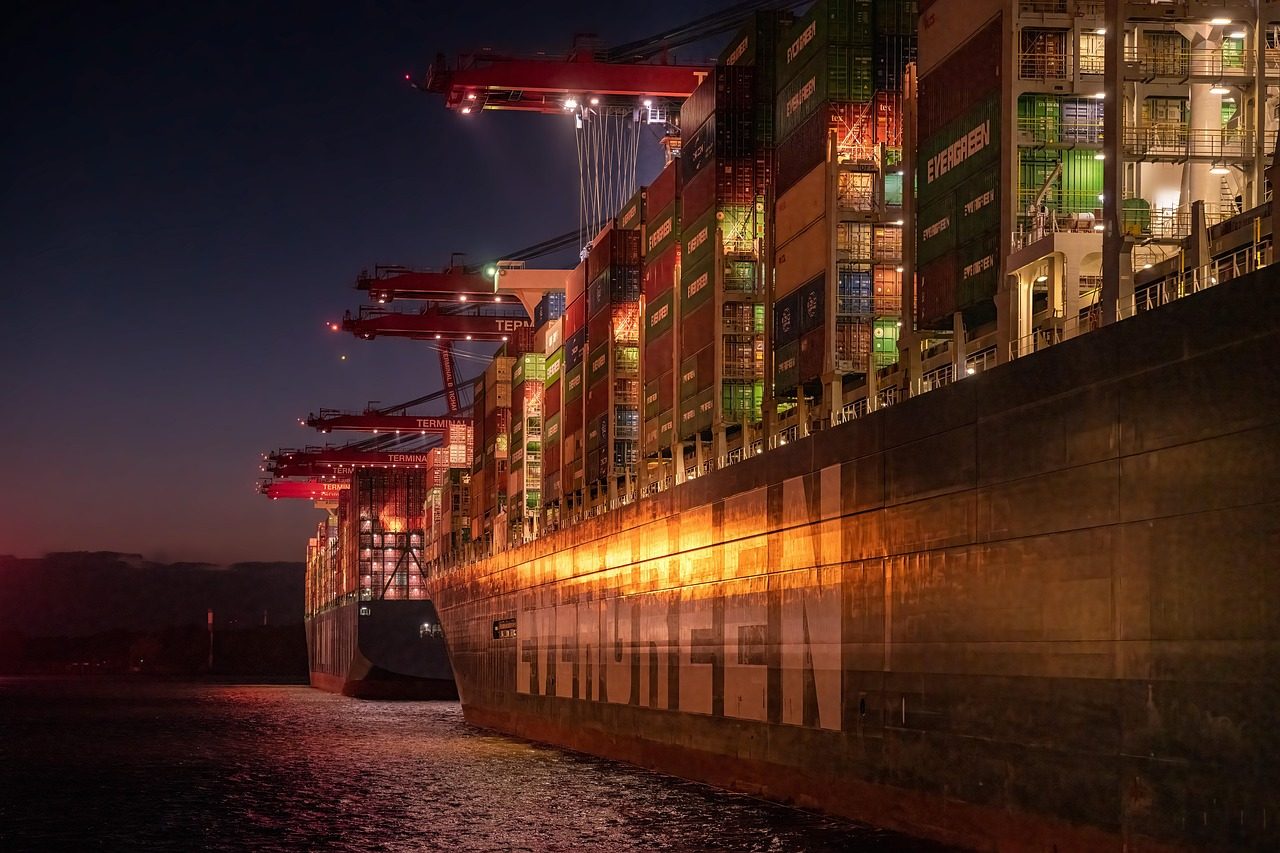
German seaport operators are preparing to handle nuclear-powered cargo ships, while Germany is absent from the international agreement meant to set the rules for them.
Matthias Magnor, vice-president of the Central Association of German Seaport Operators and head of the Bremen port operator BLG, said nuclear propulsion is coming. "We are preparing for it," he said, warning that Germany cannot afford to be left behind.
The technology in question is the small modular reactor, or SMR, embedded in liquid fluoride or chloride salt that cools it and shuts the reaction down automatically if it overheats. Unlike the light-water reactors that powered the US test ship NS Savanna and Germany's Otto Hahn in the 1960s, the new designs run at low internal pressure, meant to reduce the risk of a steam-boiler explosion. They use only low-enriched uranium, unlike military submarines.
Rafael Mariano Grossi, head of the International Atomic Energy Agency, forecasts that the first nuclear-powered ships could enter service in the 2030s, with first activities from 2032. The ATLAS agreement — Atomic Technologies Licenced for Applications at Sea — was launched in Washington at the end of August 2026 with six international working groups. Twenty-six states signed, among them the United States, India, France, Britain, Italy and the Netherlands. Germany is not on the list.
Eero Lehtovaara, a Helsinki captain negotiating with maritime and nuclear authorities for the Swiss engineering group ABB, said the severity of a worst-case accident depends on the amount of uranium aboard and the reactor's containment. He acknowledged an emergency is possible if water enters the hull, as a missile strike could cause.
In Germany the question divides MPs. Social Democrat Uwe Schmidt said Berlin is busy dismantling its nuclear plants. Green MP Harald Ebner said: "We should not invest research money in a technology that has already failed once." Christoph Ploß, the federal government's maritime coordinator from the CDU, called it "an option we should think about" and said nuclear propulsion would help meet climate targets; global shipping produces about three percent of CO2 emissions.
Insurance remains unresolved. Pierre Sames of the Hamburg classification society DNV said there are "no liability rules and therefore no insurance options" for nuclear-powered ships, and IMO conventions on free passage through territorial waters and port-state controls do not cover them. Ports are therefore likely to refuse such ships entry at first.
In August the US maritime agency MARAD agreed with the British manufacturer Core Power to order hulls at shipyards in Japan and South Korea and fit reactors in the United States, an initiative attributed to President Donald Trump to counter China's shipbuilding lead.
Sources — how we know this
- PrimaryHandelsblatt
Energy Portfolio
Check your broker for the latest on energy stocks.
View Now →