This story is currently available in англійська only — a translation isn't ready yet.
Hatay MKÜ to present its 8 projects against the climate crisis at COP31 tomorrow
Among the projects prepared under the leadership of the Coordinatorship are an early warning system, a documentary on the Amik Plain and a target of 2.5 million lira in annual savings at a foundry.
ℹ️ Озвучка браузером · студійний голос ШІ незабаром
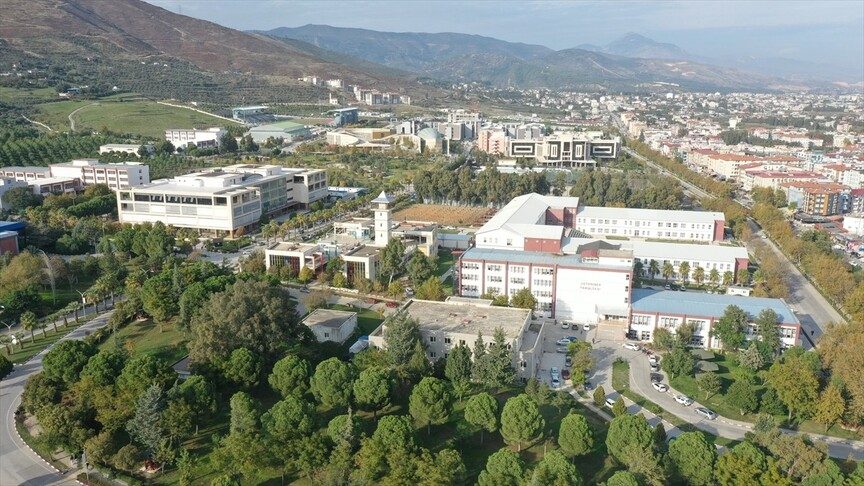
Hatay Mustafa Kemal University (HMKÜ) will present the 8 projects it developed against the climate crisis at COP31 tomorrow. The projects were prepared under the leadership of the university's Sustainability and Climate Change Coordinatorship, with the cooperation of academics and students. According to what Anadolu Agency reported, the presentation will be made on 16 November and the projects will be discussed at COP31.
One of the projects is "Green Transformation in Metal", carried out at a foundry operating in the Antakya Organized Industrial Zone. The electricity, natural gas, waste heat and water conversions of the company, which produces around 30,000 tons a year, were mapped with real data. The study foresees savings of around 2.5 million lira a year and a reduction of 180,000 tons in carbon emissions.
The "Inclusive Early Warning System", supported within the scope of COP31, aims to prevent the loss of life and property that extreme heat and sudden rainfall triggered by the climate crisis could cause. With the digital system to be developed, it is planned to warn citizens in a timely manner against climate risks, especially those living in tent and container cities or those on the move.
The "Memory of the Amik Plain" project will turn the changes in the process stretching from Lake Amik to the Amik Plain into a story through interviews conducted with farmers through the eyes of students, and convert it into a documentary. The "Hatay Agriculture 2035: Redesign of the Faculty of Agriculture" study, meanwhile, updates the faculty curriculum with digital agriculture, sustainable economy and artificial intelligence-supported education models; the new model is expected to set an example for other faculties of agriculture across Turkey.
The "Community Resilience to Forest Fires" project will carry out fire prevention, preparedness and safe evacuation training as well as participatory risk assessment in villages with high forest fire risk, with the participation of students, public institutions, local residents and administrations. The study aims to put forward a "Community-Based Local Climate Adaptation and Disaster Risk Reduction Model" that can also be applied in other villages.
In the "Blue Campus" project, the entire amount of annual rainfall falling within the university campus boundaries will be calculated; a feasibility report will be prepared on how much of the water is lost, how much of it can be recovered, and how the water obtained will be used in irrigating green areas. Under "Climate Scouts on Campus (Living Laboratory)", the Tayfur Sökmen Campus was designed as a living laboratory; students' environmental literacy is being measured and a digital climate map is being produced.
HMKÜ Rector Prof. Dr. Veysel Eren told the Anadolu Agency reporter that COP31 being held in Turkey is of great importance. Stating that the damage caused by the climate crisis is felt more in agricultural regions in particular, Eren said that sudden rainfall turns into floods and rapidly submerges agricultural areas, and that this situation also threatens reliable food. Eren said, "I believe that our students will carry out important work in raising awareness about the climate and in the search for solutions to the problems that climate change will create."
Sources — how we know this
- PrimaryAnadolu Ajansı (TR)