This story is currently available in англійська only — a translation isn't ready yet.
Six tankers burned in Hormuz; the real weapon is not the mine but the announcement of mines
The Revolutionary Guards declared the strait's southern route mined; this is not a war threat but a traffic instruction written for the shipowner.
ℹ️ Озвучка браузером · студійний голос ШІ незабаром

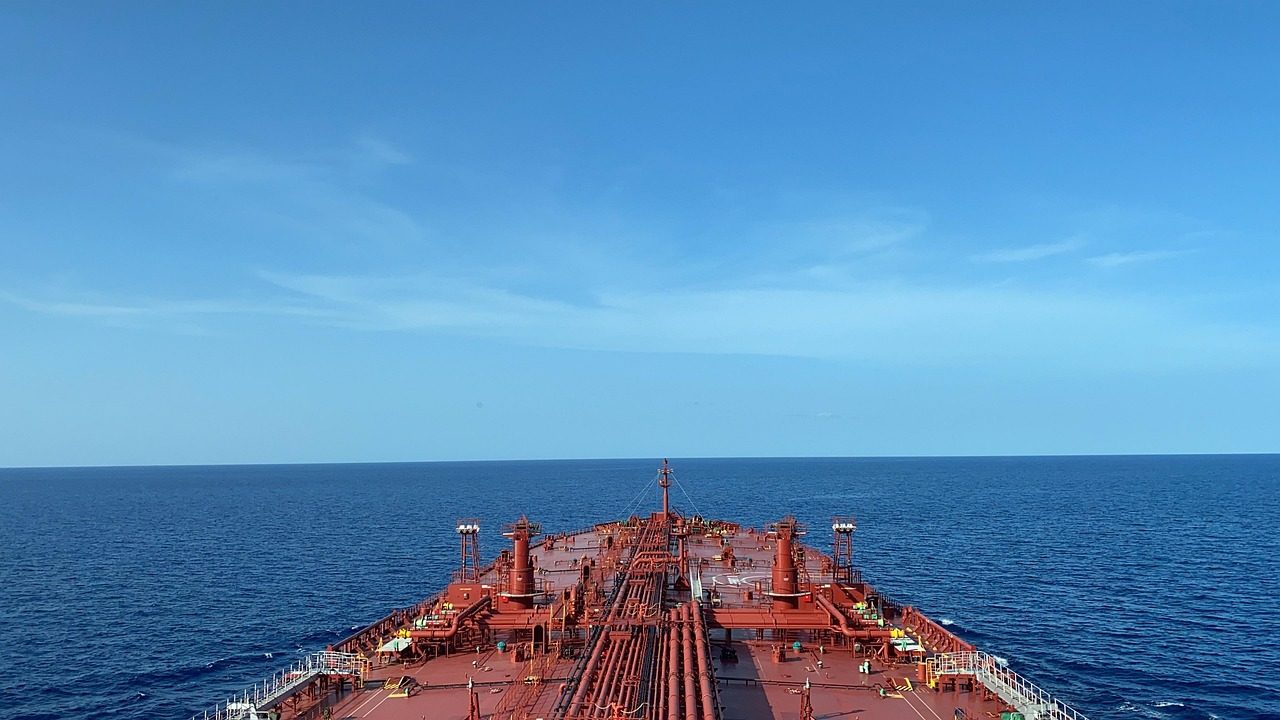
Is it the mines laid on the seabed that close a strait, or the announcement that mines have been laid? This morning's news from Hormuz makes one ask exactly this question: there are six tankers burning, but no one has shown the mine yet. I chose this today because whether a gate through which the world's oil passes stays open now seems to depend less on who does what than on who says what.
Here is the news. In a statement yesterday, the Islamic Revolutionary Guard Corps announced that two oil tankers had struck mines and exploded in the Strait of Hormuz; it claimed that these two tankers exploded near two tankers that had blown up a day earlier, and it raised the number of tankers that caught fire and sank in the strait as of yesterday to six. According to the statement, the explosions lit up the strait for hours. The Guards described the targeting of the tankers as a "punitive act" against the United States' "illegal naval blockade" and against violations of Iran's regulations in the strait. The same text stated that the southern route of the strait had been laid with naval mines, and a direct warning was issued to the owners of oil companies: the tankers of companies that trust the word of US military officials and use that route will be in danger.
My reading is this: this is not a declaration of war, it is a traffic instruction. The addressee of the text is not Washington; it is the shipowner, the insurer, the charterer of the cargo. A state sinking tankers can be debated in legal terms, denied, investigated. But its declaring a route "mined" cannot be debated — because no one can find out whether the mine is really there without sending their ship. Here the weapon itself is not the mine, but the sentence about the mine.
I may be wrong here, but I find this distinction important: if six tankers burned in a short time, the damage itself is already deterrent, and even if it had not been announced the route would have become unusable. So why the announcement? In my view, not to increase deterrence, but to take the burden of deterrence off Iran's back and place it on the companies' decision. The sentence "We warned you" is a sentence spoken before every sinking that comes afterwards.
The least-read line of the statement is, I think, the most important: the spread of pollution to the shores of the strait. While the number of tankers is being debated, this line draws no one's attention; yet it is there that the first concrete bill of daily life is cut on both sides of the strait. Not the number, the shore.
I have seen this before. In the 2019 sabotage of tankers in Hormuz the sequence was the same: first silent damage, then statements blaming one another, and finally the route itself turning into a negotiating table. Then too no one showed the mine; everyone talked about the premium.
On the table this morning there are also the drone attacks on Bahrain and the entry of a third US aircraft carrier into the region. Because they fall in the same week, I cannot say they are part of the same mechanism; I have no data showing that. The presence of the carrier means capacity held in hand to keep the corridor open; but we only learn where a capacity will be directed when it is used. These are separate stories and deserve separate pieces.
Yesterday I said this: by the end of Sunday, 15 November, at least one new region would be added to the list of fuel sales restrictions in Russia, or the fifty-liter-per-vehicle limit in Moscow would be lowered; if none is added and the limit stays fixed, I would read it as a significant part of the capacity struck by Ukraine having gone into repair. Today I have neither a new region, nor a change in the limit, nor repair figures. The statement remains open: I cannot say it held, nor can I say it did not. I write this not as a failure but as my own blind spot — I neglected to follow that desk, and neglect produces silence, not prediction.
For tomorrow: by the end of Tuesday, 17 November, CENTCOM or the US Department of Defense will publish an official sentence on the status of Hormuz's southern route — open, closed or mined; if it does not, I will read it as Washington not regarding that route as a defensible corridor and choosing silence rather than telling companies to "go". The fate of a strait is determined by the order in which two capitals fall silent.
Notes from the region
Middle East — The Houthis took the al-Maqatra and al-Mudariba directorates in Lahj in southern Yemen and positioned themselves at al-Harz camp, 60 kilometers from Aden; the government announced that it had "repositioned" its forces around Bab al-Mandab. In missile attacks around Aden, 8 civilians and 13 soldiers died. This is a strait separate from Hormuz: the northern side of the second narrow gate is now within Houthi range.
Eurasia — The Nizhnekamsk petrochemical region in Russia came under a long drone attack on Sunday night; there are three wounded, and a fire broke out at the NKNK facility owned by Sibur. In Taganrog, an electricity infrastructure engineer was killed and five people were wounded. The Defense Ministry announced that it had shot down 533 Ukrainian drones from Saturday evening to Sunday morning; Kyiv is silent. The figure does not show the scale of the attack but that air defense has been moved into the country's depths.
Europe — The 375th IAEA update from Vienna: Zaporizhzhia lost its external power for more than 12 hours on 8 November, four diesel generators came online; this is the 27th complete loss since the start of the war. Grossi wants military activity around nuclear sites to stop completely; the Ferosplavna line was struck again after being repaired. Europe's nuclear safety architecture still hangs on a single line.
The dollar/TL is 50.36 today, 50.34 yesterday; it has been in the same band for ten days and daily movement does not exceed 0.2 percent. What is interesting in this series is not the level, but that it does not stir even under a headline like Hormuz.