This story is currently available in англійська only — a translation isn't ready yet.
Paris and Berlin Rewrote the Car File in a Corridor. The Commission Will Publish It.
A provisional Franco-German pact loosens 2035, redefines 'made in Europe', and lets renewable fuels count as zero. The executive proposed; the capitals disposed.

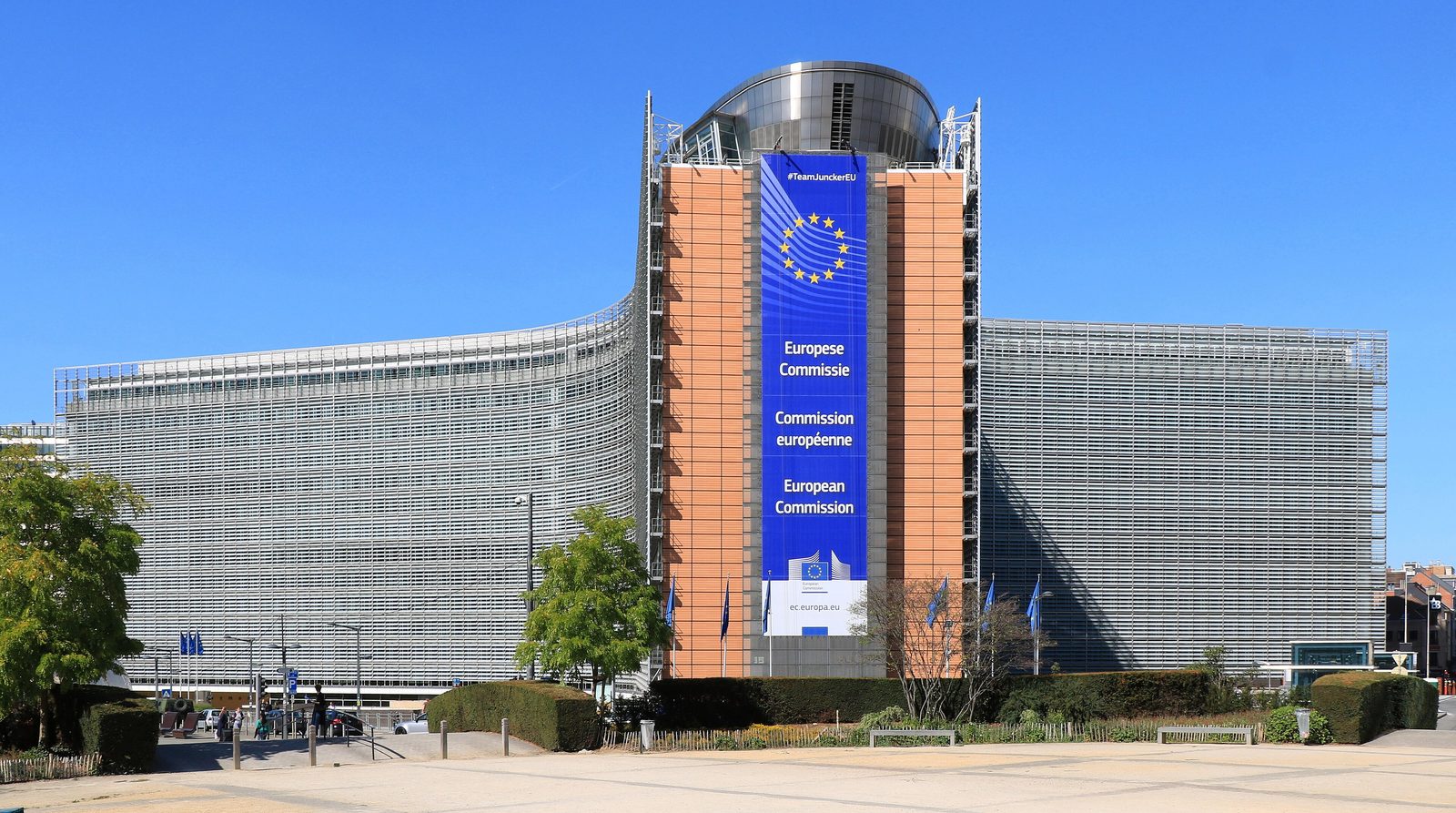
The operative sentence of Thursday's provisional Franco-German accord on the automotive file is not the one about 2035. It is the one that quietly disappears a requirement. Under the European Commission's own proposal, carmakers would have had to cut new vehicle exhaust emissions by ninety percent, and compensate the remaining ten percent through credits — among them a credit for building with low-carbon steel. The draft text agreed between Paris and Berlin, confirmed by diplomats to the wire that broke it, states that those residual emissions need not be compensated at all.
Strip the technicality away and the move is this: the ten percent is now free. A manufacturer that reaches ninety is treated as having reached one hundred. The low-carbon steel clause, which was less an environmental measure than an industrial subsidy routed through emissions accounting, is gone. Someone drafted that deletion. Someone in a Berlin ministry asked for it, and someone in a Paris cabinet accepted it in exchange for something else.
What Paris got, on the reading of the draft, is the narrower definition of 'made in Europe'. The Commission had proposed in March to open the public-procurement preference to the long list of partner countries holding reciprocal access agreements with the Union — which would have included, in practice, most of the trading world. The Franco-German text restricts the scheme to the twenty-seven, with a conditional opt-in for a short list that includes Britain and Norway. The British government welcomed the inclusion within hours. One capital's industrial doctrine was swapped for another's climate ambition, and both delegations will go home claiming a win.
Germany also obtained the clause allowing cars running on renewable fuels to be counted as zero-emission, and the extension of the Commission's 'super credits' — originally conceived as a nudge toward small, affordable electric vehicles — to cars of any size. The super-credit for an affordable urban EV becomes a super-credit for a premium SUV with the right fuel certificate. This is not a drafting accident. It is the shape of an industry that still sells its margins at the top of the range.
The institutional point is the one the wires will underplay. The Commission proposed. Two capitals, in a bilateral, have written the compromise that the twenty-five others will be invited to accept. The European Parliament's rapporteurs on the file will be handed a text whose load-bearing walls are already poured. The co-legislators retain the right to amend. They do not, in practice, retain the right to rebuild.
This matters because it coincides with two other developments on the same Thursday-into-Friday. The European Council President has convened an extra summit for 26 November to try to rescue the next seven-year budget before the French, Italian and Polish electoral calendars eat 2027. And the Commission President has floated, to leaders in the room, the idea of bloc-wide strategic gas reserves — an admission, barely coded, that storage facilities are entering winter at levels described in the reporting as record lows, with fill rates that may land well short of the regime's standing target.
Three files, one week, one pattern. On cars, the agenda is set bilaterally and the Commission's draft is edited by the capitals that matter. On the budget, the Council President is openly managing an electoral clock rather than a policy one. On energy, the executive is asking leaders for an instrument it does not yet know the shape of, to cover a shortfall its own regime failed to prevent.
For a listed Gulf automaker, or a Gulf sovereign fund with positions in European industrial steel, the Franco-German text is the document to read this weekend, not the Commission's March proposal. The procurement perimeter has narrowed; the emissions perimeter has widened; the definition of 'zero' has become a question of fuel certification rather than tailpipe physics. Investment memos written against the Commission's original draft are now, politely, obsolete.
Enforcement, as ever, is the test. A ninety-percent target with no compensation requirement on the final ten is enforced by whoever certifies the fuel, whoever audits the credit, and whoever, in a national type-approval authority, decides a Friday afternoon in 2032 whether a particular diesel-adjacent molecule counts. That person has not yet been named. The capitals that wrote the clause know who they would like it to be.
The Commission proposed. The Council disposes. On this file, two members of the Council disposed before the others arrived.