This story is currently available in англійська only — a translation isn't ready yet.
The Ketsi and the Disputed Line: What Georgian Food Carries Across Borders
As the 68th Geneva International Discussions open once more without resolution, the clay cooking vessels of the South Ossetian villages keep holding the memory no diplomat has mana
ℹ️ Озвучка браузером · студійний голос ШІ незабаром

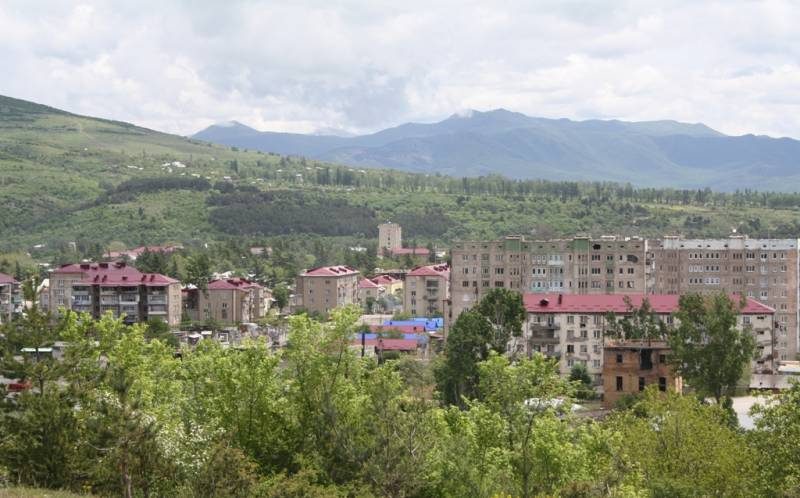
The smell reaches you before the dish does — charred clay and lamb fat and something herb-green underneath, the kind of smell that belongs to a specific altitude, a specific hillside, a specific grandmother's hand pressing dough against the inside of a ketsi. The ketsi is the shallow clay pan of the Georgian table, blackened by decades of open fire, and food cooked in it carries that blackening into the flavour in a way no modern skillet will replicate. If you have eaten from one, you understand the sensation: the crust that forms on the bottom, the way heat moves through clay differently than through steel — slower, rounder, like a conversation rather than an announcement.
I was thinking about the ketsi this week when I read that the 68th round of the Geneva International Discussions had convened — 68 rounds, since 2008, of multilateral talks addressing the security and humanitarian consequences of a war that remapped communities along the edges of South Ossetia and Abkhazia. Eighteen years of conversations. Eighteen years of people on both sides of those contested lines waking up and making bread and carrying grief into their kitchens.
My reading is that food is where the archive lives when the official archive is disputed.
The flatbreads of the Liakhvi valley, the churchkhela strung on cords above market stalls in Gori, the walnut-stuffed badrijani that every displaced woman I have ever spoken to mentions first when she describes what she misses — these are not symbols. They are the actual record. The recipe is the document.
Mzia Kvaratskhelia — a woman I interviewed some years ago, who had left her village in the Tskhinvali region in 2008 and resettled in Tbilisi — described making kharcho for her grandchildren from memory. Kharcho is a sour-plum beef soup, specific in the way that only Georgian food can be specific: you need tkemali, the sour plum paste, not tomato, not any other souring agent. You need the beef to be on the bone. You need to add crushed walnuts near the end, off the heat, so they thicken the broth without cooking down to nothing. «My mother told me,» she said, «that if you put the walnuts in too early, the soup forgets what it was.»
The soup forgets what it was. I have been thinking about that phrase for days.
For the kharcho she described, the proportions are these: start with one kilogram of beef short rib in cold water, bring it slowly to the boil, skim until the surface is clear, then let it cook for an hour and a half until the meat begins to offer itself away from the bone. Remove the beef, shred it, return it to the broth. Add three generous tablespoons of tkemali, a pinch of dried fenugreek, a pinch of ground coriander seed, one dried red chilli. Let it absorb for twenty minutes. Only then — the heat off, the soup resting — stir in a quarter-cup of raw walnut paste. Adjust salt. That's the whole of it. The simplicity is deceptive, the way most honest things are.
What the Geneva talks have never quite been able to address — and I say this not as a political judgment but as an observation from the food side of the archive — is the question of what a community is when its recipes travel and its territory doesn't. The villages above the administrative boundary line in the Shida Kartli region grew specific strains of grape for their amber wines. Those vines are still there, technically, on the other side of a line that most of the world disputes. The wine they produce is still Georgian wine, in the way that matters to the women who taught their daughters to press the grapes with bare feet in a stone marani. But the daughters are in Tbilisi now, pressing different grapes, and the wine comes out a little different, and everyone agrees the difference is real and no one agrees on what it means.
Eighteen sessions of the Geneva talks have not resolved land. They have not resolved return. What has moved — quietly, in the way that actual life moves — is the food. Mzia's kharcho is now cooked in a Tbilisi apartment. The ketsi she uses was brought out in 2008 wrapped inside a blanket, the only clay vessel her mother could carry. It still blackens the bottom of the lamb, still makes the crust, still moves heat the slow Georgian way.
There is one kitchen move worth carrying from this into your own practice, whatever your geography: when you make any walnut-thickened broth — Georgian, Circassian, Levantine, they all know this trick — take the pot fully off the heat before the walnuts go in. Not the back burner, not low flame. Off entirely. The walnuts should warm into the soup, not cook in it. The difference is the difference between a broth that holds together and one that goes grainy and dull.
The 68th round will produce what the previous 67 produced: no breakthrough, careful language, a continuation of the process. My reading is that the process matters precisely because someone has to keep the conversation warm while the food does the actual remembering. The soup must not forget what it was.
Eighteen years on, the ketsi still smells of the same fire. That is not a small thing.