This story is currently available in англійська only — a translation isn't ready yet.
The Quota and the Sabotage Warning Are the Same Policy
Moscow is quadrupling diesel export quotas to honour a deal with Washington while Patrushev warns London is targeting the tankers. Both statements serve one budget.

A government that bans diesel exports until the end of the year, and in the same week quadruples the quotas by which that ban is circumvented, is telling you something precise about who the ban is for. It is not for the market. It is for the refiners who were not invited to the deal.
Start with the arithmetic, because the arithmetic is the policy. Russian refineries produce roughly 40% more diesel than the domestic market absorbs. After a summer of drone strikes on refining capacity, utilisation at the end of October was reported 25% higher than at the start of the month — the kind of recovery curve that forces a decision in Moscow whether anyone in Moscow wants to make it. Either the surplus leaves the country or it piles up in tank farms until the price inside Russia collapses and the refiners who kept the army fuelled through a bad year stop being able to pay their crews. So the surplus leaves. The only remaining question is under whose signature, and at whose price.
The answer, as of this week, is: under a quota list drawn up by the government, with November volumes rising to about two million tonnes — roughly half a million barrels a day — and with an expanded roster of exempt refiners expected in a new order in early November. Shipments under existing intergovernmental agreements continue in parallel. Deputy Prime Minister Alexander Novak has already named three tankers in transit and a fourth sailing on 28 October. These are not accidents of paperwork. They are the operational face of the understanding Vladimir Putin and Donald Trump reached by telephone on 9 October, alongside the energy ceasefire with Ukraine that gave the refiners their breathing room in the first place.
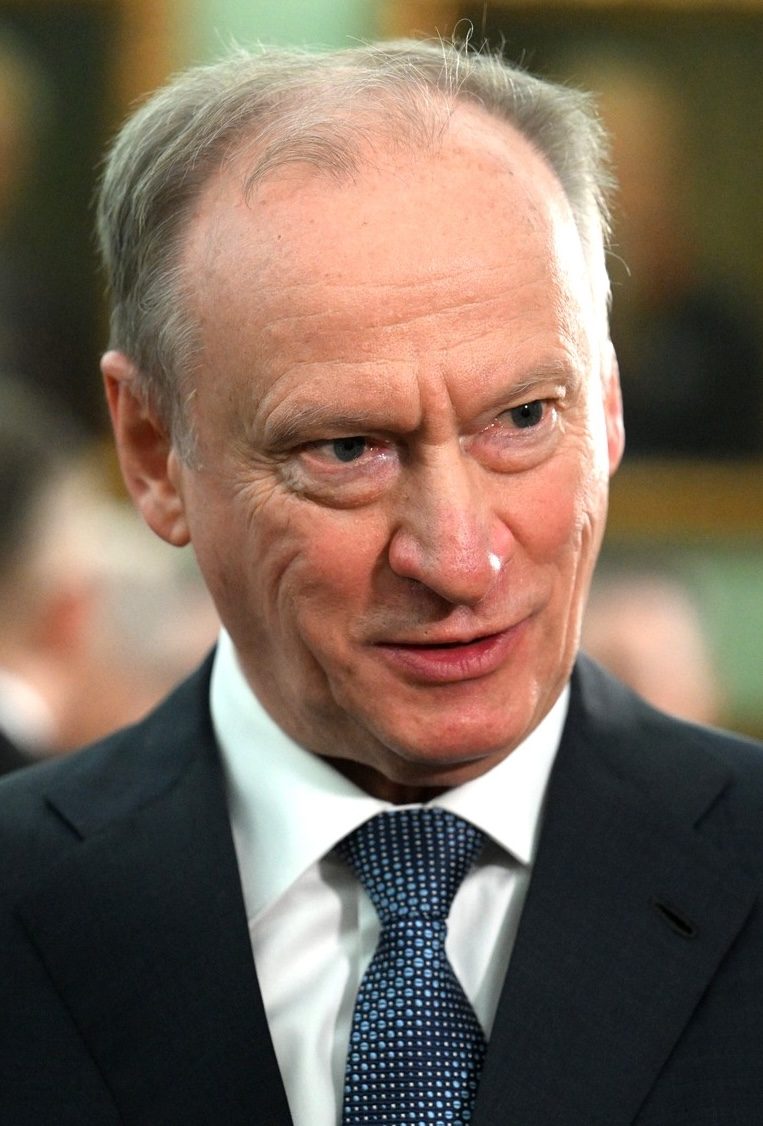
Now layer the second statement from Moscow on top of the first. Nikolay Patrushev — Kremlin aide, chair of the Maritime Board, and a man whose job description is to see enemies at sea — tells a government daily that London and NATO headquarters are «already preparing» sabotage against those same tankers, and that more than a hundred attacks on ships and maritime infrastructure moving cargo in Russia's interests over the past year are on the conscience of what he calls «the West.» The number is unverifiable in the open record; the framing is the point.
Read the two documents side by side and the contradiction dissolves. Russia has just signed a diesel supply arrangement with Washington that its own domestic political economy requires it to sign — the alternative was a glut and a refiner revolt. That arrangement is politically awkward in Moscow, because it concedes that the fuel the United States needs to keep pump prices manageable before 3 November is fuel Russia is willing to deliver. Patrushev's sabotage warning is the domestic cover. It reframes a commercial accommodation as a theatre of risk in which Russia is still the besieged party, and it names the villain as London rather than Washington — which is diplomatically convenient, because London is not the counterparty on the deal and cannot be offended into walking away from one.
The symmetrical move is visible on the other side of the line. According to reporting attributed to an American business daily, Ukrainian long-range units were instructed in mid-October to complete the refinery strikes already in motion and open no new files, and the unofficial pause may extend past the midterms. Volodymyr Zelensky is being asked to stop hitting the thing that makes the deal possible, so that Donald Trump can hold down a pump price that his party has to defend on 3 November. The suspension has not been independently confirmed. The incentive structure that would produce it is not in dispute.
What you are watching, then, is a sanctions regime being enforced selectively by its own authors. Washington wants Russian diesel to move, because American drivers vote and Russian refiners do not. Moscow wants Russian diesel to move, because its refiners are the industrial spine of a wartime economy that cannot afford a storage crisis. Kyiv is being asked to stop interfering with the physical plant that makes both wants possible. London, which is not in the room, gets cast as the saboteur in waiting — a role that costs the Kremlin nothing to assign and gives Patrushev a speech.
My reading is that the quota list matters more than the sabotage warning, and the quota list is the document to watch. The identities of the refiners added to the exempt roster in the early-November order will tell you which corporate structures the Kremlin is choosing to reward with hard-currency export revenue at a moment when every other Russian exporter is being squeezed. That is the real distribution of power inside this deal, and it will be written down in a government order rather than in a Rossiiskaya Gazeta interview.
What would prove this reading wrong: a November in which the expanded quota does not materialise, the exempt list stays narrow, and the tanker departures slow rather than accelerate. In that case the sabotage rhetoric was leading the policy, not covering it, and Moscow has decided the domestic optics of selling fuel to Washington outweigh the refiners' balance sheets. I do not expect that outcome. But the order, when it is published, will settle the argument faster than any speech about London.
Energy Portfolio
Check your broker for the latest on energy stocks.
View Now →