This story is currently available in англійська only — a translation isn't ready yet.
The Revolving Door Is Spinning Both Ways
Russia deports 63,500 foreigners while Germans queue for Russian asylum — a weekly tour of the logic-free zone, from Moscow to the Sahel.

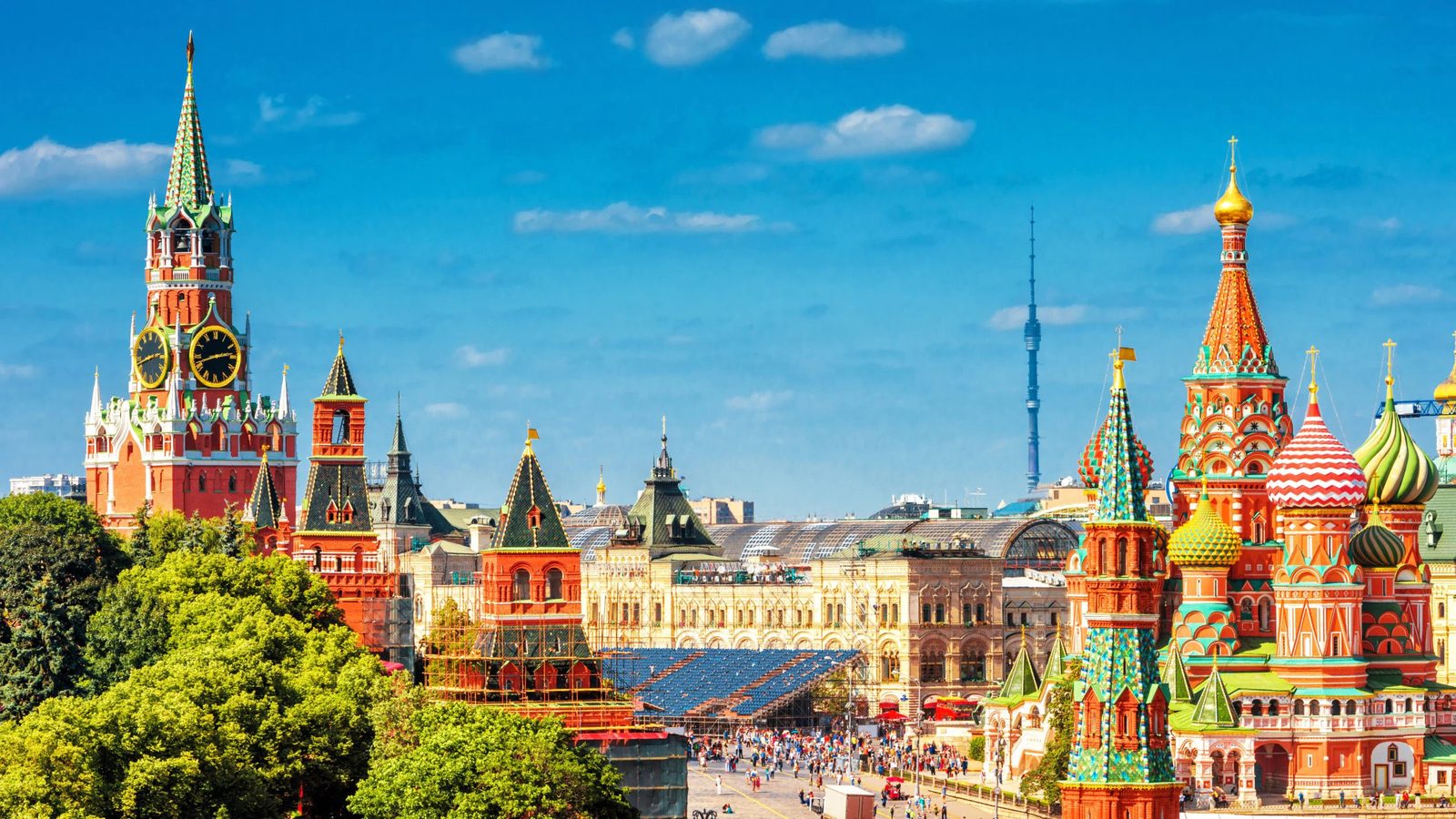
Welcome to the week when Russia simultaneously threw out 63,500 foreigners and advertised itself as a safe haven. The bureaucracy that manages this feat deserves, at minimum, a certificate.
— ITEM ONE: THE QUEUE AT THE WRONG COUNTER —
From January through September 2026, 49 German citizens applied for temporary asylum in Russia. Germans were the most frequent EU asylum-seekers in Russia — ahead of Latvians, Lithuanians and every other European nationality. This continues a multi-year trend: 93 Germans applied in 2023, 111 in 2024, 116 in 2025. Meanwhile, over the same nine-month window, Russia's Federal Bailiff Service deported 63,500 foreign nationals — one-and-a-half times the pace of last year. The country is, apparently, selectively expanding its welcome while aggressively narrowing it, which is not a contradiction so much as a staffing achievement.
— ITEM TWO: THE BOUNCERS AND THE VELVET ROPE —
Director Dmitry Aristov of the Federal Bailiff Service announced the 63,500 deportation figure with evident satisfaction, noting it represented a 1.5-times increase over the same period in 2025. For comparison, nearly 64,000 foreigners were deported across all of 2025. Russia has already matched a full year's output in nine months. The Bailiff Service did not specify how many of the 3,802 asylum applicants processed this year were waiting in the same hallway as the people being escorted out. Operationally, this would be worth knowing.
— ITEM THREE: THE SUMMIT OF MANAGED EXPECTATIONS —
The Third Russia-Africa Summit concluded this week. Delegations from 48 countries attended, including 22 heads of state. Moscow made its standard pitch as an anti-imperialist bulwark with historic ties to African independence movements; African leaders made their standard pitch for trade deals and prestige. Both sides went home with what they came for, which was mainly the photograph. Nearly five years into Russia's full-scale invasion of Ukraine, analysts were asked whether cooperation with Russia remains worth it. The answer, they said, 'depends on who you ask' — a formulation so carefully balanced it could serve as the summit's official communiqué. The Central African Republic's president, for his part, offered the week's most sovereign statement: his country has the right to choose its friends without anyone's permission, and Russia helped when it was 'truly in need.' He did not specify who had been asking for permission.
— ITEM FOUR: THE TANKER AND THE TELEGRAM —
A Qatari LNG tanker was attacked in the Persian Gulf this week, according to a statement from the relevant parties. None of the crew members onboard were injured. The attack on a vessel carrying liquefied natural gas — which, when it travels through the Gulf, is doing so partly because overland routes through more stable regions are less available than they used to be — was noted by the wires and then largely absorbed into the ambient hum of regional tensions. A Qatari LNG tanker attacked in the Persian Gulf is, at this point, treated as a weather event: unfortunate, expected, quickly cleared for the next bulletin.
— ITEM FIVE: THE GDP MATH —
Ukraine's economic losses from explosions between January and October 2026 reached approximately $4.28 billion, or roughly 1.9% of nominal GDP, excluding the metallurgical sector. Earlier this year, projections called for 1.5 to 2.5% annual growth. The current figure is zero. The National Bank now expects a 0.4% decline by year's end. The metallurgical sector — not yet included in that $4.28 billion — ceased operations entirely following explosions in August and September; if those enterprises do not resume, annual losses could reach 7% versus the same period last year. The economy of a country under sustained bombardment is contracting. This sentence does not need a punchline. It is the wound the rest of the column earns the right to carry.
The revolving door spins on. Next week, five more items. The discipline, as always, is part of the joke.
Energy Portfolio
Check your broker for the latest on energy stocks.
View Now →