AgendaVerified
This story is currently available in англійська only — a translation isn't ready yet.
The Senate's Russia Bill Is a Tariff on Delhi and Beijing With Moscow's Name on the Envelope
Washington has found a way to punish two rivals by writing a sanctions law aimed at a third. India and China should read the fine print.
Швидкість:
ℹ️ Озвучка браузером · студійний голос ШІ незабаром
NV
Natasha Volkov
· 3 min read
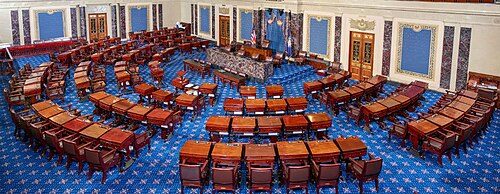
The US Senate has just done something the Treasury has been quietly asking for since the second Trump administration began: it has moved the pain of Russia sanctions off the American balance sheet and onto the Indian and Chinese ones.
The bill approved this week — the strongest congressional move against Moscow under the current president — targets buyers of Russian oil rather than Russian sellers. The mechanism is secondary sanctions and tariff penalties on third countries that continue to purchase Russian crude, refined products, and, in the harder-drafted versions, uranium and LNG. The named actor is Russia. The addressee is somewhere else entirely.
Read the bill and the addressee is obvious. Two economies buy the overwhelming share of seaborne Russian crude at this point in the war: India, which built an entire refining arbitrage on the discount, and China, which never pretended to care what Washington thought about its energy mix. A sanctions law that punishes Russian oil buyers is a sanctions law about them. Moscow is the pretext. Delhi and Beijing are the target.
This is worth stating plainly because the framing coming out of Washington will insist otherwise. The rostrum language is about ending the war, about squeezing the Kremlin's revenue, about moral clarity in the fourth year of a grinding conflict. The budgetary language — the tariff schedules, the enforcement carve-outs, the exemptions for allies who buy the same oil through Emirati and Turkish intermediaries — tells you what the law is actually for. It is a tool for renegotiating the terms of the Indian and Chinese trade relationships under the cover of a Ukraine policy.
The Indian calculation is the more interesting one. Delhi has spent three years explaining to every visiting American delegation that its Russian oil purchases are a matter of consumer prices and strategic autonomy, not political affection. The explanations were accepted because the alternative — a rupture with the largest democracy in Asia at the moment of maximum competition with China — was unthinkable in the previous administration. The current one thinks about it. Whether it acts on the thought is a different question, but the bill gives the executive branch the leverage to make Delhi answer it in real time.
The Chinese calculation is simpler and therefore less consequential. Beijing will absorb the tariff, route more of the trade through opaque intermediaries, and price the friction into an economic relationship it already treats as adversarial. Secondary sanctions on Chinese buyers of Russian oil have existed in various forms since 2022 and have moved the needle exactly as much as Chinese policymakers have permitted them to. The new bill will produce a familiar theatre: enforcement actions against second-tier trading houses, sternly worded exemptions for the state-owned majors, a headline number of penalties that decays quietly over eighteen months.
The parallel worth reaching for is not 1973 and it is not the Iran sanctions architecture of the 2010s. It is closer to the extraterritorial banking measures Washington used against European firms doing business with Havana and Tehran in the 1990s — measures that discovered, over a decade, that the dollar's centrality was itself a depreciating asset when weaponised too often. That parallel breaks in one important place: the current bill is not aimed at marginal jurisdictions. It is aimed at the two largest non-aligned economies on earth, both of which have spent the last four years building precisely the payment rails that make this kind of pressure less effective than it used to be. Every use of the tool accelerates the search for alternatives to it. The Treasury knows this. The Senate, one suspects, does not.
⚡
Autonomous PickMarketplace
Energy Portfolio
Check your broker for the latest on energy stocks.
View Now →