This story is currently available in англійська only — a translation isn't ready yet.
Treasury Talks to a Sanctioned Fund While Diesel Flows: Washington Prices the Peace
Steve Witkoff let the quiet part out in St Petersburg. The economic track with Moscow is no longer a rumour — it is a desk at the US Treasury.

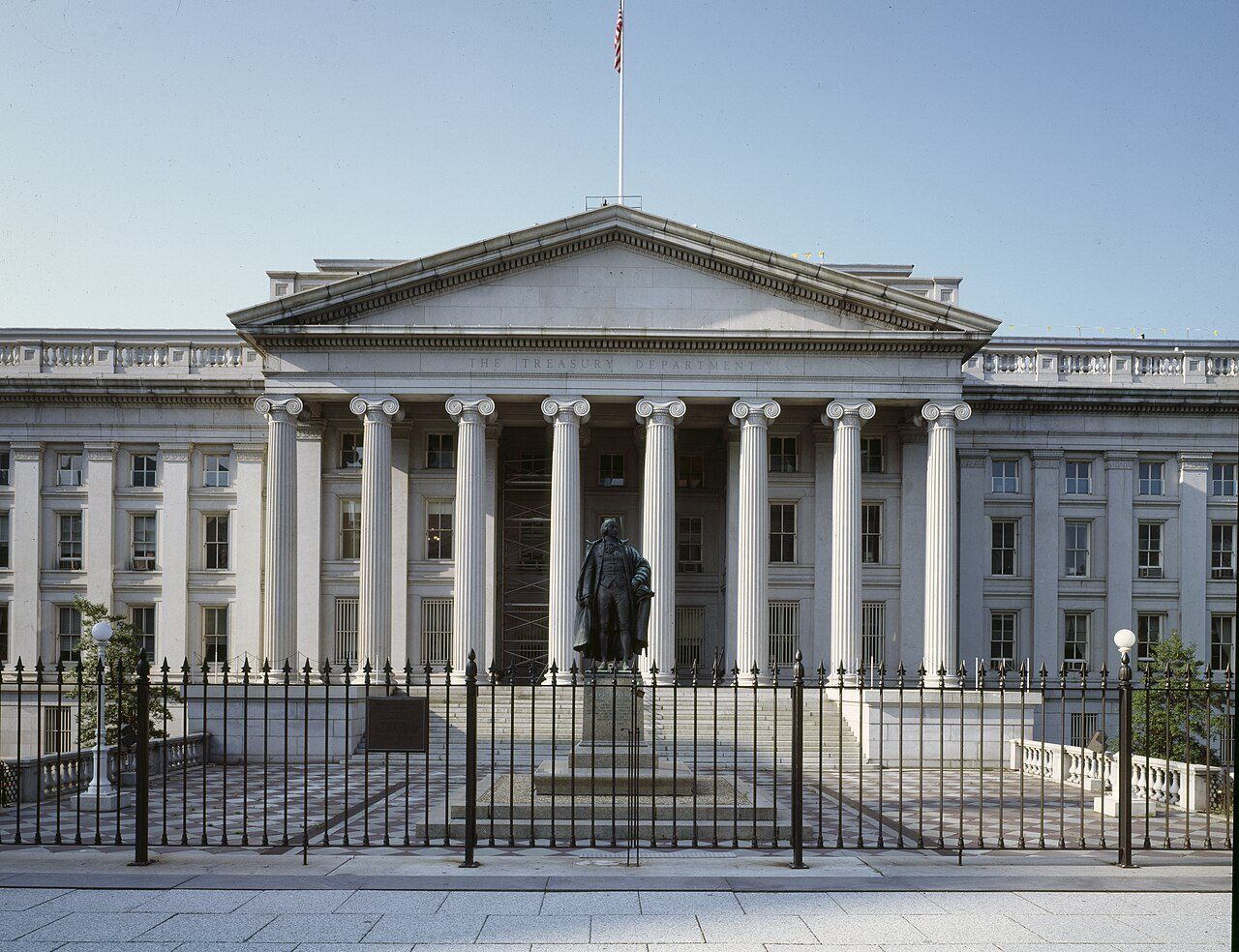
The sentence that mattered on Wednesday was not about ceasefires. It was eight words long, delivered inside a St Petersburg conference room: «Our Treasury Department is working with you now independently.» The speaker was Steve Witkoff, Donald Trump's envoy. The addressee was Kirill Dmitriev, chief executive of the Russian Direct Investment Fund — an institution the same US Treasury placed under sanctions in February 2022, when it was identified as part of the financial scaffolding of Vladimir Putin's government.
Read that again, slowly. The agency that designated Dmitriev as a sanctioned person is now, by its own envoy's admission, in direct working contact with him on economic cooperation. Not through a licensing exception. Not through a humanitarian carve-out. Independently. The word is Witkoff's own.
This is the development that reframes everything else on the Ukraine file. Until this week, the generous reading of the Trump administration's Russia policy was that the diesel arrangement announced earlier this month — the deal under which Moscow would ship hundreds of thousands of tons of diesel into the US market — was a one-off, a price-of-fuel transaction dressed in the vocabulary of statecraft. That reading is no longer available. There is a channel. It has a counterparty. It has a subject matter, and the subject matter is not peace. It is trade, finance, and, Witkoff mentioned, Russian fertiliser.
Name the decision-maker. The Treasury Secretary does not open a working line with a sanctioned individual on his own authority; that line exists because the Oval Office wants it to. Witkoff's role here is not negotiator, it is announcer — the person sent to say in public what has already been decided in private. The praise he offered Dmitriev in the room («You've been outstanding, Kirill») is the giveaway. You do not flatter a counterparty you are pressuring. You flatter a counterparty you are building something with.
Now look at what Moscow produced in exchange for the visit. An elderly American teacher, Stephen Hubbard, 74, released after being held since the opening months of the full-scale invasion. Trump had asked for him by name the day before. The transaction was transparent: a prisoner, offered on arrival, as the price of admission to the economic conversation. In the arithmetic of hostage releases this is a bargain for the Kremlin. One pensioner for a seat at the Treasury's table is a trade any finance ministry in the world would take.
And Kyiv? Witkoff was candid about that too. Ukraine, he said, is being spoken to «openly» about the possibilities that might open up once the war ends. Translate: the economic reconstruction of Ukraine and the economic reintegration of Russia are being discussed in the same room, by the same envoy, as parallel tracks of one deal. The Ukrainian president has already said in public that the diesel arrangement «plays into Russia's hands.» He is not wrong about the direction, but he is understating the scale. The diesel was the pilot. The Treasury channel is the product.
The Czech president put it in the mildest possible register this week when he observed that coordinated sanctions had been placing Russia «under strain» until the diesel deal gave Moscow «time to breathe.» That is diplomatic for: the pressure architecture built since 2022 is being dismantled, one carve-out at a time, by the state that built it. A Republican senator from Utah, writing in his own name, used blunter words — «capitulating to a dictator shows weakness» — and the fact that the dissent is now bipartisan is itself a data point about where the policy sits.
My reading is this. The administration is not negotiating an end to the war in order to normalise economic relations with Russia. It is normalising economic relations with Russia and using the war as the occasion. These are different sequences and they imply different leverage. In the first, sanctions relief is the carrot at the end of a peace. In the second, the carrot is being eaten before anyone has agreed to pull the cart. Dmitriev, whose institution has spent four years locked out of the dollar system, understands which sequence he is in. So does Putin, who did not fly to meet Witkoff — Witkoff flew to meet him.
The test for this interpretation is not rhetorical, it is budgetary. Watch the Office of Foreign Assets Control licence register in the coming weeks. Watch whether the diesel arrangement acquires a sibling in fertiliser, as Witkoff hinted. Watch whether any US financial institution receives quiet comfort to process RDIF-adjacent transactions. If those things happen, the economic track is the policy and the peace track is the cover. If they do not — if the channel stays verbal and the sanctions regime holds in substance — then this week was theatre for a domestic audience that wants cheaper fuel.
For now, the ground truth is a Michigan pensioner on a plane home, a sanctioned fund manager being praised by a US envoy on camera, and a Ukrainian government being told to think about the economics of a postwar it has not been asked to design. That is not a peace process. It is a repricing.
Energy Portfolio
Check your broker for the latest on energy stocks.
View Now →