This story is currently available in англійська only — a translation isn't ready yet.
Two Voices on the Panjshir Road
An argument between a mineral trader and a border officer about what Afghan emeralds mean when they reach the Aegean customs hall.

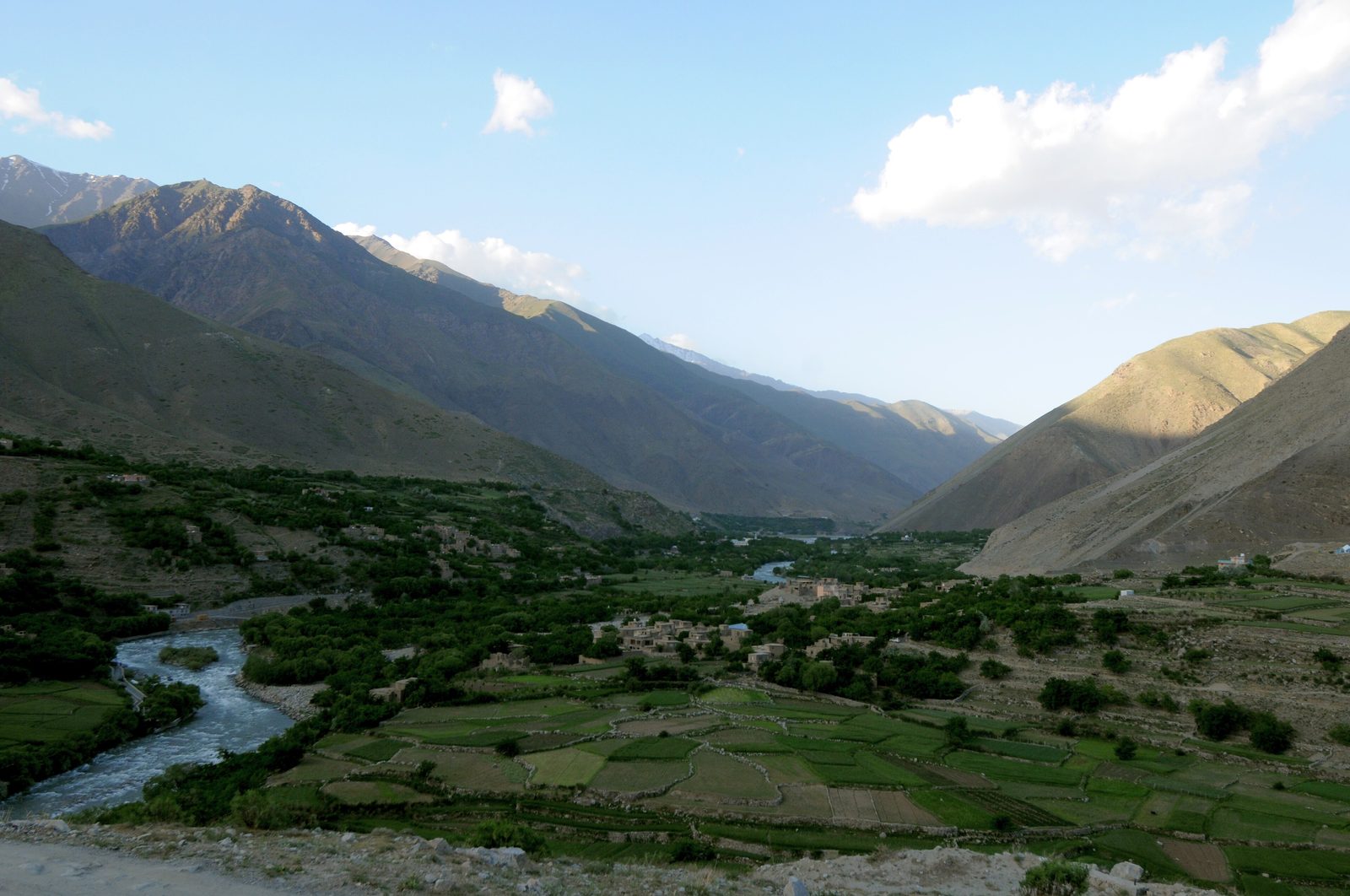
There is a man I will call Yusuf, who left the upper Panjshir valley in the spring of 2024 with a cloth pouch of unsorted beryl stitched into the lining of his jacket. He crossed from Nimruz into Iranian Baluchistan on foot, then north by shared taxi to Urmia, then west over the mountains into Van, and finally — after seven months of waiting — across the Evros river at a bend the smugglers call the elbow, about forty kilometres north of Edirne. He is now in Thessaloniki, where he sorts stones for a wholesaler who asks no questions about provenance and pays in cash. His cousin is still in Panjshir, chipping emerald out of a vertical seam at four thousand metres with a hammer, a chisel, and a head-torch whose battery he recharges from a solar panel the size of a book.
I want to stage, in what follows, an argument I have been having in my head for weeks — ever since the recent reporting on Afghan miners reminded me how long this particular supply chain is, and how many borders it crosses before the stone becomes a ring in a window on Mitropoleos Street. The argument has two voices. I owe each of them a fair hearing. I will not tell you which one I think is right. I will tell you only that one of them gets the last word, and you may draw your own conclusion from the fact that I let him.
THE FIRST VOICE is the trader's. Call him Marco, though he is not Italian and that is not his name. He has worked in coloured stones for twenty-two years, out of a small office near the port, and he sees the Afghan supply the way a sommelier sees a difficult vintage: a product of specific geology, specific hands, and specific hardship, which the market can either reward honestly or exploit cheaply, and which — crucially — will reach the market either way.
His argument goes like this. The miners in Panjshir are not asking to be rescued from their trade. They are asking to be paid properly for it. The reporting on their conditions tends to end with an implied call for intervention — tighter certification, sanctions regimes, due-diligence frameworks modelled on the Kimberley Process for diamonds — and every one of those instruments, in Marco's experience, has the same effect at the mine face. It raises the compliance cost for the European buyer, lowers the price the miner receives, and pushes the trade into channels where no questions get asked at all. Yusuf's pouch did not cross four borders because the system worked. It crossed four borders because the system, in trying to clean itself, had made the clean route unaffordable for a man with a hammer and a head-torch.
Marco is not a cynic. He pays Yusuf more than the Dubai wholesalers would, and he knows the names of the villages the stones come from. His point is that the moral energy of the European consumer is a blunt instrument. It wants reassurance more than it wants justice. It wants a certificate on the ring, and it is willing — without knowing it is willing — to let a man cross the Evros in winter in order to feel better about a purchase in spring. If you care about the miner, Marco says, buy from the trader who knows his name. Do not ask the state to intervene, because the state will intervene in the way states do, which is to say at the border, against the man, and never at the counter in the mall.
THE SECOND VOICE belongs to a woman I will call Dimitra, who works for the Hellenic customs service at a crossing I will not specify. She has spent six years watching the informal mineral trade come through her hall in jacket linings, in children's schoolbags, in the hollow handles of suitcases. She has nothing against Yusuf. She has, in fact, waved through more Yusufs than she has caught, because the service is understaffed and the priority list for inspection is written in Athens by people who have never seen the hall. Her argument is not about enforcement. It is about what the absence of enforcement actually produces.
She would put it this way. Every uncertified stone that reaches Thessaloniki is a stone whose price has been set by the weakest party in the chain. Marco pays Yusuf more than Dubai would; fine. But Marco is one trader, and the aggregate market is not Marco. The aggregate market is a clearing price, and the clearing price is set by whoever will pay the least and ask the fewest questions, which in the current configuration is a wholesaler in a jurisdiction that does not care. The absence of a certification regime does not protect the miner. It protects the trader who refuses to pay him. The man with the hammer in Panjshir is not negotiating with Marco. He is negotiating with the floor of the market, and the floor is where there is no floor at all.
As for the border — Dimitra would say — the border is not the instrument of the miner's suffering. The border is the instrument of the state's attempt to know what is moving through its territory, which is the minimum precondition for taxing it, for regulating it, for one day perhaps lifting the miner out of the arrangement in which his labour is worth less than the stone's weight in rough. The argument that enforcement harms the migrant is true in the short run and, she thinks, catastrophic in the long one. It cedes the entire architecture of international trade to the people who have most to gain from its opacity. It mistakes the kindness of the individual trader for the structure of the market, and it leaves the miner — the actual miner, in the actual valley — exposed to a price set by his weakest negotiating counterpart on earth.
I have put these two voices as fairly as I know how. Marco would say that Dimitra's certification regimes have never, in the history of extractive commodities, delivered what they promised at the mine face, and that the gap between the policy document and the valley floor is where men like Yusuf fall through. Dimitra would say that Marco's version of the trade depends on a handful of ethical individuals holding the line against a market that has every incentive to erode them, and that no serious policy can be built on the hope that there will always be enough Marcos.
Yusuf, when I asked him, said he did not want to talk about policy. He wanted to know whether his cousin, next spring, might be able to send the stones by post instead of by cousin. He wanted a receipt. He wanted the state — some state, any state — to know his name in a way that was not punitive.
Which of the two voices does that request belong to?