This story is currently available in англійська only — a translation isn't ready yet.
«Will Iran close Hormuz?» — and why the trading desks are asking the wrong thing
A projectile, a threat, and a melting Arctic route quietly rearrange the question every ministry is still phrasing the old way.

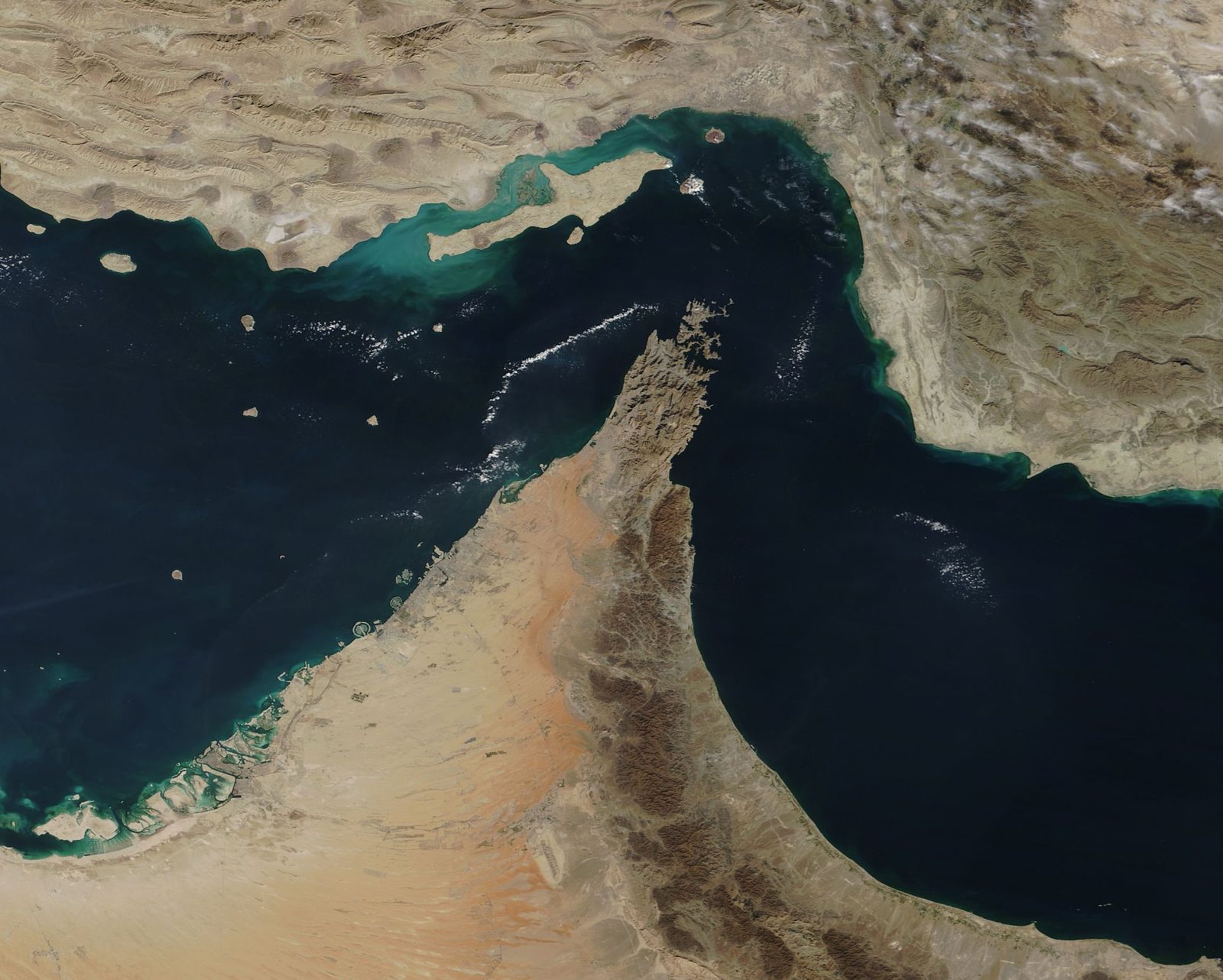
«Will Iran close the Strait of Hormuz?» That is the sentence bouncing between insurance desks in London, procurement offices in Delhi, and finance ministries from Riyadh to Tokyo this morning, after a vessel was struck by an «unknown projectile» in the strait — one casualty, engine room damaged, per the British maritime agency — and a senior Iranian official warned of escalation if Washington does not honor a memorandum whose contents the wires have not fully carried.
It is the wrong question. It has been the wrong question for a decade, and today's news is the clearest evidence yet of why.
Closure is a binary. The world's second-most important waterway does not work in binaries. It works in premiums — the extra dollars a Greek owner charges to send his tanker through, the war-risk surcharge a Lloyd's underwriter adds on Tuesday that was not there on Monday, the day of delay a Chinese refinery accepts because its captain is now taking the long way around a suspicious dhow. A projectile of unknown origin, one casualty, an engine room: this is not closure. This is the tax. And the tax is already being paid.
Here is what the wires did not carry. The conversation in energy ministries this week is not about whether Tehran will «close» anything — nobody in the room believes that, including, one suspects, Tehran. It is about how long the current ambiguity — projectiles from nowhere, threats tied to unpublished memoranda — can be sustained as a pricing instrument before someone in Washington decides the ambiguity itself is the provocation. That is the negotiation happening off-camera. The strait is not a valve. It is a dial, and Iran has learned to turn it a quarter-degree at a time.
Meanwhile, in a paragraph most readers skipped, Beijing was quietly briefing on its «Ice Silk Road» — an Arctic route that a melting summer now makes commercially plausible for European-bound Chinese cargo. On its own, a curiosity. Placed next to a damaged engine room in Hormuz, something else: the first serious signal that the world's largest importer of Gulf crude is building an option to route around the very chokepoint whose premium it currently pays. That option will take years to mature. Tehran can read a map.
For the reader in Cairo or Amman, the mechanism is closer than it looks. Egypt imports refined product priced off Gulf benchmarks; every war-risk tick in the strait finds its way, with a lag of weeks, into the subsidy bill the finance ministry is already stretched to carry. The taxi driver filling up in Shubra will not read a UKMTO advisory. He will notice, in September, that the pump did not fall the way the summer glut promised it would. The professor will know why. The driver will only know that someone, somewhere, is quietly charging him for a projectile whose origin no navy has claimed.
There is a protective orientation in all this, and it is not a trade. It is a habit of reading. When the headline asks a binary — open or closed, war or peace, deal or no deal — assume the answer is neither, and look for the dial. The people who move markets are not waiting for closure. They are pricing the quarter-turn.
So the better question, the one worth carrying into the week: at what premium does Hormuz stop being a chokepoint and start being a toll road — and who, in that arrangement, is the toll collector?
Energy Portfolio
Check your broker for the latest on energy stocks.
View Now →