This story is currently available in англійська only — a translation isn't ready yet.
Starship returns from space and is caught by mechanical arms over Texas
First catch of a vehicle returning from orbit after 22 hours from launch, while the booster exploded after Friday's liftoff and the 'double catch' failed
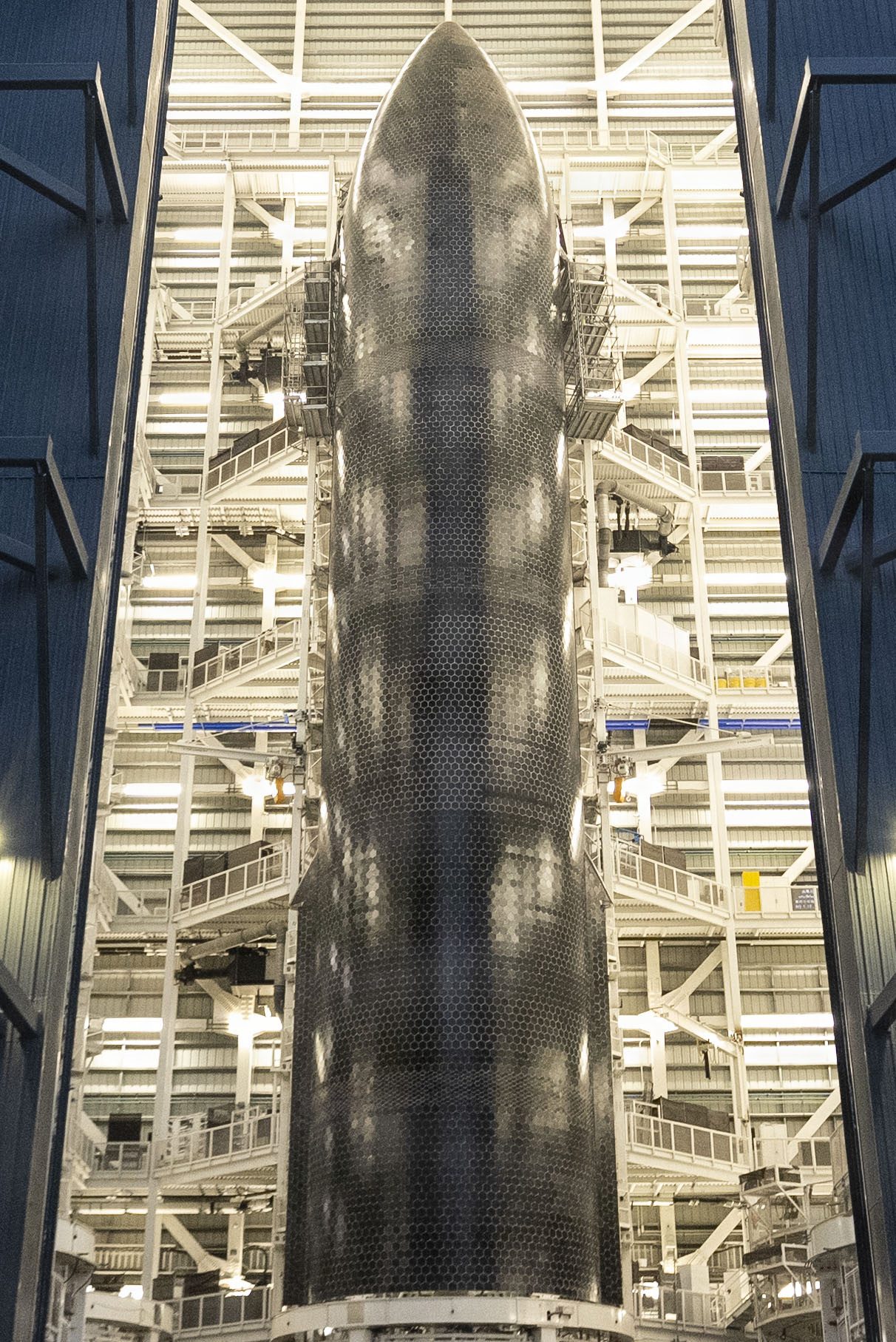
Giant mechanical arms caught SpaceX's Starship vehicle in the air above Launch Pad 2 in Texas, in the first catch of a vehicle of this kind returning from space.
The vehicle emerged from a cloudy sky on Saturday, descending slowly over Starbase before sliding between the mechanical arms known as 'chopsticks,' at the very point where its journey had begun 22 hours earlier.
SpaceX founder and CEO Elon Musk congratulated 'his amazing team,' and company officials said the catch demonstrates the vehicle's full reusability, a crucial matter for rapid, low-cost reuse.
However, the booster (first stage) exploded shortly after Friday's liftoff from Texas, so the company did not achieve the 'double catch' it had wanted. The upper stage separated smoothly from the booster before things went wrong, ascending to orbit and deploying 26 advanced Starlink satellites.
Kate Tice of SpaceX said the booster's engines shut down early during the return, and the guidance system recognized that it was not in the correct position and automatically diverted its course toward the water and self-destructed. Engineers are still investigating the cause.
Despite the failure to recover the booster, the company had previously carried out booster catches that confirmed the validity of the technology.
NASA, which is paying billions of dollars to land Artemis astronauts on the Moon later this decade, welcomed the achievement. Agency administrator Jared Isaacman said on the X platform: 'It was like magic.'
Starship completed 14 orbits of Earth at an altitude of 265 kilometers (165 miles), exceeding the one to two orbits recorded by the previous mission, and SpaceX reported that everything on the vehicle, including its heat shield, appeared to be working well.
This was Starship's fifteenth full-size flight since 2023, and only the second to orbit. The vehicle is 124 meters (407 feet) long, the largest and most powerful rocket in the world, and is intended for travel to the Moon and Mars.
SpaceX expects to begin launching Starship from the Kennedy Space Center in Florida within the next few months.
Sources — how we know this
- PrimaryAl Jazeera English