This story is currently available in англійська only — a translation isn't ready yet.
Committee headed by Popular Mobilization Forces investigates oil smuggling in Jurf al-Sakhar amid confrontation between al-Zaidi and Kataib Hezbollah
Security Media Cell denies that parties and factions are represented on the Jurf al-Sakhar committee, and a Coordination Framework official warns the confrontation has reached a dangerous point
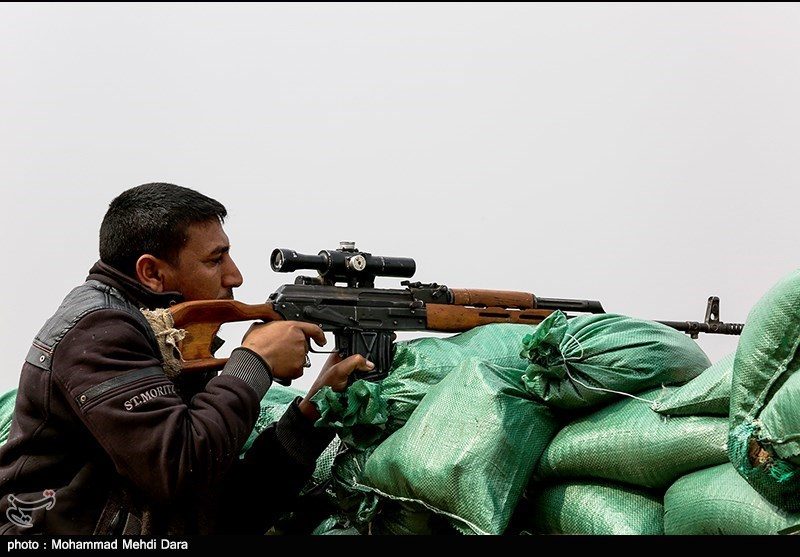
The Iraqi government sent a committee on Friday headed by the Popular Mobilization Forces to investigate accusations of oil smuggling from the Jurf al-Sakhar area south of Baghdad, in an open confrontation that has lasted two weeks between Prime Minister Ali al-Zaidi and Kataib Hezbollah.
The head of the Security Media Cell, Lt. Gen. Saad Maan, said the committee investigating the smuggling of oil products in Jurf al-Sakhar does not include representatives of political parties or of armed factions. Maan's statement did not refer to the results of the investigation.
The confrontation began after leaked intelligence reports accused Kataib Hezbollah of smuggling thousands of barrels of oil extracted from Jurf al-Sakhar, an area the group has controlled for about a decade and has prevented successive governments from entering.
An official in the ruling Coordination Framework said the investigation into the alleged oil sales represents the first government move on the ground inside the off-limits area. He added that the group's strength and influence cannot be understood in isolation from its connection to its Iranian patron, and that successive governments failed to confront it or enter Jurf al-Sakhar because of the power it derives from its close ties to Tehran.
The official noted that Iranian financial support was largely limited to the group's early years, and that the brigades have developed their own network of financial interests that may include investing in oil or stealing it, and that they receive substantial funding from the Popular Mobilization Forces through three brigades under its command. He warned that the confrontation has reached a dangerous point that raises serious concern within the Coordination Framework, and that prominent Shiite leaders are working intensively to avoid a potential clash between the government and the brigades.
Political analyst Aqeel Abbas said al-Zaidi has gone further than any of his predecessors in confronting armed factions over their weapons, and that "the decision to confront the group has already been taken," with the possibility that the nature of the confrontation could change as events develop. He added that the Coordination Framework's influence in the dispute appears to be receding, and that its traditional role as mediator between the prime minister and the factions is no longer as effective.
Abbas attributed the strengthening of al-Zaidi's position to two factors: American support at a time when Iran is suffering severe weakness and turmoil, and support from the Iraqi judiciary. He did not rule out the prime minister backing down, saying that a political agreement between the two sides is the most likely outcome because both are seeking to avoid defeat.
For his part, Ayad al-Anbar, a professor of political science at the University of Baghdad, questioned the government's campaign to bring the factions' weapons under state control, and said that "the government's strategy to bring weapons under state control remains unclear," and that the authorities are relying on short-term tactics that change with events and reactions. He added that the confrontation and the broader disarmament file have turned into political maneuvering and shows of force instead of a serious discussion of a fundamental problem, and asked: "In a country of political fiefdoms, why don't those who hold weapons seek to become security fiefdoms?"
Kataib Hezbollah was founded after the U.S. invasion of Iraq in 2003 by Abu Mahdi al-Muhandis, who was killed in a U.S. strike near Baghdad International Airport in early 2020 alongside Qasem Soleimani, commander of the Quds Force of the Iranian Revolutionary Guard.
Sources — how we know this
- PrimaryAsharq Al-Awsat (EN)
Energy Portfolio
Check your broker for the latest on energy stocks.
View Now →