This story is currently available in англійська only — a translation isn't ready yet.
Netanyahu Renews Unity Government Offer to Eisenkot, Who Calls It a 'Trick'
The Israeli prime minister says a unity government with Yeshar is necessary to 'remove the Iranian threat,' while Eisenkot links any cooperation to his position on the Knesset speakership
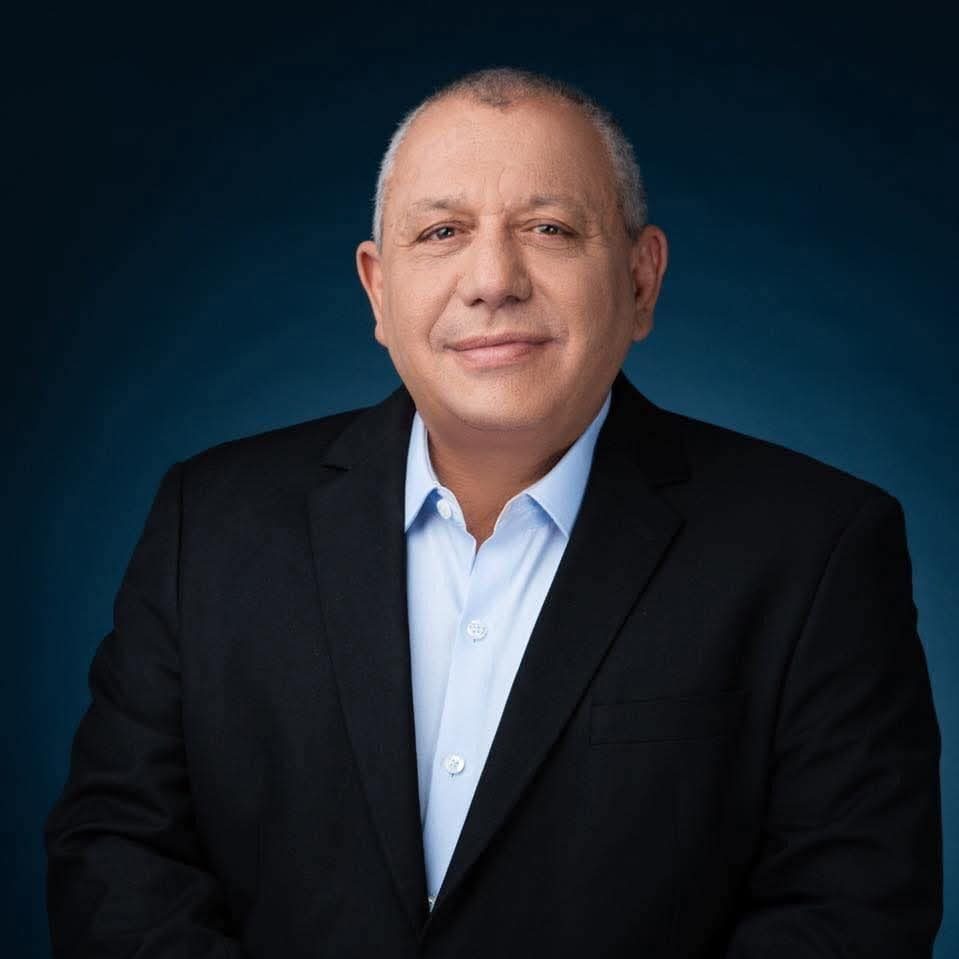
Israeli Prime Minister Benjamin Netanyahu renewed, in a video statement on Saturday, his call to opposition leader Gadi Eisenkot to form a unity government, describing the step as part of Israeli national security. He said his meeting with Eisenkot on Thursday "only reinforced the conviction that forming a national unity government is essential," adding that such a government could "remove the Iranian threat once and for all," and claimed that Tehran "will not hesitate to use nuclear weapons against us."
Eisenkot, leader of the Yeshar party, whom President Isaac Herzog gave the first opportunity to form the next government, responded to the offer by saying: "A nice try, but these tricks do not work with me, nor with the citizens of Israel." At the same time, he confirmed that Yeshar and the Likud party are talking about a proposed joint government.
In the October 27 elections, the four-party bloc led by Eisenkot won 48 seats out of 120 in the Knesset, against 53 seats for Netanyahu's right-wing and religious bloc, while the two Palestinian lists, the Joint List and Ra'am, took 19 seats, a record number.
With the support of the two lists, Eisenkot's bloc succeeded last week in passing the composition of the Arrangements Committee by a majority of 63 votes to 50, then moved to form temporary committees for finance, foreign affairs and defense. His bloc, together with the two Arab lists, holds 67 seats, six more than an absolute majority. There is another scenario: a minority government backed by Ra'am's eight lawmakers, which would give Eisenkot 56 votes against 53 for Netanyahu if the Joint List (11 lawmakers) abstains in the confidence vote.
However, convincing Eisenkot's allies is harder: Yair Golan, leader of the Democrats, is open to working with the two lists, while Avigdor Lieberman (Yisrael Beiteinu) and Naftali Bennett (Together) reject an alliance with the Palestinians, even though both served in the 2021 government in which Ra'am formally joined a ruling coalition.
Yasser Manna, a researcher at the Jerusalem Center for Studies of Israeli Affairs, said that "one of the main difficulties facing Eisenkot is the opposition of Avigdor Lieberman and Naftali Bennett to relying on the Arab parties," adding that this "increases the importance of negotiating with the ultra-Orthodox parties," although it restricts his options and does not automatically make a unity government with Netanyahu more likely.
The most likely scenario according to experts is a coalition between Eisenkot's bloc and the two ultra-Orthodox parties in Netanyahu's bloc, Shas and Yahadut HaTorah, which would raise his bloc to 61 seats. Reports said that advisers in one of the two factions of Yahadut HaTorah demanded a written commitment from the 48 lawmakers of Eisenkot's bloc to pass a law exempting yeshiva students from military service and shielding it from Supreme Court annulment, which Eisenkot and Lieberman oppose.
Herzog gave Eisenkot a deadline until December 6, extendable by a maximum of 14 days, that is until December 20. Eisenkot kept the door open to members of Likud and the Religious Zionism party led by Finance Minister Bezalel Smotrich, on condition that they support a government he leads and accept his program, saying that if Likud and Religious Zionism members truly believe that this is a time for unity, as they told the president, "then I cannot imagine any reason that would prevent them from supporting a government under my leadership" and with the principles I presented.
Daniel Levy, the former Israeli negotiator and president of the American Middle East Project, said that "the coalition formation period is about propaganda, distortion and trying to gain influence."
An early test comes on Tuesday, when Eisenkot's allies intend to replace Knesset Speaker Amir Ohana of Likud with Yeshar lawmaker Matan Kahana, and Eisenkot has challenged Netanyahu and Smotrich to back Kahana and allow the vote to be held on its scheduled date.
Eisenkot commanded the Israeli army between 2015 and 2019, and served as an observer in Netanyahu's war cabinet during the first eight months of the war on Gaza, before leaving the emergency government in June 2024. Manna said the relationship between the two men "is marked by a deep crisis of trust that goes beyond political rivalry." Even if they agree on a government program, the question remains: who leads it.
Sources — how we know this
- PrimaryAl Jazeera English