This story is currently available in Englisch only — a translation isn't ready yet.
Brent at $101.51 Tells You Everything About How This Crisis Is Being Managed
Oil is falling into a war scare, the Gulf is lobbying Washington against escalation, and the UAE is quietly building around the Strait of Hormuz. The numbers explain why.
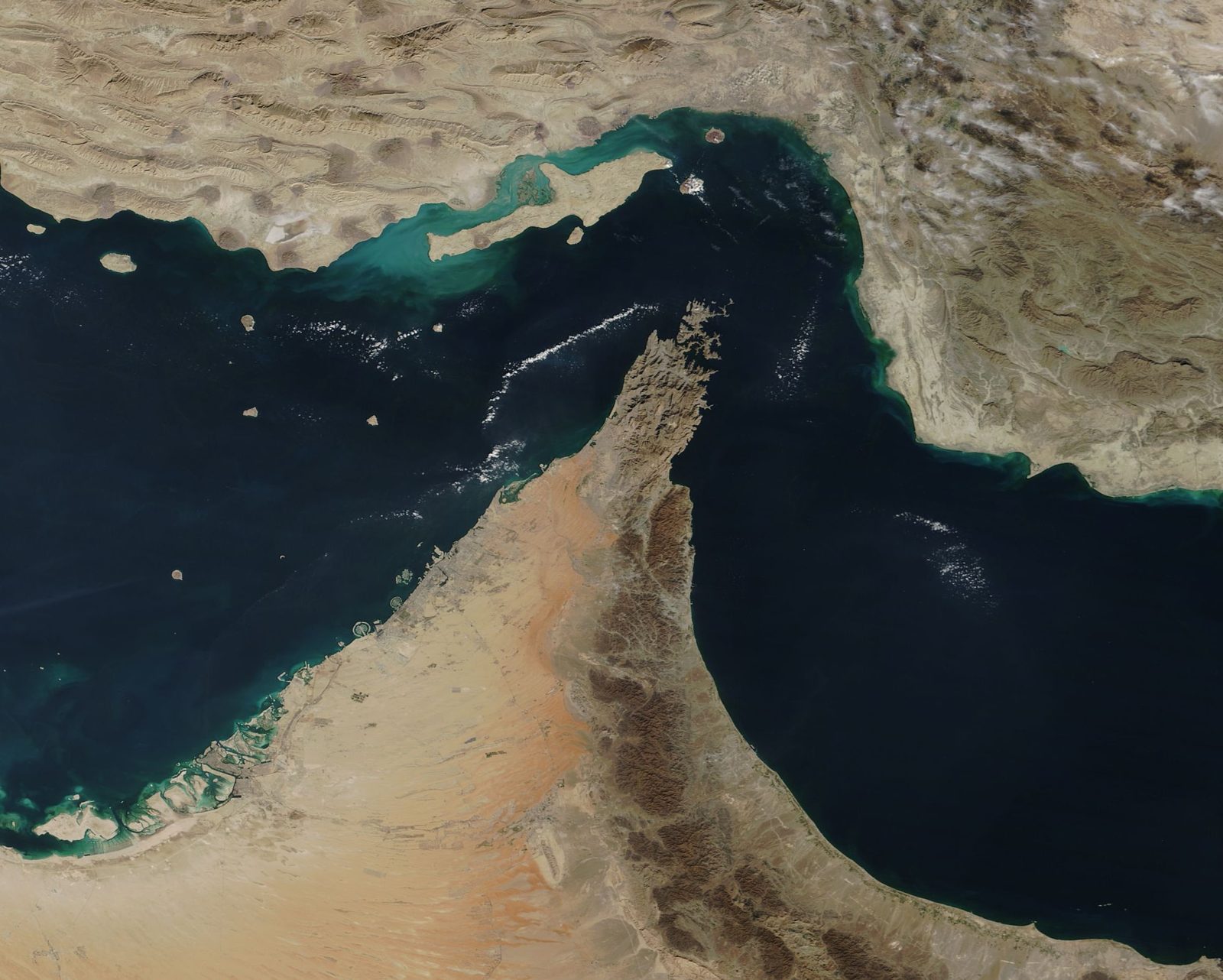
Brent crude closed Friday at $101.51, down 2.98% on the day. WTI followed it lower to $94.89. That is the single most important data point of the week — not because of where the price is, but because of which direction it moved.
We are, by most accounts, in the middle of an active US-Iran confrontation serious enough that Qatar has dispatched a negotiating team to Tehran in coordination with Washington, and serious enough that the UAE has joined Saudi Arabia and Qatar in urging the Trump administration not to restart the war. And yet oil fell three dollars.
Markets are not panicking. That tells you something.
Let me unpack what, exactly.
The instinctive reading of a Gulf crisis is the 1990 reading: tankers at risk, Strait of Hormuz exposure, a war premium of fifteen to twenty dollars baked into the barrel within hours. That is not what we are seeing. Brent above $100 is elevated by the standards of the last two years, but the move this week was downward, and it happened against a backdrop of headlines that, in a different decade, would have sent the tape vertical.
Three things explain the calm. None of them are reassuring if you look closely.
The first is supply redundancy. US weekly crude production printed at 13.702 million barrels per day for the week ending May 15. That is a structural number, not a cyclical one. The American shale complex has effectively become the world's swing supplier of last resort, and traders know it. A disruption in the Gulf in 2026 does not mean what a disruption in the Gulf meant in 2006.
The second is the pipeline story, which deserves more attention than it has received. The UAE confirmed this week that its new pipeline designed to bypass the Strait of Hormuz is nearly 50% complete. Read that sentence twice. The Emiratis are not hedging against a theoretical closure of Hormuz; they are building infrastructure on the assumption that the strait is, over a long enough horizon, an unreliable artery. A presidential adviser also went on the record explaining that the UAE left OPEC quotas behind to pump more because the end of the oil era is now a planning assumption inside Abu Dhabi.
The third is diplomatic. The same Gulf capitals that markets traditionally treated as flashpoints are now functioning as de-escalators. Qatar in Tehran. Saudi Arabia and the UAE pressing Washington. This is the inversion of the 2019 script, when the Gulf was where escalation happened to you. In 2026, the Gulf is where escalation gets talked down.
Now let me get to what this means for the people I write for.
If you are sitting in Riyadh, Dubai, or Doha, the immediate read on $101 Brent is that fiscal breakeven math still works. Saudi Arabia's budget arithmetic has tightened considerably as Vision 2030 capital expenditure has scaled, and the kingdom is now, according to reports from the Financial Times and Semafor this week, freezing new work for consultants and halting some consultancy payments altogether. That is a meaningful signal. When a government that has spent the better part of a decade as the single largest client of McKinsey, BCG, Bain, and the Big Four collectively pulls the handbrake on advisory spend, it is telling you that the marginal riyal is being counted in a way it was not eighteen months ago.
War, in other words, is expensive even when you are not fighting it. Regional risk premiums tighten access to capital. Insurance costs rise. Project finance gets repriced. And when your own fiscal model assumed Brent comfortably above $90 and a smooth glide path on giga-project execution, a year of geopolitical turbulence forces choices.
The consultancy freeze is the canary. It is the easiest cut to make — discretionary, externalised, with no domestic political cost. If the pressure continues, the next cuts get harder.
Meanwhile, the riyal sits at 3.7500 to the dollar and the dirham at 3.6725. The pegs are doing their job. They always do, until they suddenly don't, and there is no serious analyst I respect who thinks we are anywhere near the latter scenario. SAMA and the CBUAE have reserves, discipline, and decades of credibility. But the cost of defending a peg in a high-rate, high-volatility environment is real, and it shows up as tighter domestic liquidity, which shows up as slower mortgage approvals, slower SME credit, slower everything that ordinary people experience as the economy.
The Tadawul, for its part, closed Thursday at 11,027.54, up a quarter of a percent. The index has been remarkably range-bound through this entire episode. Saudi equities are increasingly a domestic story — driven by domestic liquidity, domestic IPO pipelines, and domestic retail participation — and that insulation is showing.
Now turn north.
The ruble traded at 71.55 against the dollar, weakening slightly. Russia's economy has been operating under a wartime fiscal regime for so long that the marginal Gulf headline barely registers in Moscow's pricing. What does register is oil. Every dollar off Brent is a dollar off Urals, give or take a discount, and a Russian budget that has spent two years assuming higher prices is now navigating a softer environment with depleted rainy-day reserves. The CIS economies that orbit Russia — Kazakhstan, Uzbekistan, the Caucasus — feel this through remittance channels and trade flows long before it shows up in headline GDP.
And then there is gold, at $4,526.67 per ounce, down a fraction on the day but sitting at altitudes that would have been unthinkable three years ago. Gold is the asset that disagrees with the oil tape. The bond market and the equity market and the crude curve are all telling you that this crisis will be managed. Gold is telling you that even if it is managed, the architecture of the post-war global financial system is being rewired in ways that make central banks want more bullion and fewer Treasuries.
Both things can be true at once. They usually are.
So what is the forensic conclusion?
The most consequential story of this week is not any single headline. It is the pattern. Oil falling into a confrontation. The UAE building physical infrastructure that prices in long-run Hormuz risk. Saudi Arabia tightening discretionary spend even with Brent above $100. Qatar functioning as the region's diplomatic switchboard. Gold quietly compounding. The ruble drifting.
What you are watching is the Gulf transitioning, in real time, from a region whose economic model depended on geopolitical stability to a region whose economic model assumes geopolitical instability as the baseline and builds around it. The pipeline gets built. The sovereign wealth funds diversify. The consultancy contracts get cut. The diplomacy gets professionalised. The pegs hold.
This is not the Gulf of 1990, or 2003, or 2019. This is a more mature, more cynical, more operationally competent version of the same neighbourhood — and it is being tested.
The question I am sitting with this weekend is whether the calm in the oil price reflects genuine confidence in de-escalation, or whether it reflects something more uncomfortable: a market that has simply stopped pricing Gulf war risk because it has seen too many cycles of escalation that resolved without the worst-case outcome. The first interpretation is rational. The second is complacency. We will find out which it was, and probably sooner than anyone in Abu Dhabi or Riyadh would like.