This story is currently available in Englisch only — a translation isn't ready yet.
Fourth-Thousand-Six-Hundredth Name, Three-Hundred-Billion Question
Luxembourg adopts the longest sanctions list in EU history on the same day Kyiv asks why the frozen reserves still sit at Euroclear. The two tracks have not met.

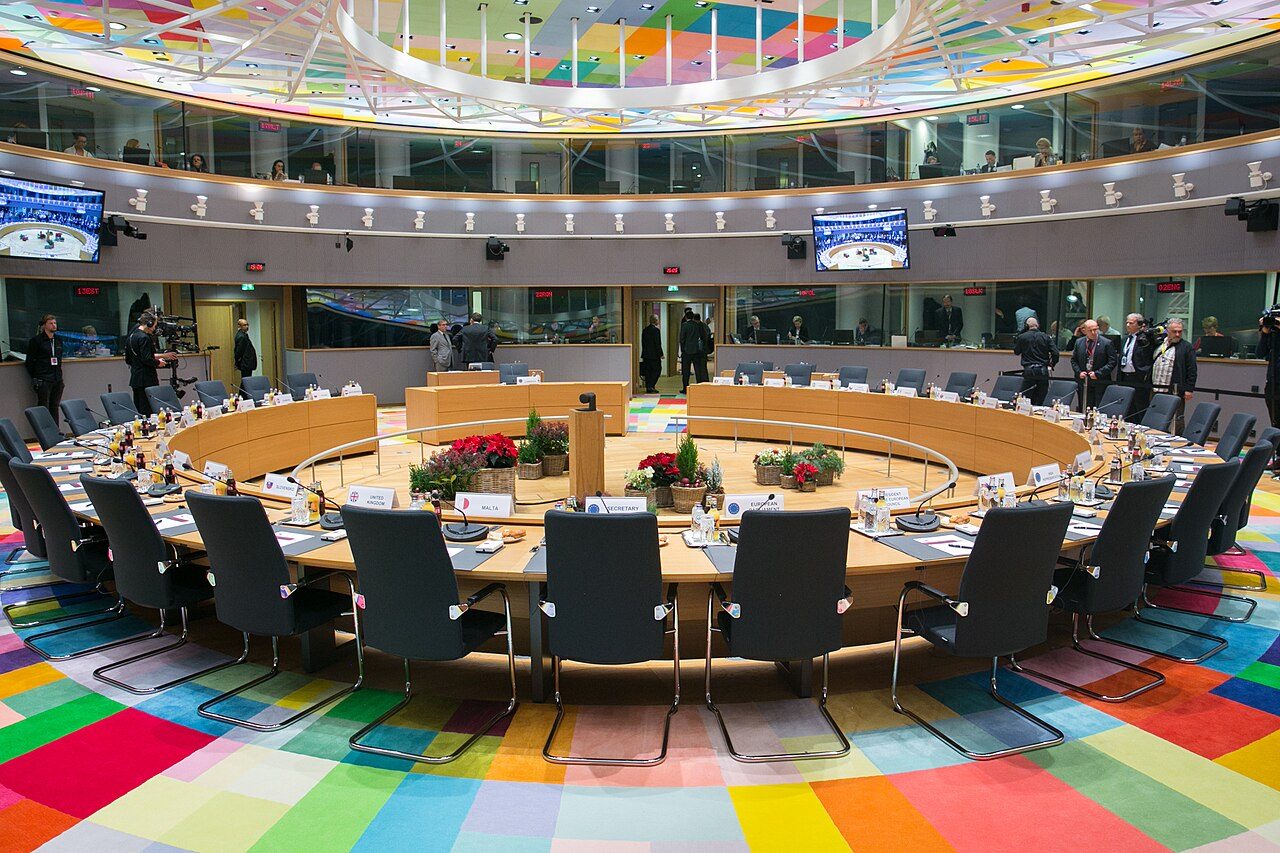
The Council Resolution published in the Official Journal this morning is, on paper, an administrative act: 826 companies and 743 individuals added to the special designations list over Russia, bringing the total to roughly 4,700 names. Assets frozen within the Union. Travel bans across twenty-seven member states. European citizens and companies barred from making funds available to any person on the schedule. The language is the language of every package since 2022; only the quantities have grown.
The High Representative chose a sharper framing. Over half of the newly listed entities, Kaja Kallas told the press as foreign ministers met in Luxembourg, 'address the production chain for the ballistic missiles Russia uses to kill Ukrainian civilians every day.' The EU values that production chain at a quarter-million employees and at least €20 billion in annual turnover. Germany's foreign minister, Johann Wadephul, speaking from Berlin rather than Luxembourg because of a party conference, called it an 'unprecedented sanction blow.'
It is worth pausing on who wrote this particular compromise. The twenty-second package is a listing exercise, not a structural one — which is why it moved. Listings are the path of least resistance in the Council: every capital can agree that the chief executive of an armour repair plant deserves an asset freeze. The hard files — a price cap revision, a tanker-fleet enforcement mechanism, a secondary sanctions regime that would bite third-country intermediaries — are not in this text. They were not in it because they would not have cleared the room. The package that gets adopted is the package every delegation can sign before lunch.
And then, hours after the ink dried, Ukraine's foreign minister Andrii Sybiha published an opinion piece asking the one question the Council did not answer. Why, Sybiha wrote, should European taxpayers continue to carry the financial weight of Ukraine's defence when roughly €210 billion of Russian central bank reserves sit immobilised at a Belgian depository? His argument is explicitly electoral: with French and Italian votes approaching in 2027, and with figures on both political extremes campaigning against Ukraine aid, the longer Brussels pays and Moscow's money sleeps, the more the war looks, to a sceptical voter, like a European subsidy rather than a Russian debt.
The gap between the two Monday events is the entire story of EU coercive economic policy right now. Listing a shipyard chief executive is a decision one working group makes in an afternoon. Converting €210 billion in immobilised sovereign reserves into a loan facility for Kyiv is a decision Belgium — backed last year by Italy — has already refused once, citing legal exposure, Euroclear's balance-sheet risk, and the fear that Russian retaliation would fall first on the depository that happens to sit in Brussels. Sweden, the Netherlands, Poland and Spain pushed again over the summer. The Commission has drafted. The Council has not disposed.
Enforcement is where the twenty-second package will be judged, and here the honest answer is modest. Asset freezes work on assets that are in the Union; the Russian defence industrial base learned long ago to route procurement through jurisdictions where a Council Resolution has no operative effect. The semiconductors keep arriving. The components keep arriving. Every package since the twelfth has included tighter language on circumvention, and every package since the twelfth has been followed by trade data suggesting the circumvention continues through a familiar set of third countries. A listing regime without a secondary sanctions tool is a regime that depends on the goodwill of jurisdictions that have declined to provide it.
For Gulf compliance departments, the transmission is now routine. Any bank, trading house or logistics operator with EU exposure will spend this week running the 1,569 newly designated names (826 companies plus 743 individuals) against client books, correspondent relationships and vessel manifests. The extraterritorial reach of the EU regime does not come from the text — the text binds only Union persons — but from the fact that no serious financial institution in Dubai, Riyadh or Manama can afford to be the counterparty that moved funds to a newly listed Russian armour plant. That is the quiet achievement of the listing method, and it is also its ceiling: it shapes behaviour at the perimeter without touching the €210 billion sitting at the centre.
The Council adopted the longest list in its history today. It also, by not acting on the reserves, confirmed that length is still the easier currency than depth. Sybiha's op-ed is addressed to voters in Paris and Rome. It should be read in Brussels as a reminder that the political cost of the gap is now being counted, and not by the people who closed the file at lunchtime in Luxembourg.