This story is currently available in Englisch only — a translation isn't ready yet.
The Diesel Exemption: When Washington Lifts and Berlin Does Not Follow
Trump's temporary waiver on Russian diesel exposes a sanctions architecture the EU built on the assumption that the two shores would move together.

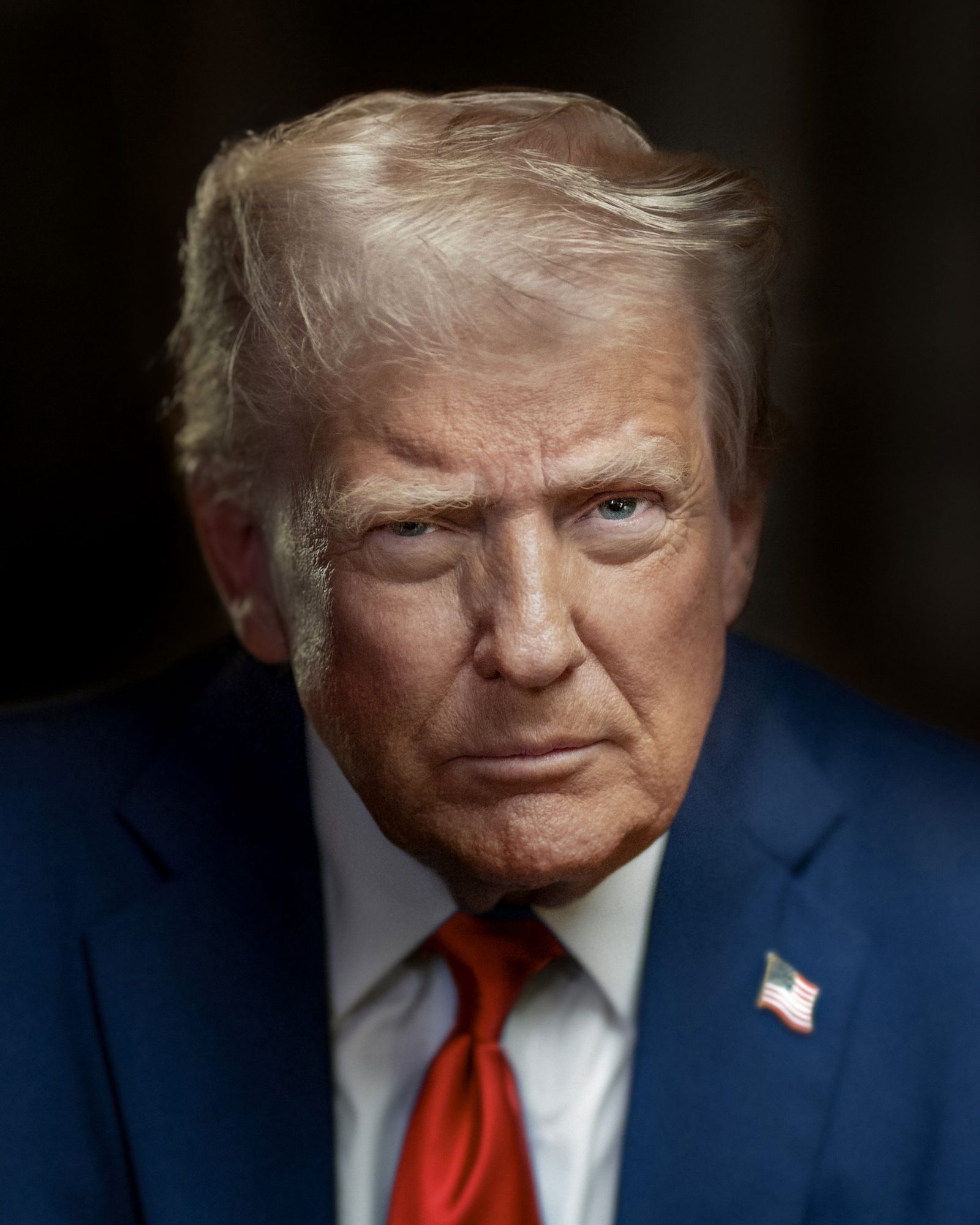
The operative sentence came, as these things do, from a government spokesperson in Berlin on Saturday morning. The federal government, Stefan Kornelius said, remains committed to the decisions on sanctions against Russia and is working with its European partners on further sanctions. Twenty-four hours earlier, the President of the United States had announced that his administration was temporarily lifting American sanctions on Russian fuel to secure a release of diesel onto global markets ahead of a November congressional vote.
Two sovereigns, one architecture, opposite directions. This is the development worth lingering over.
Sanctions regimes are legal instruments, but their deterrent weight is political. The EU embargo on Russian seaborne diesel entered into force on 5 February 2023; it remains in force; the German fuel and energy association pointed out, correctly, that it does not expect a measurable price effect at German pumps from Washington's waiver. That is the technical answer. The political answer is more awkward. The sanctions architecture against Russia was designed in 2022 as a joint transatlantic structure, with the G7 price cap as its load-bearing beam. Each capital held up its section on the understanding that the others would hold up theirs. When one capital lowers its section unilaterally, the beam does not fall, but every engineer in the building begins to recalculate.
The High Representative, Kaja Kallas, wrote on Saturday that suspending sanctions on Russian diesel provides Moscow with more revenues to wage war, and that this is not the time to ease pressure on Russia, and Europe won't. Note the construction. It is a message addressed less to Moscow than to Washington, in the register one reserves for an ally one still needs. The European Commission, separately, called for a ceasefire covering energy infrastructure in both Ukraine and Russia, and reminded readers that Europe knows too well the hidden costs linked to over reliance on Russian hydrocarbons. Two statements, one message: we are not following you on this.
On Monday, EU foreign ministers meet to formally add roughly 1,600 new individuals and entities to the Union's Russia blacklist. The timing is not coincidental. A listing round that would, in a quieter week, read as procedural housekeeping now becomes a demonstrative act — proof that European sanctions machinery operates on its own cadence, independent of the White House news cycle.
Who wrote this compromise, inside the EU? The 19th package has been shaped primarily by the Baltic states, Poland and the Nordics, with Berlin as the indispensable guarantor on the industrial-exposure questions and Paris pushing hard on the shadow fleet. Hungary and Slovakia have, as usual, extracted their carve-outs. What is new is the degree to which the Commission's enforcement arm — the sanctions coordinator's office — has started treating circumvention through third-country jurisdictions as the main battlefield rather than a secondary file. The diesel waiver complicates that work in a very specific way: enforcement officers in Brussels now have to explain to counterparts in Dubai, Istanbul and Mumbai why a Russian cargo they are being asked to interdict under European rules is, at the same moment, being welcomed under American ones.
Which brings us to the transmission question. Gulf trading houses, refiners and shipping registries have spent eighteen months building compliance workflows calibrated to the stricter of the two regimes, on the sensible assumption that the stricter regime would remain American. That assumption no longer holds. A trading desk in the DIFC that structured its Russian-origin diesel flows around OFAC's thresholds now has to re-engineer around the EU's — and around the possibility that the two will diverge further rather than reconverge. The compliance cost of divergence is real; the political cost of being caught on the wrong side of a European listing round is realer.
Separately, officials are finalising a visa package that would tighten Schengen access for Russian tourists, with a Commission proposal expected in January after sustained pressure from Warsaw, Stockholm and Tallinn. Some 478,000 Schengen tourist visas were issued to Russian citizens last year, a figure the Swedish Justice Minister has described as an obvious vulnerability. The file is distinct from diesel, but it belongs to the same conversation: a Union increasingly building its Russia policy on the assumption that it will have to carry the architecture alone.
The diesel waiver is temporary; the midterms are in three weeks; the pause may well lapse quietly. What will not lapse is the lesson European capitals have now been taught twice in a year. The transatlantic sanctions building has one engineer in Washington who reserves the right to remove a beam when domestic fuel prices require it. The engineers in Berlin, Paris and Brussels have taken note. They are, politely, drawing up their own plans.
Energy Portfolio
Check your broker for the latest on energy stocks.
View Now →