This story is currently available in Englisch only — a translation isn't ready yet.
Indian Spices Under the Microscope: What the Global Food Flags Mean for Your Kitchen
European inspectors, Japanese ports, Chinese borders — Indian farm exports are getting turned away. Here is what the science says about why it matters at your table.

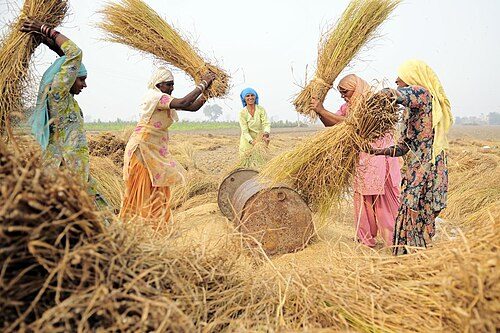
The headline circulating this week is a strange one if you are not used to watching food-safety corridors: Tokyo is turning back mangoes, Beijing has blocked rice shipments, and European inspectors are raising concerns about Indian spices. If your instinct is to shrug — it sounds like trade politics — I want to gently push back. Because what is happening at those borders is actually a useful lens for something most of us navigate every single week: how do you trust what is in the food you are buying, especially when your kitchen relies heavily on spices, rice, and fresh produce sourced from South Asia?
Let us start with what the evidence actually says about spice contamination risk, because this conversation gets muddy fast.
Spices are among the most complex foods to regulate. They are dried, often handled multiple times across long supply chains, and their very concentration — the thing that makes them aromatic and potent — also means that anything unwanted in them arrives concentrated too. Pesticide residue studies in peer-reviewed literature consistently show that dried spices carry detectable residues at rates higher than fresh produce, simply because drying reduces water weight while retaining fat-soluble compounds. The European Food Safety Authority has, over several years, flagged residues in cumin, coriander, and chilli at levels that in some cases exceed maximum residue limits. The effect size here is not trivial: certain studies suggest that in high-consumption households — and that includes a significant portion of South Asian families in the GCC and Europe — spice-derived pesticide exposure can represent a meaningful share of total dietary pesticide load.
This is not a reason to panic. It is a reason to be informed.
For those of us who cook with turmeric daily, add cumin to everything from eggs to lentils, and consider a good biryani masala a near-sacred household object, this matters practically. The Islamic tradition of tayyib — of food being wholesome and pure, not merely halal in the ritual sense — is actually a useful frame here regardless of whether you come to it religiously or not. Tayyib asks us to consider the full journey of what we consume. That is not piety for piety's sake; it is, as it turns out, decent food-systems thinking.
So what can you actually do today, without overhauling your pantry or spending more money you do not have?
The single most evidence-supported habit for reducing pesticide exposure from spices is also the simplest: buy whole and grind yourself when you can. The reasoning is mechanical, not mystical. Pre-ground spices have a larger surface area exposed to air, meaning any residue is more bioavailable, and they also pass through more processing steps where cross-contamination can occur. A small grinder — or even a mortar and pestle for softer spices like cardamom — gives you more control and, honestly, better flavour. You do not need to do this for everything. Pick your two highest-volume spices and start there.
A second practical move: rotation and sourcing transparency. Markets in Dubai, Sharjah, and across the GCC are increasingly stocking spices with country-of-origin labelling and, in some cases, batch certification. It is worth asking, even if the answer is not always forthcoming. Buying from suppliers who can tell you where the spice was grown is a low-cost due-diligence step that costs only a question.
On the rice question — particularly relevant given Ramadan meal planning and everyday GCC consumption — the concern tends to centre on heavy metal accumulation, particularly arsenic, which rice absorbs from soil and water more readily than most grains. Rinsing rice thoroughly before cooking (not just a quick splash — we mean three to four rinses until the water runs mostly clear) reduces surface starch and some water-soluble contaminants. Cooking in excess water and draining, rather than absorption cooking, reduces arsenic content measurably in laboratory settings — some studies cite reductions of around 40 to 60 percent, though the range is wide depending on rice variety and origin.
None of this means Indian food is dangerous, or that you should stop buying these products. The vast majority of what reaches your kitchen is within safe thresholds. What the current wave of international scrutiny signals is that global food safety standards are tightening — and that is, on balance, a good thing for consumers everywhere, including in the countries of origin.
What it also signals is that the regulatory gap between what is permitted in a source country and what is accepted at destination borders remains significant. Indian agricultural authorities and farming communities are, by all accounts, navigating this with real difficulty — the economics of switching pest-management practices are not trivial for smallholder farmers. That complexity deserves acknowledgment, not a simplistic 'just buy organic' instruction from a wellness column.
Your practical test for this week: take your most-used spice, check whether you have a whole or ground version, and if ground, see whether you can find it whole at your next shop. Spend one week using freshly ground. Notice whether you use less — because the flavour is more present — and file that observation away. Less volume from a cleaner source is often better than more volume from an uncertain one.
The borders are sending a signal. Your kitchen can quietly respond to it, one jar at a time.