This story is currently available in Englisch only — a translation isn't ready yet.
Macron in the Gulf, Alone: What Bilateral Fuel Diplomacy Costs the Union
The French president's tour secures diesel and defence talk from Doha to Manama. It also quietly concedes that there is no European Gulf policy to speak of.

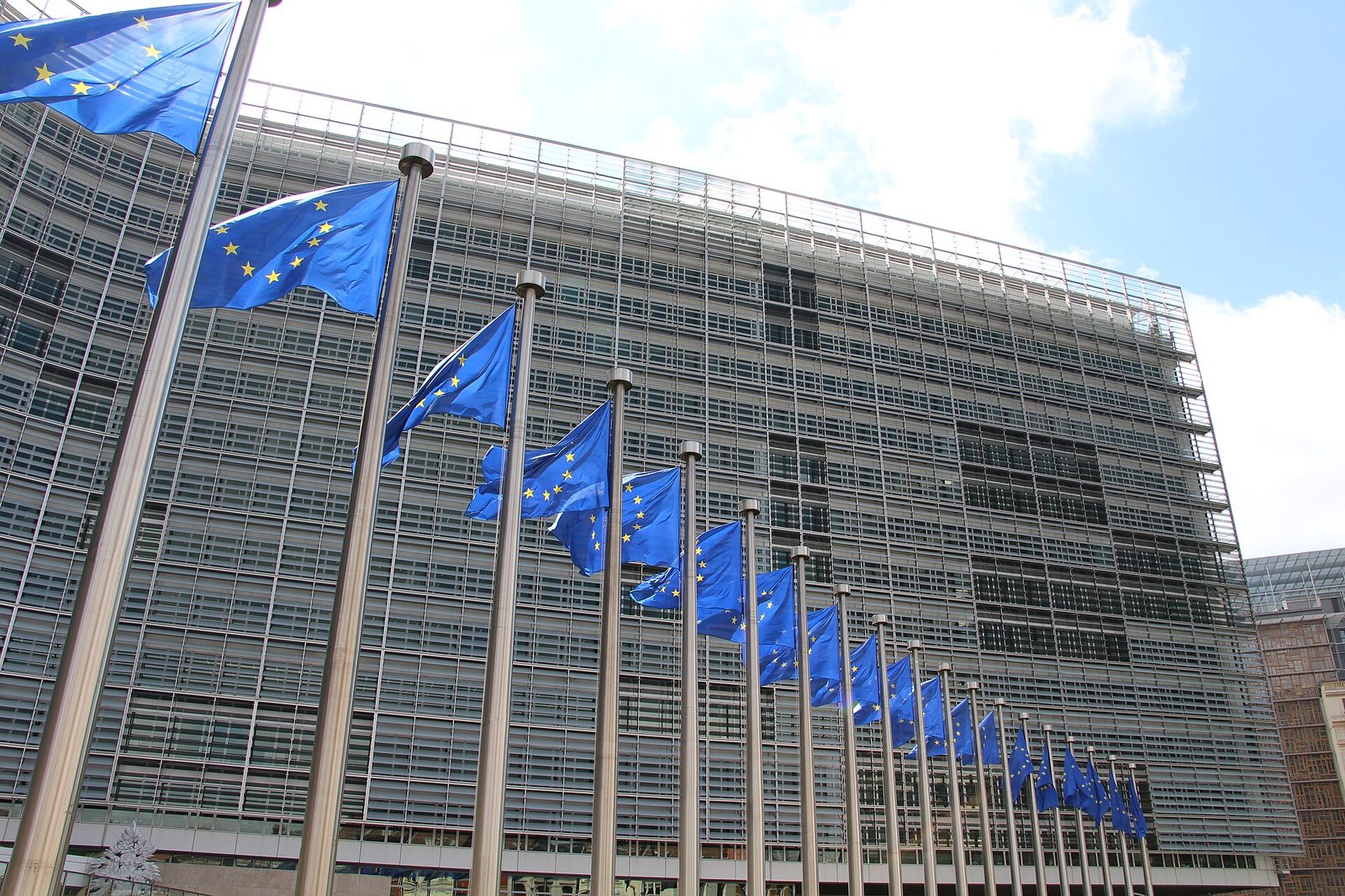
The French presidency's communiqué from this week's Gulf tour is admirably precise: 100,000 tonnes of diesel per month from the United Arab Emirates, 100,000 from Bahrain, and, with Saudi commitments included, a total of 295,000 tonnes per month — just over 10% of French consumption. The Élysée gave the figure in tonnes, which tells you who the audience is. Tonnes are what a hauliers' federation understands. Barrels are what a Commission energy desk understands. The grammar of this trip is national.
Emmanuel Macron landed in Doha on Tuesday, after Abu Dhabi, Kuwait City and Manama, with the chief executive of TotalEnergies in his delegation. The sequencing is the policy. A head of state travels; a national oil major travels with him; a national fuel-price crisis at home travels in the diplomatic pouch. Qatar's foreign ministry described France as « a friend and ally » and confirmed a strategic dialogue covering energy, investment and defence. The 2024 pledge of €10 billion in Qatari investment across energy transition, AI, aerospace and healthcare sits in the background as the deposit against which this week's conversations draw.
All of which is lawful, useful, and — from the perspective of anyone who has spent a decade reading EU external-action strategy papers — a quiet verdict on their enforcement.
The Union has, on paper, a Strategic Partnership with the Gulf. It has an energy platform designed, after 2022, to aggregate demand so that no single member state would again find itself bidding against its neighbours for molecules. It has a Critical Raw Materials Act whose entire premise is that twenty-seven buyers acting in concert extract better terms than one buyer acting alone. It has an EU-GCC cooperation track that was supposed to graduate from annual communiqués into something resembling a joint procurement muscle.
My reading is that this week retired that ambition without a vote. When domestic protest over fuel prices reaches the Élysée courtyard, the aggregation platform in Brussels is not where a French president goes. He goes to Hamad International, where the honour guard is fighter jets.
Trace the compromise, because there is one, even if it was never trilogued. Berlin has spent two years insisting on joint gas purchasing as a matter of Union discipline. Paris, this week, has demonstrated that discipline is for ordinary months. The Commission's energy platform retains its mandate; what it loses is the political claim that bilateral deals are a thing of the pre-2022 past. The next time a southern member state cuts its own supply arrangement with Algiers or Baku, the precedent cited will not be stated, but it will be this one.
For the Gulf capitals, the lesson is more useful still. The transmission belt between EU regulation and Gulf boardrooms — the one that runs through the Digital Markets Act, the AI Act, the Carbon Border Adjustment Mechanism — depends on the Union negotiating as a bloc. When the largest continental member arrives alone, with a national champion in tow, Riyadh and Doha learn that the bloc can be disaggregated when the price is right. That knowledge does not stay in the energy file. It migrates into every subsequent conversation about data flows, sovereign AI compute, and the extraterritorial reach of European rules on Gulf-owned platforms. A compliance officer in Lyon preparing her CBAM declarations next quarter will not feel the shift. A sovereign wealth fund lawyer in Abu Dhabi reviewing a European acquisition will.
The security backdrop sharpens the point. Qatar's intelligence chief told a Doha forum this week that his country redeployed its entire defensive architecture in six hours during the Iran war, and that France was among its principal defenders, « securing the Gulf country's air defence with fighter jets and other capabilities ». The IRGC, meanwhile, announced it had mined two tankers in the Strait of Hormuz. The United Kingdom is dispatching fighter jets to protect Saudi Arabia from Houthi attacks. The security market in the Gulf is open, bilateral, and transactional. Paris has read the room correctly. Brussels is still drafting the invitation.
There is no scandal in Macron's tour. There is only the quiet arithmetic by which a Union of twenty-seven becomes, in the files that matter most, a Union of whoever shows up. The Commission will issue a readout. Member states will nod. The 295,000 tonnes will arrive in French ports. And the next External Action Service white paper on Gulf strategy will be read by its authors, by their interns, and by the Qatari delegation that already knows which number in it is binding and which is decorative.