This story is currently available in Englisch only — a translation isn't ready yet.
Istanbul, Hormuz and the Instruments the Union No Longer Holds
Eight ministers meet in Istanbul to warn against a second round of the Iran war. The warning is sincere. The leverage behind it is thinner than any communiqué will admit.

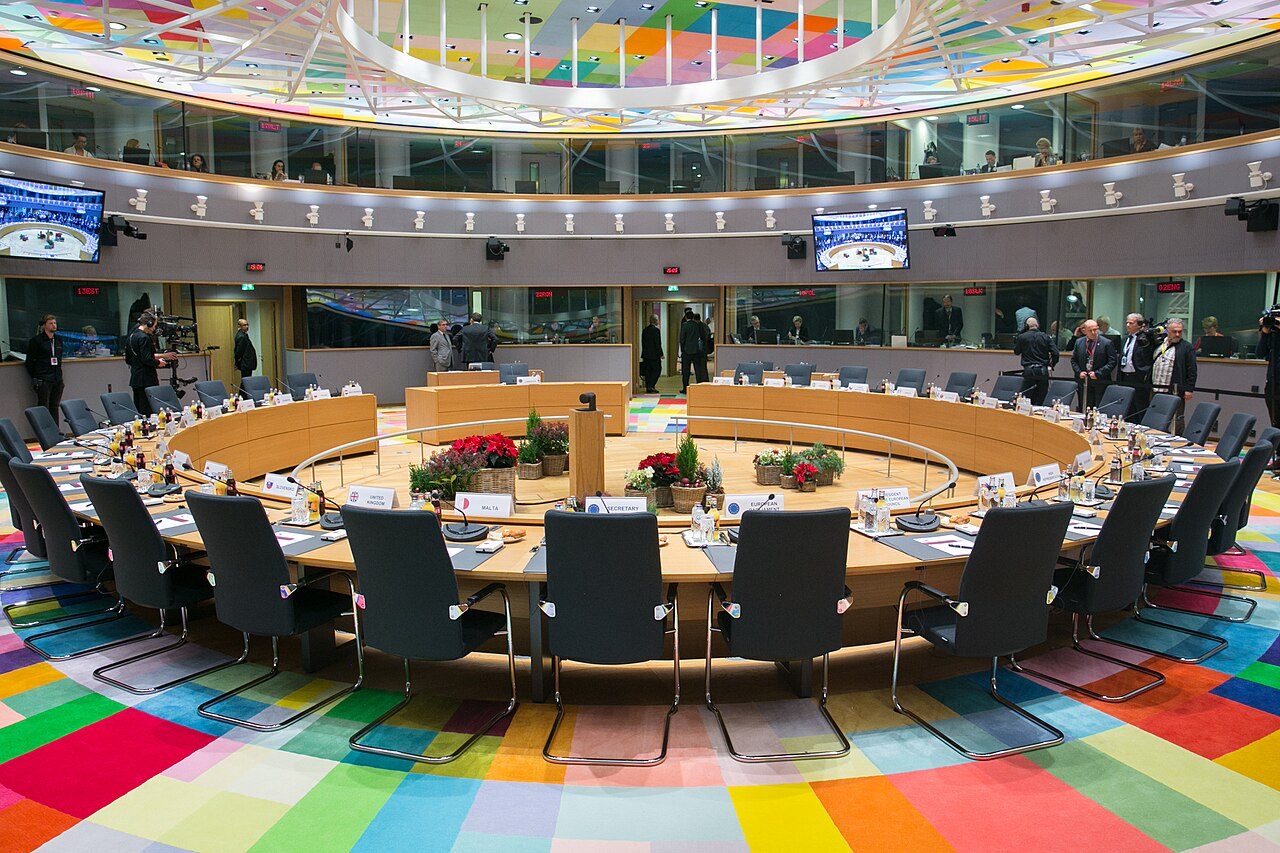
On Friday the foreign ministers of France, Germany, Italy and the United Kingdom sat down in Istanbul with counterparts from Turkey, Saudi Arabia, Pakistan and Egypt. The subject was the Strait of Hormuz, the war that reopened in late February, and the possibility of a second American-Israeli campaign against Iran. The French foreign minister chose the operative sentence: further escalation 'would create nothing but losers and would undoubtedly have very serious consequences for hydrocarbon prices.'
Read that sentence twice. It is the register of a government that has concluded the war is bad for its people and has also concluded it cannot stop it. The verb is 'call on'. The instrument is 'restraint'. The addressee is Washington, by way of Tehran.
My reading is that Istanbul marks the moment the Union stopped pretending the Iran file is a diplomatic question and admitted it is a cost-of-living question. The recent Israeli campaign, which the German chancellor described as work being done 'for all of us', has become something European capitals are explicitly asking not to be repeated. The reason is not a change of heart about Iran's nuclear programme. The reason is that heating bills in Lyon, Dortmund and Milan are now a function of what the Fifth Fleet does in the Gulf, and the governments that will be judged for those bills are the ones that no longer sit in the room where the decision is made.
It is worth being precise about what Europe has actually surrendered. The Union possesses, on paper, a formidable toolkit for energy-market discipline: the price cap mechanism inherited from the 2022 gas crisis, the market abuse regulation that applies to wholesale energy under REMIT, the strategic oil stocks obligation, and the sanctions machinery coordinated through the External Action Service. None of these instruments reaches the actual price-forming event, which is a decision in Washington to authorise or forbid a strike. The DMA governs how a search engine ranks a shopping result. It does not govern how a benchmark crude contract reprices when the Strait closes for forty-eight hours. The AI Act will, in due course, require transparency about training data. It will not require transparency about why Brent moved eleven dollars overnight.
The helium story told by a continental broadcaster on Thursday is the small, exact illustration. Washington designated helium a critical material, citing semiconductor manufacturing, and the trigger was the disruption of Qatari exports through Hormuz and Russian export restrictions introduced in April. The American response was industrial policy: federal funding, domestic monitoring, a Secretary of Energy quoted on bringing manufacturing back. The European response to the same shock has so far been a communiqué in Istanbul and a Commissioner in Dublin talking about trade. One of these is a lever. The other is a letter.
The Spanish prime minister has, to his credit, said the quiet part aloud at the October European Council, describing the war as 'illegal, unjust and unjustified' and linking it directly to the economic cost. The Parliament is not homogeneous on this: the EPP group remains closer to the Berlin-London line of conditional restraint, the S&D closer to Madrid, the Greens pressing for a formal Council position on Hormuz freedom of navigation that the Council has twice declined to table. The compromise that is actually being written, in rooms the wires do not cover, is between those who want a European sanctions package calibrated to Israeli settlement expansion and those who fear any such package would be read in Washington as alignment with Tehran. France is drafting. Germany is editing. Italy is reserving. The Commission is waiting to be asked.
The transmission to the Gulf is where this becomes interesting for readers of this paper. Qatari helium, Emirati sovereign wealth exposure to European utilities, Saudi presence at the Istanbul table — the Gulf is now a co-author of European energy security in a way the Union has not formally acknowledged in any legislative text. The forthcoming Critical Raw Materials implementing acts could, if the Commission chose, name helium and designate Qatari supply as strategic. That would be a lever. Whether it is pulled depends on whether Berlin decides that annoying Washington on industrial policy is cheaper than annoying its own voters on heating.
Enforcement, as ever, is the test. A Council that cannot bring itself to name the war in a conclusion will not bring itself to impose a price cap that bites. The instruments exist. The political authorisation to use them does not. Istanbul was polite. It was also, in the technical sense, a confession.