Этот материал пока доступен только на языке: английский — перевод ещё не готов.
Kobakhidze's Calendar Trick: Tbilisi Rewrites When Its Neighbours Became Dangerous
The Georgian Dream prime minister has found a rhetorical use for 2008 that Moscow itself would recognise as elegant work.

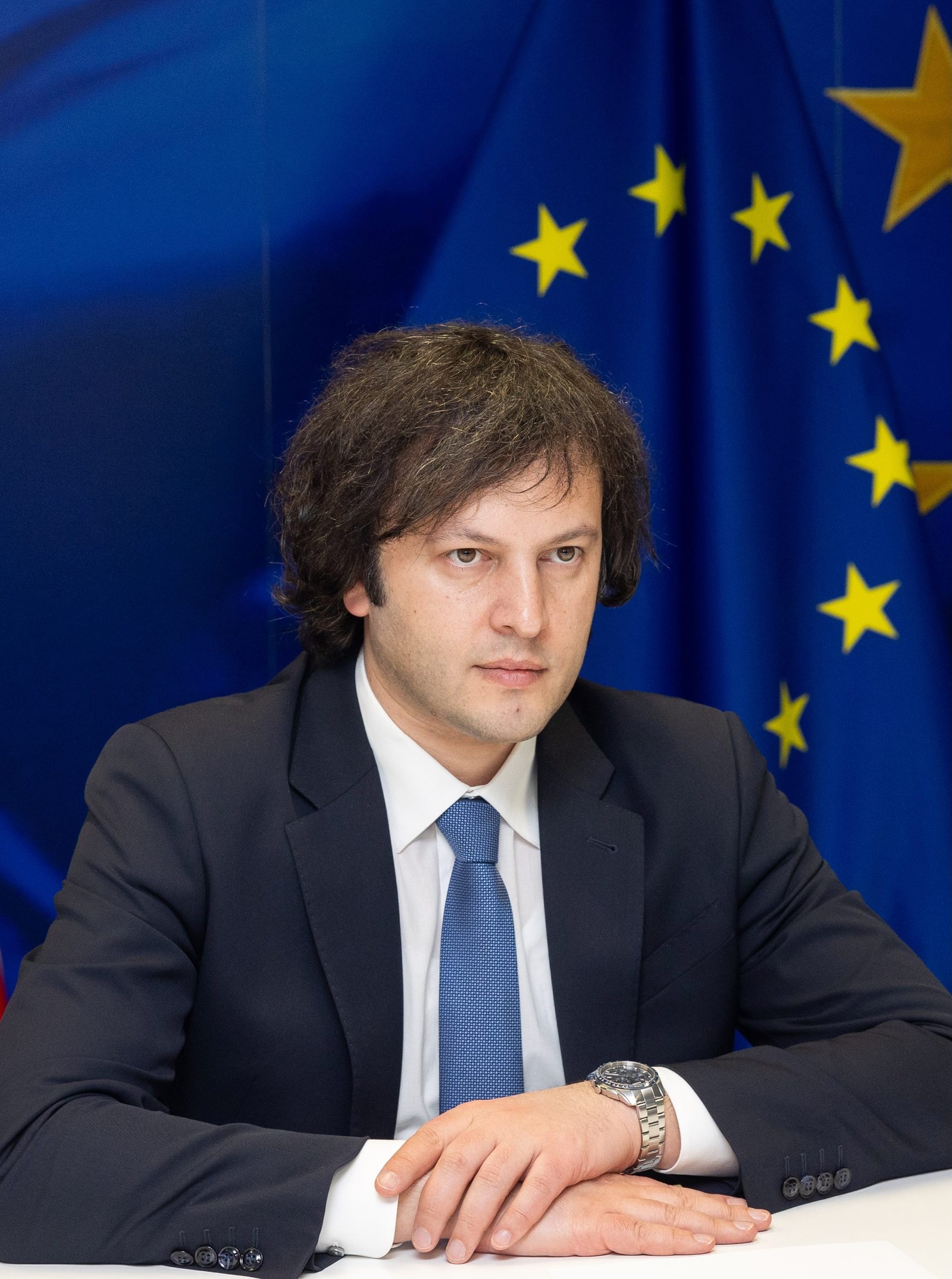
Irakli Kobakhidze has discovered that the most useful thing a prime minister can do with a war is misremember when it mattered.
This week the head of Georgian Dream accused his opposition and his critics of ignoring Russia's 2008 invasion and only discovering their Russophobia in 2022. It is a clever line. It is also a tell. When a governing party reaches back eighteen years to explain why its current critics are illegitimate, the reach itself is the story. Kobakhidze is not litigating 2008. He is licensing 2026.
The move works on two levels, and both deserve to be named.
The first level is domestic. Georgian Dream has spent the past two years shepherding through legislation — on foreign agents, on civil society, on media — that its critics say borrows heavily from the Russian legal toolkit. The government's answer has been consistent: we are the party that actually fought Russia, we are the party that actually knows what Russian pressure feels like, therefore we cannot be the party importing Russian methods. It is a syllogism with a missing middle, but it does political work. By anchoring legitimacy in 2008 rather than in 2024 or 2026, Kobakhidze picks the year on which his party looks best and his opponents look most opportunistic. Every politician does this. Few do it this openly.
The second level is external, and it is the one worth watching. Notice what Kobakhidze did not say. He did not say Russia is a threat today. He said his critics only recently began saying so. The grammar matters. The prime minister has positioned himself as the arbiter of when Russophobia is authentic and when it is fashion — which conveniently means he gets to decide when it applies. In August 2008, obligatory. In February 2022, suspicious timing. In August 2026, an unhelpful distraction from bilateral trade.
The budget, as always, tells the cleaner story. Georgia's economic re-orientation toward Russian tourism, Russian remittances, and Russian transit — the quiet re-plumbing that followed Western sanctions on Moscow — has been the actual foreign policy of this government. The rhetoric has been European aspiration; the receipts have been Eurasian integration by other means. When a governing party's speech and its ledger point in opposite directions, the ledger is the policy. Kobakhidze's 2008 gambit is designed to make anyone who points this out sound like a Johnny-come-lately to the Russia question.
The timing of the intervention is not accidental. Studio Monitori, one of the more serious investigative outlets in Tbilisi, reported that its Facebook page was disabled on Sunday amid what it described as a cyberattack. The page came back. The message did not need to. In a small media ecosystem, a two-hour outage at the right outlet is not a technical event; it is a weather report. And it lands in the same week that the prime minister is busy explaining which critics of Russia are the real ones.
Where does the parallel break? It breaks on the question of state capacity. The Kremlin's information management is industrial; Georgian Dream's is improvisational, and improvisation leaves fingerprints. The 2008 rhetorical pivot works domestically because Georgian voters remember the war. It travels poorly abroad, because European capitals with a functioning archive can read a budget line as easily as a speech. Brussels has spent two years watching Tbilisi's EU accession candidacy stall on precisely this contradiction. The candidacy has not been withdrawn. It has been left, deliberately, in a state of suspended plausibility — which is its own form of pressure, and one Kobakhidze has so far absorbed without visible cost.
So what would prove this reading wrong? Two things. If Georgian Dream moved, in the next parliamentary session, to soften or repeal the foreign agents framework, the argument that 2008 is being weaponised to cover a Russian-methods drift would collapse. If Tbilisi's trade and transit data with Russia began contracting rather than expanding, the ledger would stop contradicting the rhetoric. Neither is impossible. Neither is currently visible.
The muscle memory in this building — the one on Ingorokva Street where the prime minister works — has learned something specific over the past decade. It has learned that a small state on a contested border can survive by being ambiguous in three languages at once: European in Brussels, sovereign in Tbilisi, pragmatic in Moscow. Kobakhidze's 2008 line is that trilingual craft in miniature. It sounds like a defence of national memory. It functions as a permission slip.
The opposition's problem is that arguing with the permission slip requires arguing with the memory, and the memory is real. That is why the trick works. It is also why it deserves to be named.