This story is currently available in англійська only — a translation isn't ready yet.
Ukraine accuses Russia of striking rescue teams after Komyshuvakha attack killed 72
The State Emergency Service says repeated strikes forced crews to suspend recovery work; experts link a crater at the site to a 3,000kg FAB-3000 bomb.
ℹ️ Озвучка браузером · студійний голос ШІ незабаром
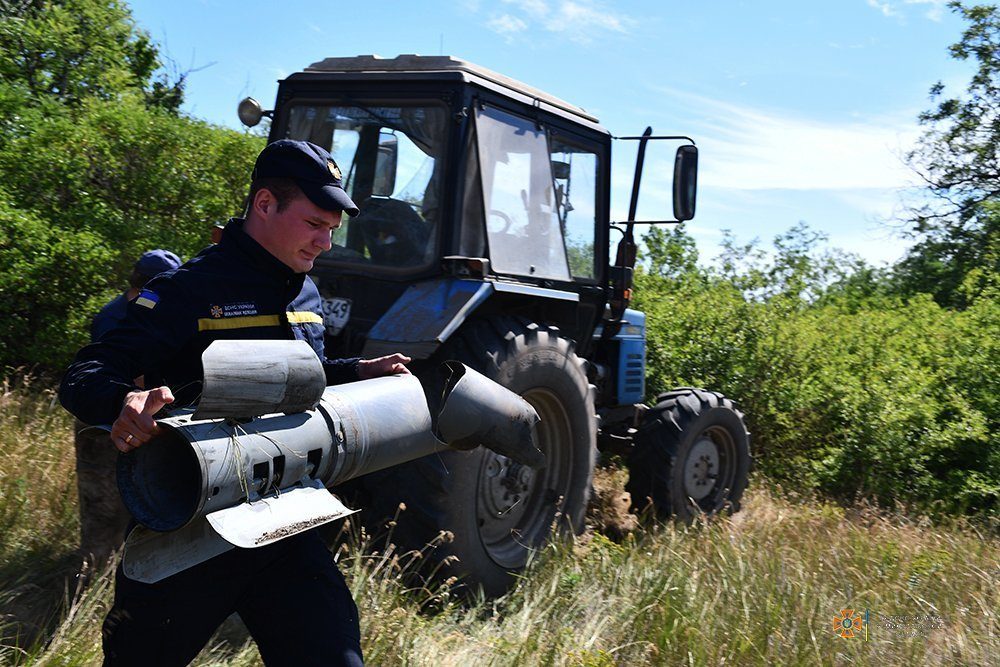
Ukrainian investigators accuse Russian forces of striking rescue and recovery teams in the village of Komyshuvakha after a "double-tap" attack on 2 November that killed at least 72 people, one of the deadliest single incidents since Russia's full-scale invasion in February 2022.
The State Emergency Service of Ukraine said there were multiple Russian strikes during the rescue at a humanitarian aid centre, where residents had gathered after a local Telegram group announced aid distribution between 10:00 and 12:00 local time (08:00-10:00 GMT). Ukraine says the second attack included a 3,000kg (6,600lb) aerial bomb dropped on a shelter where people had fled.
The service said three police officers, four workers and two rescue dogs were injured, and five vehicles were damaged. "Emergency workers are constantly forced to periodically suspend work," it said, citing the threat of repeated shelling.
Ukrainian authorities said an initial strike at 09:45 local time hit buildings above ground and killed one woman. Bodycam footage released by Ukrainian police shows warnings of a second strike on police radios growing more urgent until people were told to run to the underground shelter; about an hour after the first attack, a large explosion is heard and the video goes dark.
Oleksiy, an intelligence officer investigating the incident for Ukraine's SBU security service, said rescue vehicles were "clearly marked" and accused Russia of "deliberately destroying humanitarian equipment". He said the village's infrastructure and the people still living there are being systematically targeted by drones and bombs. Bodies are still to be recovered, he said, calling it "essentially a humanitarian operation to search for the dead".
Trevor Ball, a bomb disposal expert at Armament Research Services, said a crater in the footage was consistent with a FAB-3000, a 3,000kg Russian bomb that can destroy underground structures. Chris Proops, a former UK National Crime Agency investigator, said the damage scale matched the weapon. Both confirmed that verified photos of munition fragments show part of a guidance kit compatible with the FAB-3000.
Ben Saul, professor of international law at the University of Sydney, said the attack "appears to be either a deliberate attack on civilians or civilian objects" — a war crime — or an indiscriminate attack, also a war crime. Samuel Moyn of Yale University called directly targeting rescuers or their equipment "a gross violation of international humanitarian law".
The Russian Ministry of Defence did not respond to questions about the Komyshuvakha attacks. A general statement it released on 2 November said it had targeted energy and transport infrastructure used by the Ukrainian military across the country. The village has no military or industrial facilities but lies close to a key route for Ukrainian troop movements, supplies and evacuations.
Sources — how we know this
2 independent sources corroborated this
- PrimaryBBC World News
- CorroboratingThe Kyiv Independent