Sanctions against SIBUR test Kazakhstan's petrochemical plans
Two days before London's decision, eight reactor sections weighing more than 600 tonnes were delivered to the Atyrau region for the $7.4 billion Silleno complex
ℹ️ Browser-based reading · AI studio voice coming soon
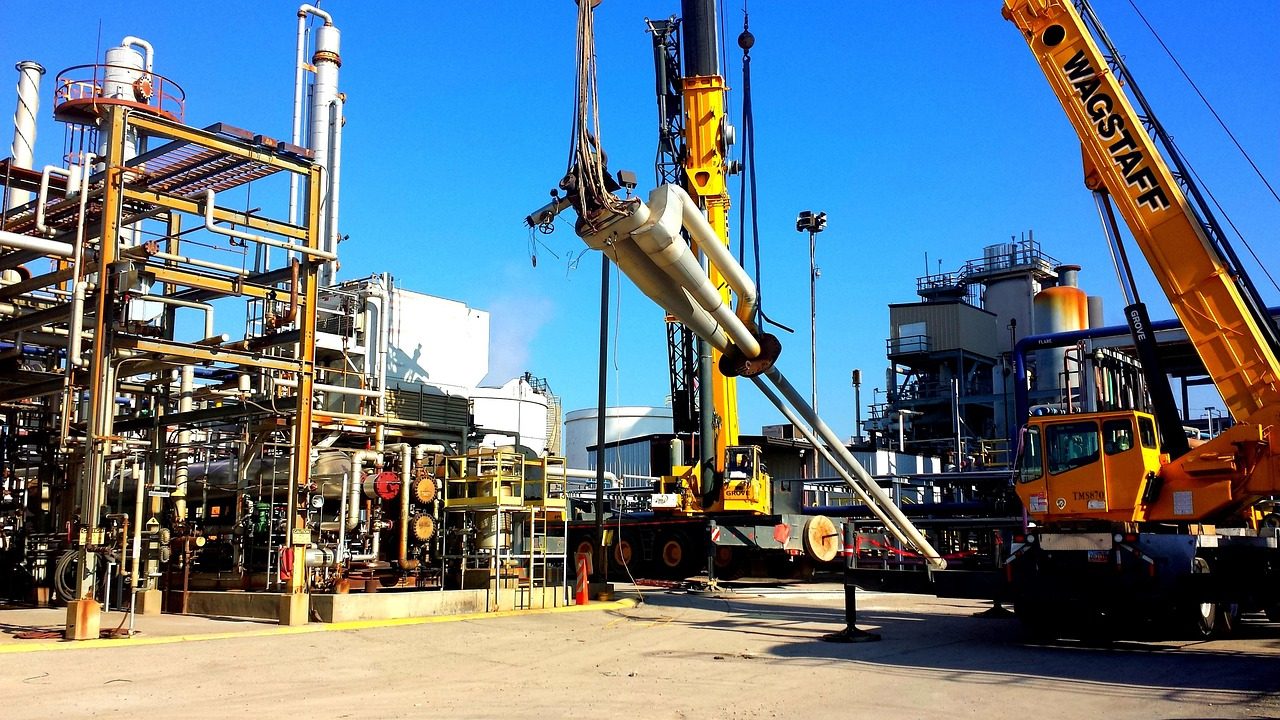
Two days before Britain added Russian SIBUR to its sanctions list, KazMunayGas announced a major delivery to the Silleno petrochemical project: eight reactor sections with a combined weight of more than 600 tonnes arrived at the construction site in the Atyrau region. The 10 November delivery preceded a decision that could complicate the international partnerships on which the project depends.
On 12 November London imposed an asset freeze on SIBUR, along with restrictions on trust services, directorships and transport. The British authorities cited the company's work in Russia's strategically important energy sector. On 13 November SIBUR rejected the decision, calling the sanctions "without legal force and unjustified", and reserved the right to challenge them.
SIBUR owns 30% of Silleno — a $7.4 billion polyethylene complex — and 40% of Kazakhstan Petrochemical Industries (KPI), which operates the neighbouring polypropylene plant. These stakes alone do not mean the British asset freeze automatically extends to both enterprises. However, under UK rules, restrictions can be imposed if SIBUR controls their decisions.
For Silleno the issue is particularly sensitive: the project is still under construction. According to KazMunayGas's 2023 annual report, that year the venture raised $2 billion in bridge financing, while key long-term investment was expected in 2024–2025. The stakes are distributed as follows: 40% held by KazMunayGas, 30% each by SIBUR and China's Sinopec. Planned capacity is 1.25 million tonnes per year, with output scheduled for 2027. KazMunayGas has said financing will come from equity and loans from international banks.
The production chain extends far beyond the plant: gas from the Tengiz field passes through KMG PetroChem's separation complex, then ethane travels by pipeline to Karabatan, where it is converted into ethylene and then into polyethylene. The report separately estimates about $2.1 billion of investment in the gas separation unit and $470 million in the ethane and propane pipelines. The technology is also international: the US company Lummus is named as supplier of the steam cracking unit, while Chevron Phillips Chemical and Univation Technologies of the US and France's Axens are involved in polymerisation.
KPI has an operating business that needs protecting: in 2024 the plant exported 326,000 of the 377,000 tonnes of polypropylene produced. KazMunayGas owns 49.5% of KPI, SIBUR 40%, Samruk-Kazyna Ondeu 9.5%, and the private investor Almex Plus 1%.
Analyst Oleg Chervinsky warned that adding SIBUR to the lists could complicate work with banks, insurers and equipment licensors — additional compliance and payment difficulties rather than an automatic halt to Kazakh enterprises. KazMunayGas has already faced a similar problem at its offshore joint venture Kalamkas-Khazar Operating with LUKOIL: reinsurers refused coverage because of LUKOIL's participation, and without insurance the company cannot obtain external financing. KazMunayGas has exemptions for Tengiz, Karachaganak and the Caspian Pipeline Consortium, but not for Kalamkas-Khazar.
British sanctions apply within British jurisdiction and to British individuals and companies abroad, so this step alone does not introduce similar American or European restrictions for Kazakh enterprises. But banks and suppliers may hesitate, judging the business too burdensome from a compliance standpoint.
Sources — how we know this
- PrimaryThe Times of Central Asia
Energy Portfolio
Check your broker for the latest on energy stocks.
View Now →