Turkey and 17 Countries Condemn Israeli Strike on Nasser Hospital in Khan Younis
Joint statement by the foreign ministers of 18 countries condemns the targeting of patients and medical staff in Khan Younis and warns of a worsening humanitarian catastrophe before winter
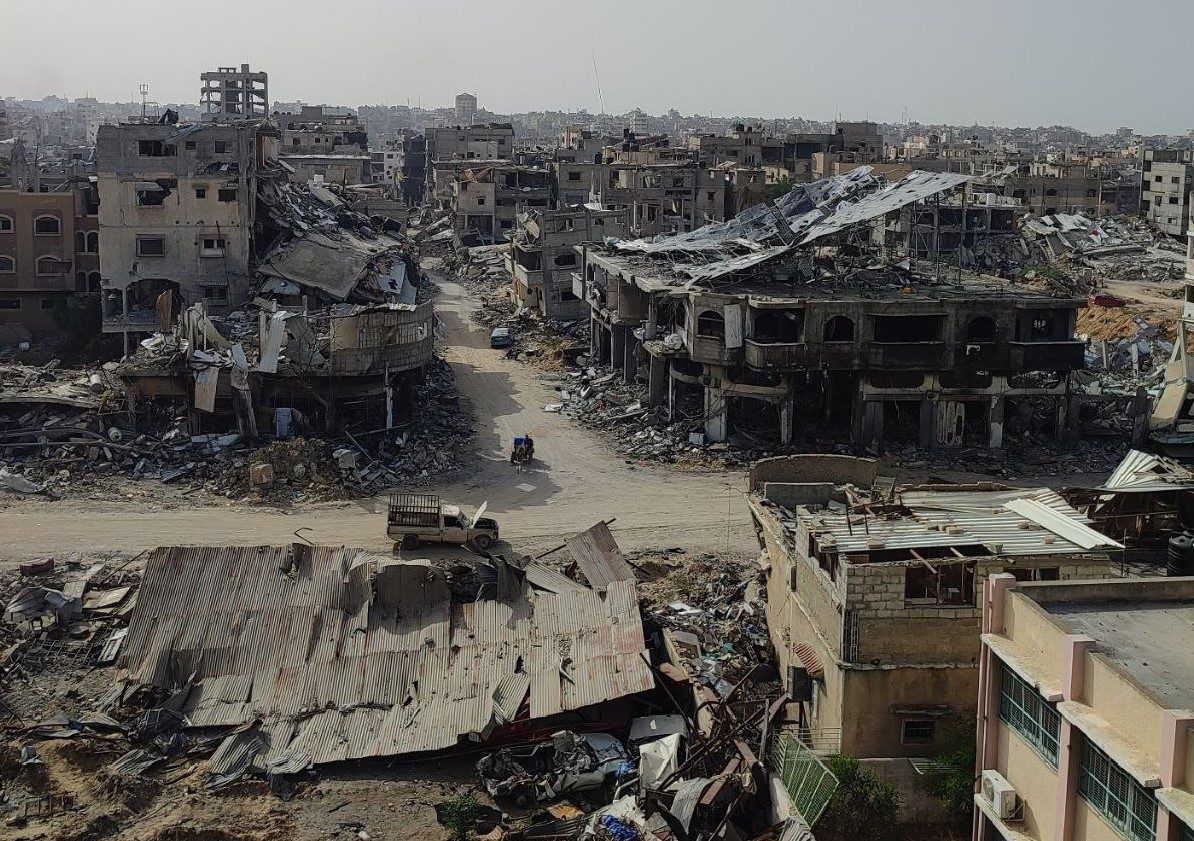
The foreign ministers of Turkey and 16 Arab and Islamic countries condemned, in a joint statement, "in the strongest terms" the Israeli air strike on Nasser Hospital in Khan Younis in the southern Gaza Strip, which killed and injured patients and medical staff.
The signatory countries alongside Turkey, according to what Anadolu Agency reported, are: the UAE, Algeria, Djibouti, Indonesia, Palestine, Qatar, Kuwait, Libya, Lebanon, Egypt, Mauritania, Pakistan, Somalia, Sudan, Saudi Arabia, Oman and Jordan.
The ministers said the strike "violates international humanitarian law, which grants health care facilities and their workers special protection."
The statement also condemned the continuation of Israeli attacks on Palestinian civilians, "including tents and other areas sheltering displaced persons," warning that they "undermine" the ceasefire and the efforts aimed at restoring security and stability in Gaza, and that they "are not consistent" with the peace plan announced by US President Donald Trump.
The ministers expressed "deep concern" over Israel's insistence on imposing restrictions on humanitarian aid, tents, convoys, mobile homes and medical supplies, considering that this "deepens the humanitarian catastrophe" in the Strip as the winter months approach, and that the deterioration of shelter, water, sanitation and health services conditions "exposes the lives of civilians to grave danger," especially infants and children who are exposed to severe cold.
The ministers called on Israel to "listen" to the calls of the international community and the Peace Council to increase aid, and to implement its obligations "immediately and in full" under the Sharm el-Sheikh agreement, the comprehensive Trump plan and UN Security Council Resolution 2803 (2025).
They demanded that Israel commit to the ceasefire and protect civilians and health facilities, and ensure "safe, continuous and unimpeded" access for sufficient quantities of humanitarian aid, including the equipment needed to restart basic infrastructure, and allow UN organizations and humanitarian organizations to carry out their tasks "without any obstacle."
The statement stressed that the obligations of the first phase "must enter into force on the date of signing," and that Israel must fulfill them "without additional conditions" — political or security — that hinder the arrival of aid and "without further delay," with urgent relief operations continuing "in isolation" from any progress in the later phases.
The ministers concluded by calling on the United States and the Peace Council to "intensify their efforts" to ensure Israel implements these obligations in full and lifts all restrictions on the entry of aid, "in order to preserve the credibility of the agreements and consolidate the ceasefire," affirming their determination to work with regional and international partners to stabilize the truce, implement all phases of the peace plan, increase humanitarian aid, and alleviate the suffering of the Palestinian people.
Sources — how we know this
3 independent sources corroborated this
- PrimaryAnadolu Ajansı (TR)
- CorroboratingHabertürk
- CorroboratingTRT Haber
- CorroboratingTRT Haber