Study in Science: Hunters in Saudi Arabia used plant poisons 125,000 years ago
A lake covering 340 square kilometres in Arouq Al-Jaliba yielded 5,511 stone tools and 132 hippopotamus bone fragments
ℹ️ Browser-based reading · AI studio voice coming soon
A study published on 12 November in the journal Science revealed that Middle Stone Age humans in southern Saudi Arabia used stone weapon tips fixed to wooden handles, possibly coated with toxic substances extracted from the thubayra shambari plant, on the shore of a freshwater lake about 125,000 years ago.
Chris Clarkson, professor of archaeology at the Australian Research Centre for Human Evolution and the School of Environment and Science at Griffith University in Australia and lead author of the study, said the team reconstructed an ancient lake with an area of about 340 square kilometres and a maximum depth of about 29 metres, whose waters were low in salinity and stable enough to support a diverse aquatic community, and that it was not a short-lived seasonal pond.
The team gathered geological, archaeological and biological evidence from the Arouq Al-Jaliba site on the southwestern edge of a buried basin, using satellite imagery, field survey, sediment dating and analysis of fossils and tools. The researchers recorded more than 500 plant and animal fossils at more than 130 locations within the site, including 132 bone fragments of hippopotamus, alongside remains of an extinct buffalo, camels, Arabian oryx, gazelles and more than a hundred pieces of ostrich eggshell.
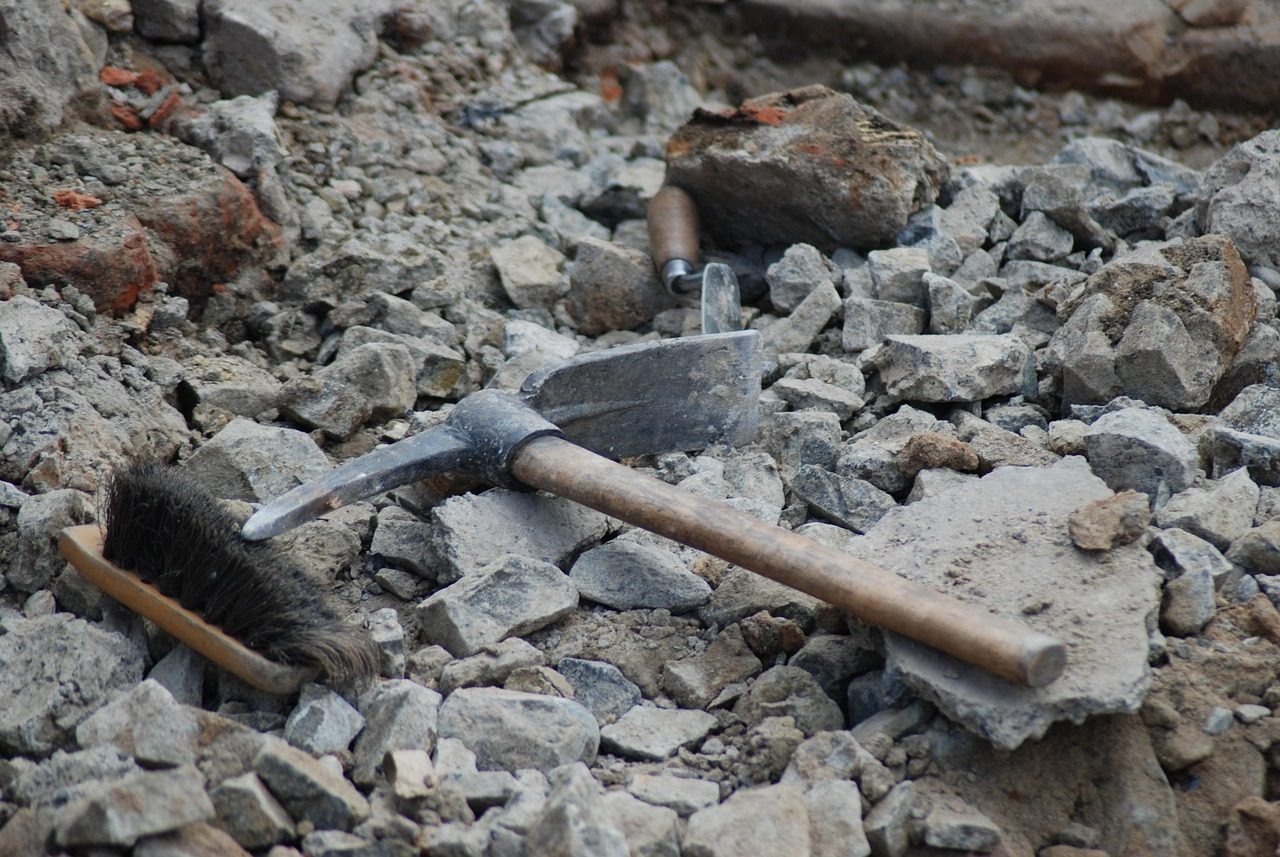
The tools included 5,511 stone tools longer than two centimetres, dominated by the Levallois technique based on preparing the stone in advance to obtain flakes of a predetermined shape. Some pieces showed fractures most likely resulting from impact, and areas near their bases bore traces of resins and plant fibres consistent with fixing the stone into a wooden handle, while their edges showed fats and collagen of animal origin.
The team found residues on several stone tips containing plant compounds and substances linked to toxic cardiac glycosides, and traces of other plants such as juniper and colocynth also appeared. Clarkson believes that this convergence of the tool's shape, the traces of its hafting, the damage resulting from impact, the animal remains and the toxic plant materials makes the interpretation of the deliberate use of poison in hunting more likely than mere accidental contamination.
Seventy-five of the 89 tools examined carried organic residues including fibres, leaves, wood, resins, fats, hair and feathers, and some tools showed preserved parts of palm leaves. Clarkson said the lake "was not merely a place for drinking or for waiting for animals, but an ecological centre around which the activities of hunting, tool-making, plant processing and the acquisition of food and raw materials came together".
The researchers set limits to their findings: the team did not find human fossils at Arouq Al-Jaliba, and therefore the study cannot assert that the makers of these tools were Homo sapiens. Erosion also exposed the archaeological layer and partly mixed remains from close periods, which the researchers interpret as an "accumulated record" of repeated activity on the lake shore, and not a single camp. Chemical analyses do not allow the full poison recipe to be reconstructed or the extent of its effectiveness to be proven, and the fractures alone do not determine whether the weapon was thrown from a distance or used for stabbing at close range.
Sources — how we know this
2 independent sources corroborated this
- PrimaryAl Jazeera (AR)
- CorroboratingCumhuriyet Gazetesi