Congo's cholera outbreak passes 60,000 cases and 1,800 deaths, WHO says
WHO chief Tedros Adhanom Ghebreyesus calls it the worst cholera outbreak in decades as infections reach eastern Kinshasa and MSF warns aid is insufficient.
ℹ️ Browser-based reading · AI studio voice coming soon
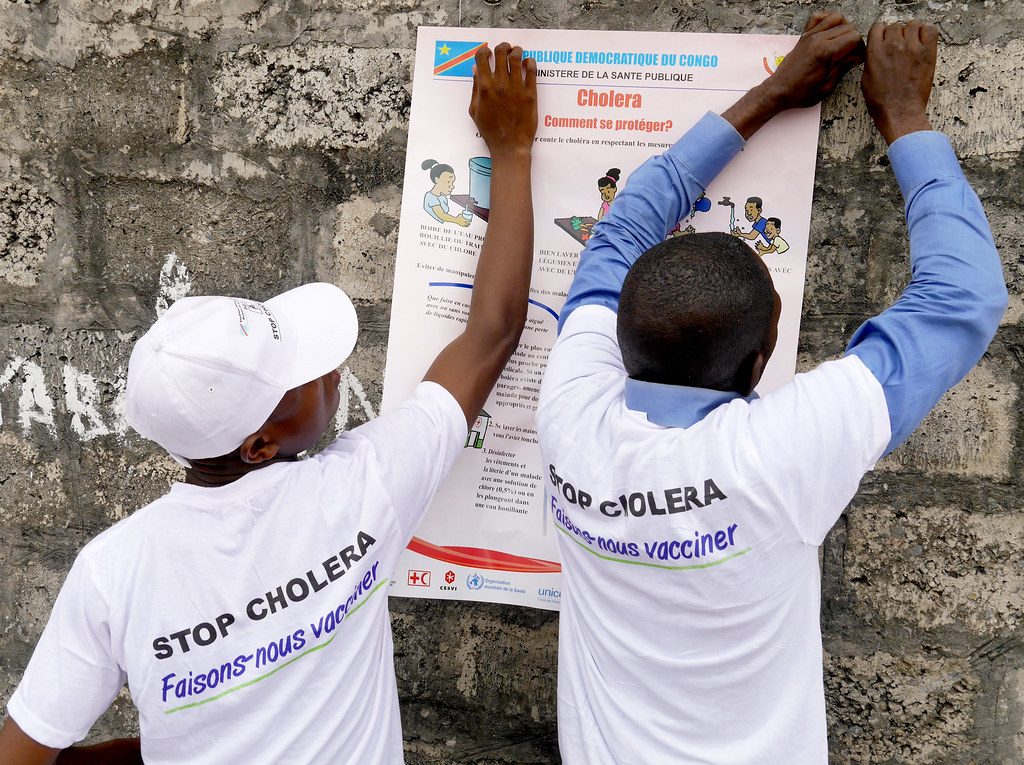
Cholera has infected more than 60,000 people in the Democratic Republic of Congo since the start of the year and killed 1,800, the World Health Organization said, with Director-General Tedros Adhanom Ghebreyesus calling it the "worst cholera outbreak in decades" in the country.
The fatality rate stands at about three percent, which the WHO describes as high for a diarrhoeal disease when it is treated.
Most infections have been recorded in the eastern provinces of North and South Kivu. Parts of both regions are remote and hard to reach, and numerous armed groups operate there, with some areas under the control of the Rwanda-backed M23 militia. Those conditions have made a coordinated state response considerably harder.
The country is also fighting the deadliest Ebola outbreak in its history.
After the Kivu cases, further infections appeared along the Congo river basin, and several were recently reported in Kingabwa, in eastern Kinshasa. The WHO fears the disease could spread again in the densely populated capital on the Congo river; cholera is waterborne and the ongoing rainy season could favour transmission. During the last outbreak in February 2026, more than 80 percent of infections were concentrated in five districts of Kinshasa, among them Kingasani.
"Cholera is a disease that kills quickly," one resident of Kingasani said. "We are afraid. We wash our hands after every contact."
Esther van der Woerdt, deputy country coordinator for Médecins Sans Frontières in the DRC, said transmission comes above all from water or food contaminated with the bacterium Vibrio cholerae, and that the underlying problem is often the absence of safe drinking water and adequate sanitation. MSF has stepped up its response, particularly in North and South Kivu, with medical care and access to clean water.
Van der Woerdt said that is not enough and called for far heavier investment in prevention, including chlorinating water and protecting sources from contamination. She put the cost of moving relief supplies at about $15,000 per truck in some areas, journeys that can take several months.
Dr Bernard Nsongolo, chief physician at the Christ Roi health centre in eastern Kinshasa, said patients present with watery diarrhoea and vomiting, with general exhaustion but no fever. He urged people in high-risk areas to drink treated water and to cook food thoroughly.
Sources — how we know this
- PrimaryDeutsche Welle (DE)