Dublin's Empty Chair: Europe Argues Over Who Should Sit In It
A summit meant for artificial intelligence has been colonised by a prior question: when Washington finally offers Europe a seat at the Ukraine table, who walks through the door?
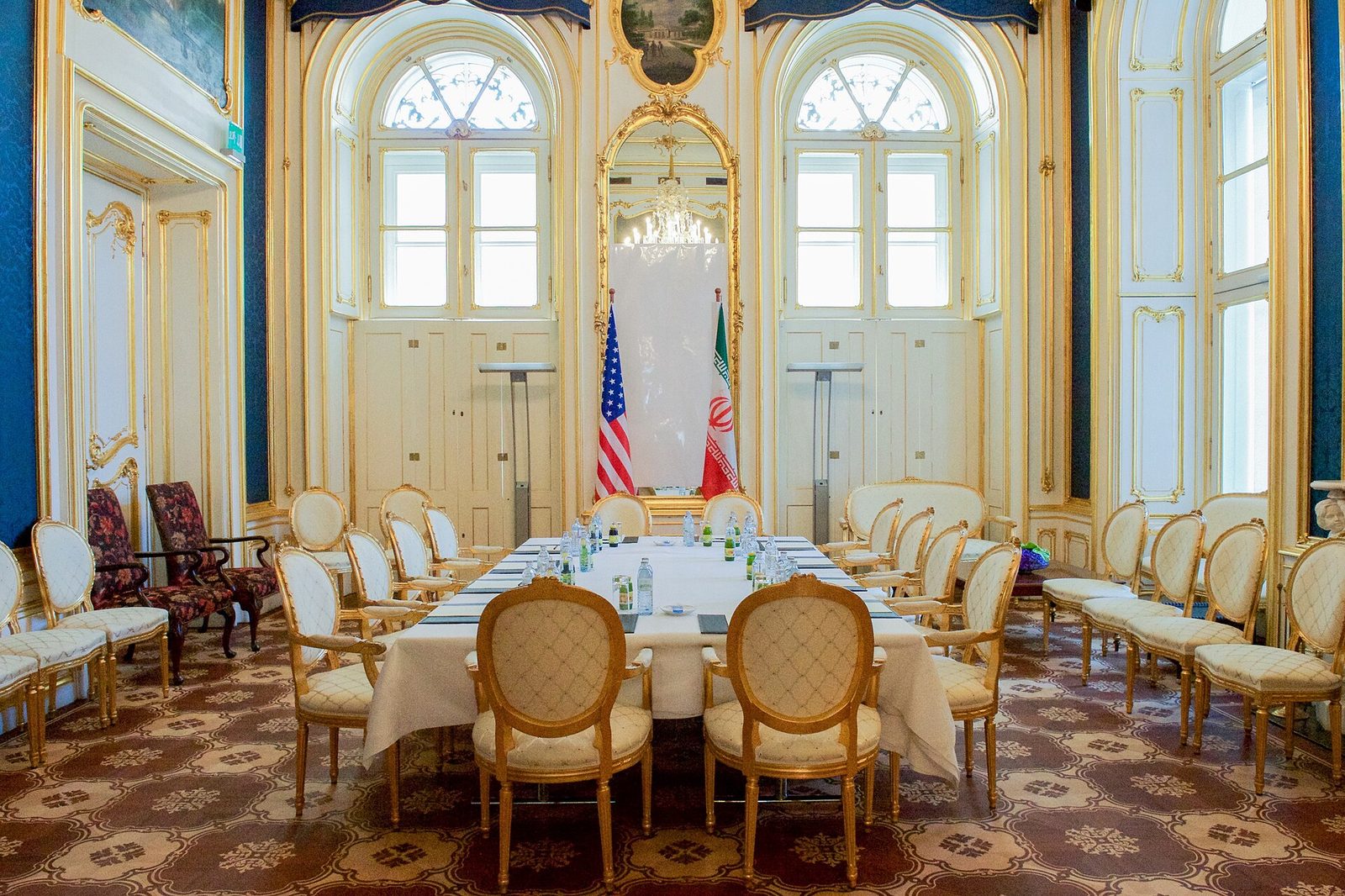
The invitation has arrived. That is the small, awkward fact around which the European Council in Dublin is now organising itself today. After eighteen months of being the bloc that pays the bills and reads the communiqués, Europe has been told by the American envoy Steve Witkoff that it will be present at the next round of Russia-Ukraine negotiations. Jared Kushner, speaking from Dublin on Thursday, confirmed that Moscow and Kyiv had agreed to expand the format. President Zelenskyy, who met roughly fifty European and non-European leaders at the European Political Community gathering the same day, put the matter more bluntly: Europeans would have a voice rather than sit «separately» on the sidelines, as they did in Abu Dhabi.
And now the embarrassment. Europe cannot agree on whose voice.
The treaties, as the High Representative Kaja Kallas has pointed out, are not ambiguous on this. Article 15 of the Treaty on European Union gives the President of the European Council external representation at head-of-state level on Common Foreign and Security Policy matters; Article 18 gives the High Representative the conduct of that policy. On the face of the text, Costa and Kallas walk into the room. Estonia's Prime Minister Kristen Michal has endorsed precisely that reading in the European press.
Paris and Berlin read the same articles and arrive somewhere else. President Macron told reporters on Thursday that Europe must first agree its proposals and its security vision before deciding who carries them. Chancellor Merz was more direct: the E3 format — Germany, France and the United Kingdom — is «well-established» and he sees no reason to disturb it. The subtext is not subtle. A format that includes London and excludes the Commission is a format in which the nuclear-weapons states speak for the continent and the institutions take the minutes.
This is the structural fracture the desk asked about, and it is older than the war. The Lisbon architecture was designed to produce a single European interlocutor on foreign policy; the capitals that matter have never fully accepted that design when the stakes are existential. Ukraine is existential. So the treaty text and the political reality are, once again, in different rooms.
What makes Dublin particularly uncomfortable is the sequencing. Costa convened this Council to have Europe's first dedicated leaders' discussion on artificial intelligence — on compute, on chips, on whether the bloc funds frontier models or resigns itself to building applications on American and Chinese ones. Mistral's Arthur Mensch and Geoffrey Hinton were on the programme. Finland's Orpo and Estonia's Michal came prepared to argue that Europe can, in fact, compete at the frontier if it writes the cheque. That conversation will now happen in the shadow of the representation fight, and probably in the shadow too of the €70 billion shortfall Kyiv faces next year — which Merz, in a letter to Costa, has already tied to the negotiations on the next Multiannual Financial Framework. Three unresolved files, one lunch.
The enforcement question — because there is always an enforcement question — is what happens if Europe arrives in the next format without having chosen. The answer is visible already. The French 24 report notes that representatives of five European capitals met the American envoys alongside the Commission on Thursday. Five plus one is not a delegation; it is a demonstration of the problem. If Costa and Kallas go, the E3 will brief in parallel. If the E3 goes, the institutions will issue statements that no one in the room is bound by. Washington, which prefers interlocutors it can count on one hand, will pick whichever channel gives it the answer it wants on a given afternoon.
For readers in the Gulf, this matters more than the choreography suggests. The Abu Dhabi round was hosted precisely because the UAE has positioned itself as a venue where Russians, Ukrainians and Americans can be in the same building. If Europe fails to consolidate its representation, the venues that convene these talks — Abu Dhabi, Istanbul, Doha — gain leverage over the agenda by default. Mediator capitals become quasi-participants. That is a transfer of diplomatic weight that no European capital has voted for and that none will easily claw back.
Costa wants clarity by the end of the day. Zelenskyy wants a name by the end of the month. The honest prediction is that Dublin produces a formula rather than a person — language about «coordinated European representation» that lets Paris, Berlin and the Berlaymont each believe they have won. A formula is not a chair. The chair, when the next meeting is called, will be filled by whoever books the flight first.