Riyadh's Diesel Memory: Carried U.S. Barrels in 1986, Carrying Moscow's in 2026
Forty years ago Riyadh opened production to defend price; today Washington opens sanctions to depress it. Riyal 3.7500, dirham 3.6725 — mirror, mirror, not quite the same.
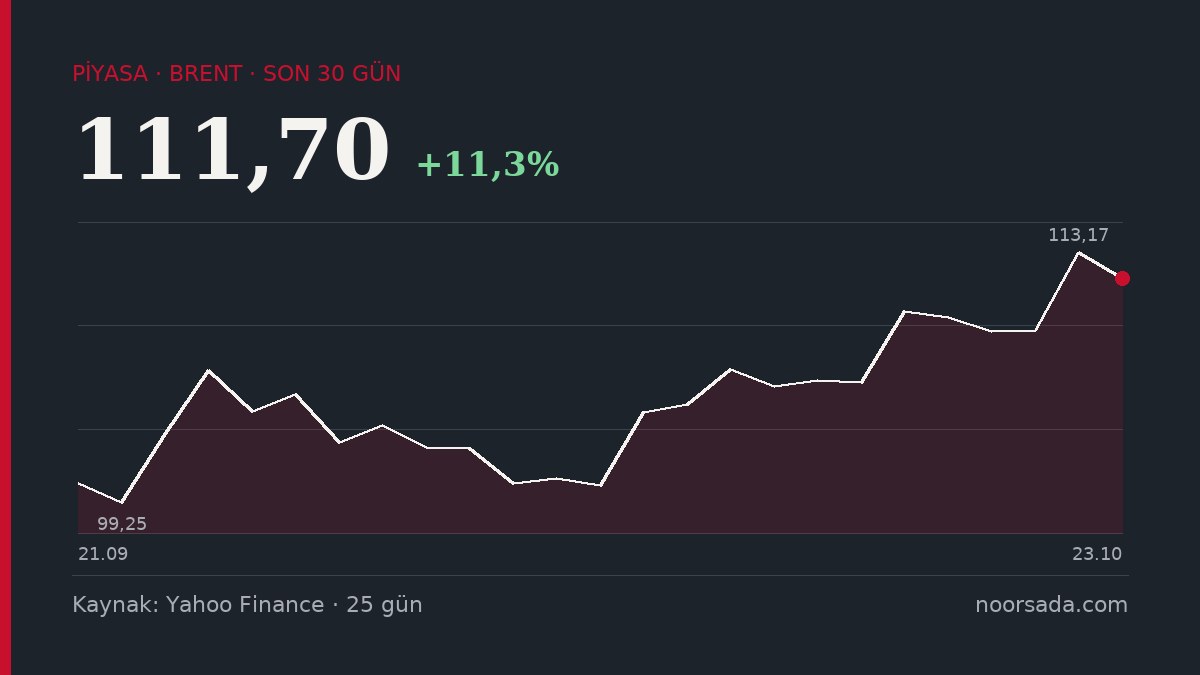
Last week two figures appeared on Gulf screens: one did not move, one did. USD/SAR closed at 3.7500, USD/AED at 3.6725 — the two lines SAMA and CBUAE have defended for forty years. The moving figure came from Washington: on Friday the White House announced that Russian diesel would flow to U.S. and global markets immediately — some 300,000 metric tons, roughly 2.25 million barrels — followed by 500,000 tons in November, then another million tons after that. The numbers were confirmed to state agencies by Russia's deputy prime minister. Monday morning, Brent fell 1.47 percent to $103.18, WTI fell 1.68 percent to $90.31, and ICE gasoil fell 3 percent to $1.436 per barrel.
This is not a diesel story; it is a price floor story. And the right question for this beat is this: what this week's most important narrative reveals is to whom the Gulf's control over oil prices — that first principle assumption for forty years — has quietly ceded its place.
Let us open the archive mirror.
*
THEN. Winter 1985-86. Riyadh has been playing OPEC's "swing producer" role for over a year: while others exceed their quota, Saudi production drops to defend price. Production had fallen from above 10 million barrels to below 2.5 million by mid-1985. Then with one decision, that role was abandoned. Production opened up, netback pricing came into play, and the barrel crashed from $30 in mid-1986 to below $10. This was no accident; it was a message. The message traveled simultaneously to the North Sea, to Texas, to the Soviet Union: if we defend price, we can also abandon it.
NOW. October 2026. This time Riyadh is not abandoning price; Washington is taking it from its hands. Trump writes on Truth Social, "Low prices for Americans, especially our farmers, ranchers and truckers, are our top priority." Weeks earlier, the same administration signed legislation granting new sanctions and tariff authority over countries importing Russian oil and gas. Now the most visible commodity on that sanctions list — Russian diesel — has been removed. Local media report reactions from both Republican and Democratic lawmakers in Washington: "the deal violates the law." But as the barrel slides to 90, this objection leaves no mark on the market.
*
THEN. The 1986 decision to abandon price defense launched a disciplinary shift in Gulf budgets that would last decades. The Saudi riyal was pegged that decade's end to its present level, 3.75 — formally pegged in June 1986; de facto since the early 1980s. The peg transformed the budgetary discipline brought by low barrels into a rule: peg to the dollar, import the Fed's monetary policy, cover fiscal deficits with debt or reserves, but do not open the exchange rate to debate. The dirham was pegged to 3.6725 in 1997 and has not moved since. These two lines have been the single sentence the Gulf has told the world for forty years: you debate price, we do not debate the rate.
NOW. Monday morning those two lines are in place again — 3.7500 and 3.6725. But the arithmetic beneath them is not the same as 1986's. In 1986 low barrels were a choice for the Gulf; today low barrels are an import. Russian diesel coming online means a competitor for Saudi crude's buyers in Asia; that same week the Saudi Energy Minister signed three memoranda of understanding with Kuwait, Qatar and Egypt on electricity, renewable energy, grid connections and energy exports is no coincidence. Riyadh's answer now extends not only to the barrel; it reaches toward the grid, electricity export, carbon cycle technology. Because the marginal decision over the barrel this week was not made in Riyadh; it was made in a phone call between Washington and Moscow.
*
THEN. The 1986 price collapse carved away the Soviet Union's foreign exchange income; this became part of the story of the years that followed. Low barrels widened an empire's budget hole.
NOW. Low barrels this time have not been structured to harm Moscow's budget; rather, Moscow has become the party setting the price floor. The opening of Russian diesel to U.S. markets is a contribution to Kremlin foreign exchange — and the Saturday attack in Zaporizhzhia that killed twenty people, including three children, is part of the answer coming back to Kyiv in exchange for that contribution. The Ukrainian President's response Sunday was sharp: "Russia thanked the lifting of sanctions on diesel exports by firing five gliding bombs at residential buildings in Zaporizhzhia." Here lies the sharpest difference between 1986 and 2026: then, low barrels weakened an empire; now, low barrels finance a war. The market prices this difference not as an ethical judgment, but as a risk premium. In Sunday's attack on King Khalid airport in Riyadh, a Pakistani resident lost his life, eleven were wounded — the ground on which the Gulf will pay a premium widens, and barrel price falls. When these two curves meet on the same graph, the peg's silence is not virtue; it is absorption capacity.
*
THEN. After 1986 the Gulf embarked on a search for non-oil revenue — but this search remained a discourse for decades; it did not arrive as a balance sheet. Through the 1990s and 2000s, 70-90 percent of budgets ran on hydrocarbon income. When energy cooperation was mentioned, what was meant was crude oil price; not grid, not renewables, not carbon and data.
NOW. When the content of the memorandum of understanding the Saudi Energy Minister signed with Kuwait is read, it becomes clear: electricity, renewables, grid connections and electricity export, energy efficiency, energy storage, smart grids, digital transformation, cybersecurity, artificial intelligence. The ones signed with Qatar and Egypt are within the same framework. This is an energy text written in the language of a non-oil industry. Because Riyadh knows that the marginal decision over the barrel is slipping from its hands, it is laying a second energy layer around itself — a grid layer. This did not exist in 1986. In 1986 the answer to low barrels was belt-tightening; in 2026 the answer is signing the infrastructure of a diversified energy network.
*
WHAT DOESN'T rhyme NOW?
First difference: in 1986 Riyadh made the decision to abandon the price floor on its own. In 2026 Riyadh has the price floor imposed on it from outside — and by an ally, not through the Fed's monetary policy, but through a White House Truth Social post.
Second difference: in 1986 on the other side of low barrels sat the Soviet Union's shrinking budget. In 2026 on the other side of low barrels sit Moscow's expanding foreign exchange revenues and Kyiv's growing coffin counts. The market prices this asymmetry, but does not own it.
Third difference: in 1986 the peg was not yet fully seated; the riyal was a new line to be defended. In 2026 the peg is a reflex. When 3.7500 and 3.6725 do not move this is not news; when they move it becomes world news. The answer to the question of who pays the cost of this silence is changing: in 1986 the Saudi budget paid the cost; today the cost is paid by the renter in the Gulf, the Turkish importer, the Egyptian bread buyer — because dollar interest is flowing in simultaneously in Riyadh and Dubai.
*
The week's story is not the volume of diesel, but the location of the decision. The price floor is no longer formed in OPEC's Vienna meeting room; it is formed in a phone call between two capitals. The Gulf knows this; that is why the three memoranda of understanding signed last week were not about the barrel, but about what comes after the barrel. When the peg stays silent — and last week it did — this silence speaks not of strength, but of transition. Forty years ago the decision to abandon price was Riyadh's; now Riyadh is building a new environment around something it no longer holds in its hands.
The operator of 1986 — that generation in the corridors of the Saudi Energy Ministry — could not see that today's low barrel could finance a war; for them, low barrels were always a tool to weaken the competitor. We probably also fail to see something: when Washington's next president reverses the price floor from the same Truth Social account, how much of the grid agreements signed today will become real infrastructure, and how much will remain on paper. Will the peg still stand forty years on — no one answering that question right now is being honest. But without acknowledging that the price floor now comes from outside, the Gulf story of the next decade cannot be written.