The Forecasters Caught Up With The Energy Shock. The Curve Hasn't.
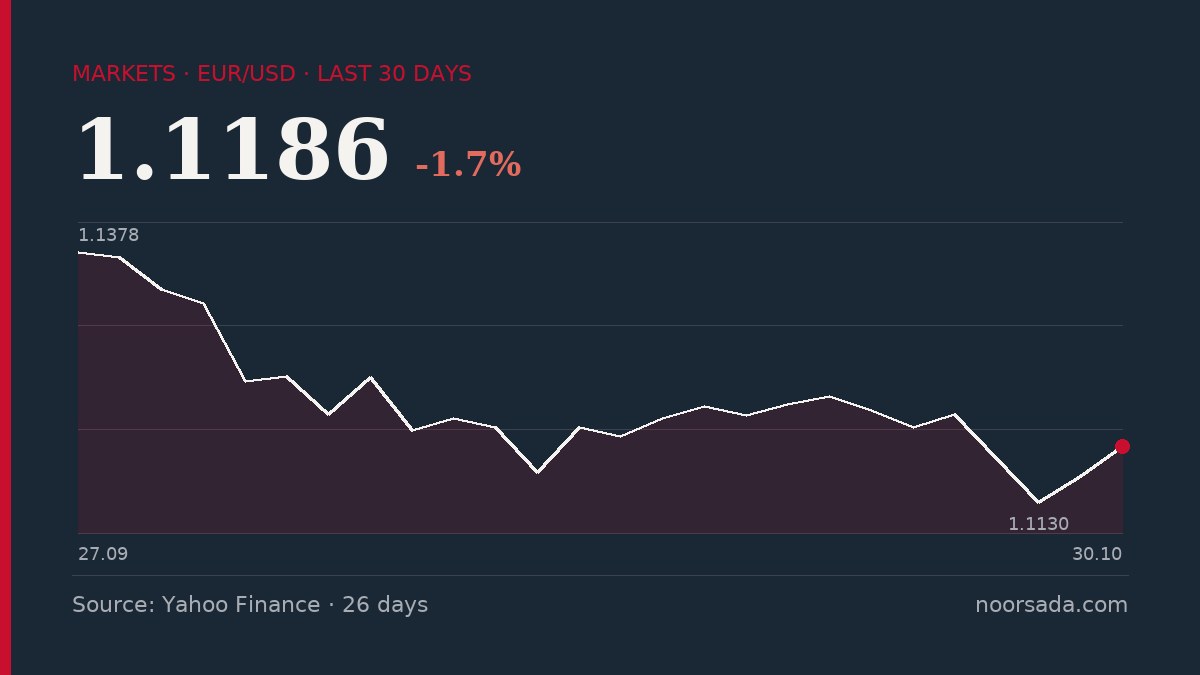
Q4 SPF marks 2026 CPI to 3.0% and 2027 to 2.6%, both revised up. The hold is locked, Lagarde leaves 7 February, and the early-2027 cut trade now sits awkwardly.

A ledger note before the numbers. An open promise from earlier in the week, concerning the shape of the UK Budget, was returned today with no verifiable evidence either way — no scorecard totals, no cross-market reaction on the record. I'm not claiming a hit. Unresolved, and move on.
Now the number that matters this morning, and it isn't the policy rate. The Q4 Survey of Professional Forecasters, published yesterday, revised headline HICP expectations up by 0.3 percentage points for 2026 (to 3.0%) and by 0.4 percentage points for 2027 (to 2.6%). 2028 was left at 2.0%. Longer-term expectations for 2031 stayed at 2.0% for both headline and core. The risk balance for inflation is tilted to the upside through 2028 and more balanced thereafter. Growth expectations were revised up by 0.4pp for 2026 and 0.1pp for 2027; unemployment for 2026 is a shade higher at 6.4%.
Read the shape, not the levels. Forecasters have accepted the energy shock as a 2027 problem but not a regime change — anchors at 2.0% have not moved. That is the single most important line in the release, and it is the line that keeps the hold decision from Wednesday coherent. The Governing Council kept the three key rates unchanged, acknowledged that financing conditions have tightened since the previous meeting, and leaned on the phrase that underlying inflation has remained broadly stable and wages do not show a material response at this stage.
Two things sit uneasily together. The policy statement treats the shock as a passing cost-push event the Council does not need to meet with higher rates. The SPF now implies 2027 inflation prints that will arrive squarely in the window of the next presidency — the Council confirmed yesterday that the President will step down on 7 February 2027. Whoever chairs the March meeting inherits a forecast path that has drifted up by nearly half a point since summer, and a market that has been pencilling in cuts.
What would change my mind. If the November flash HICP for the euro area prints softer than the SPF path implies, the hold stays uncontroversial and the cut trade survives. If it prints at or above the revised path, the front end of the euro curve has to do work it has not yet done, and the succession narrative stops being a personnel story and becomes a reaction-function story.
One dry observation: forecasters raised 2027 inflation by 0.4 points and 2027 growth by 0.1. Someone, somewhere, is calling that a soft landing.