The Rhine goes quiet: how a river's low water reroutes a continent
Germany's inland shipping association warns the Rhine could split in two. To understand why that matters, walk the week backwards.

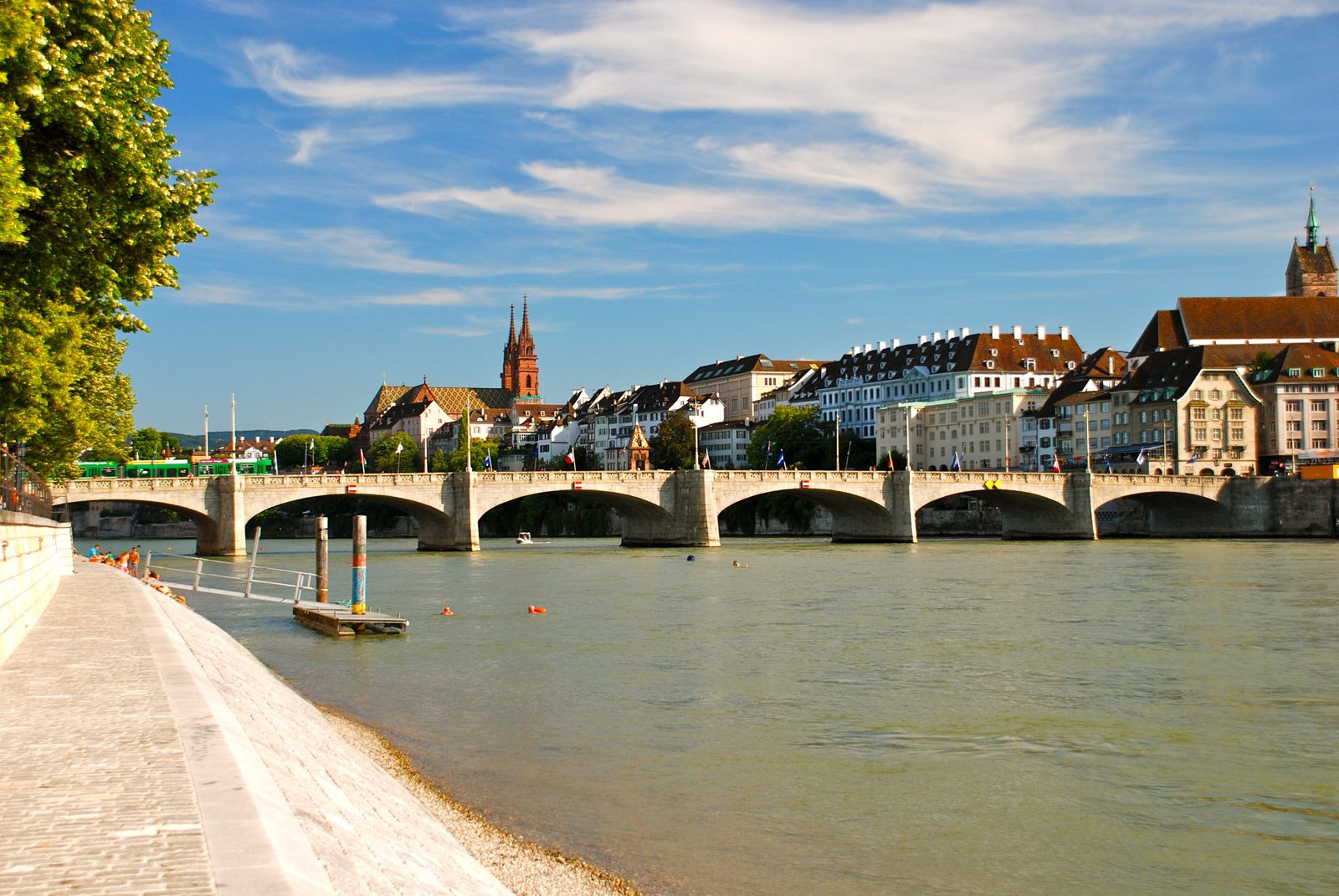
The sentence that mattered from Berlin over the weekend was almost hydrological: Germany's inland shipping association warned that the Rhine could soon become effectively split in two as water levels continue to fall. A river warning, in the passive voice. No minister attached, no press conference. And yet, if you sit with it, this is the wire that will still be worth reading in a year — because everything else piled on top of it explains itself only when you start from the water.
Work backwards from that communiqué. By the time an industry body issues a public warning, the freight desks at the chemicals parks along the middle Rhine have already been rationing barge loads for days. Contracts written on the assumption of full-draft barges get renegotiated at half-draft, which means double the barges for the same cargo, which means surcharges the wires call « low-water fees » and the receiving factory calls a margin problem. The Ludwigshafen chemistry, the Duisburg steel, the diesel moving up from Rotterdam refineries toward Swiss and southern German tanks — all of it prices off a river depth gauge most Europeans have never heard of.
Go back further. The reason the Rhine matters this much in 2026 is a decision-chain that runs through the last four years: pipelines rerouted after the Russian cut-off, refinery runs shifted westward, southern Germany's diesel and heating oil made more dependent on barge lift up the river precisely as the summers grew drier. Each of those looked, at the time, like a sensible substitution. Layered together they built a system whose single point of failure is rainfall in the Alps and the Black Forest.
Now set this next to two other wires from the same weekend, because the pattern only shows itself in the pairing. In Shanghai, Typhoon Dolphin grounded close to 1,500 flights and forced mass evacuations along the Chinese coast. In British Columbia's Okanagan, a fast-moving wildfire pushed thousands from their homes. Different hemispheres, different mechanisms, same underlying grammar: infrastructure built for a climate envelope that no longer holds, and logistics networks discovering their tolerances the hard way. The editorial hypothesis is narrow and, I think, defensible: the physical shocks of 2026 are no longer arriving as discrete events to be insured and forgotten. They are arriving as the operating condition, and the supply chains built in the 2010s were not designed for an operating condition. They were designed for an average, with excursions.
What this means at the reader's kitchen table depends on where the kitchen is. If you heat with oil or drive diesel in southern Germany, Austria, Switzerland, expect the pump and the delivery invoice to reflect the barge math within weeks, not months — this is the mechanism, quiet and mechanical, by which a dry August in the Rhine basin becomes a heating bill in November. If you run a small manufacturing business anywhere along a European chemicals supply chain, the input you order today may ship on a schedule written by a river gauge. If you sit in Cairo or the Gulf reading this at a distance, the second-order effect is the one to hold: a Europe whose industrial base is repeatedly interrupted by its own rivers will be a more anxious buyer of stable energy corridors, which is part of why the Hormuz conversation between Iran and Oman, and the Mecca defense text of last week, are being negotiated with the urgency they are.
The backstage question, the one the wires did not carry, is being asked this morning in the finance ministries of the Rhine-basin capitals: at what point does « low water » stop being a seasonal line item and become a capital-spending decision — dredging, rail substitution, strategic reserve siting — that no single government wants to sign alone.
The earliest cause is the one no press release will name. It did not rain enough in the mountains this spring.
Energy Portfolio
Check your broker for the latest on energy stocks.
View Now →