Tokayev's Summit Diplomacy: Astana Buys Optionality While the Bond Market Reads the Receipts
A Central Asia–Azerbaijan summit, a J.P. Morgan watchlist slot, and a quiet message to every capital that thought Kazakhstan had only one patron.
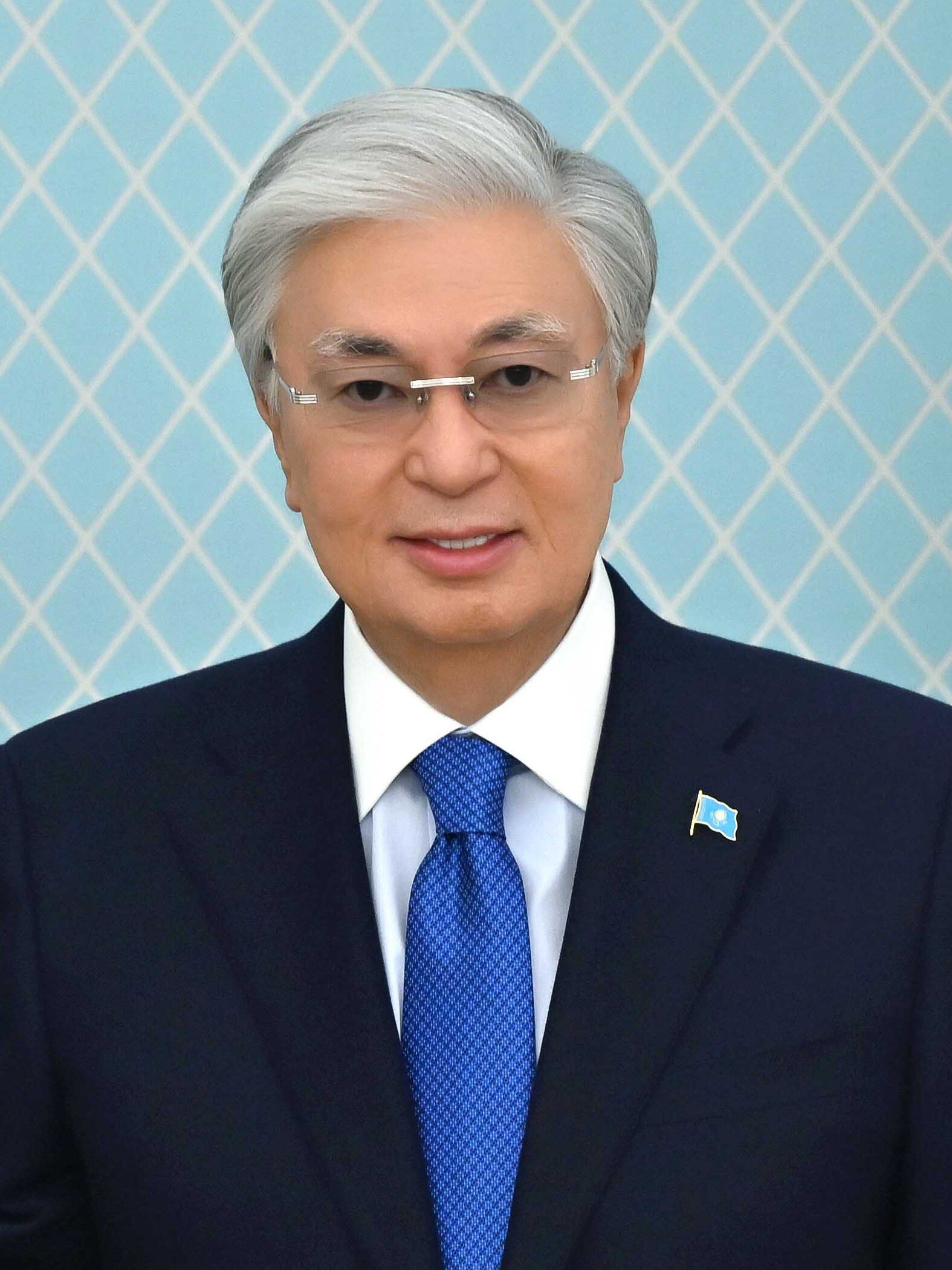
Kassym-Jomart Tokayev spent this week doing two things at once, and the second one is the story.
At the Central Asia–Azerbaijan summit he called for stronger regional cooperation — the sort of phrase that, read in isolation, carries the weight of a conference lanyard. Read against the week's other news from Astana, it carries considerably more. Kazakhstan's sovereign debt was placed on J.P. Morgan's watchlist for potential inclusion in the GBI-EM index. That is the sentence a foreign ministry cannot write but a finance ministry lives for. Index inclusion means passive capital — pension funds, insurance balance sheets, the slow money that does not read op-eds — begins to arrive automatically. It is the closest thing in sovereign finance to being adopted.
The two events are not coincidental. They are the same policy with different audiences.
Tokayev's government has spent the last three years performing a very particular trick: being indispensable to Moscow, legible to Beijing, acceptable to Brussels, and bankable to New York, without being owned by any of them. The summit in the capital this week — Azerbaijan at the table alongside the five post-Soviet Central Asian states — is the diplomatic face of that trick. The watchlist placement is the balance-sheet face. One signals that Astana can convene its neighbourhood without asking a larger capital's permission. The other signals that the people who price risk for a living have begun to treat Kazakhstan as a country whose paper you can hold without a political note attached.
The decision-maker here is Tokayev himself, and the decision is older than it looks. Since February 2022, every Central Asian government has been doing arithmetic on a question nobody wants to ask aloud: how do you remain economically plausible to Russia while making yourself independently valuable to everyone else? Uzbekistan has answered with manufacturing diversification. Turkmenistan has answered by largely refusing to answer. Kazakhstan has answered with a two-track programme — regional convening power on one track, deep capital-markets integration on the other — and this week both tracks moved at once.
Notice what the summit communiqué is not asking for. It is not asking for a security umbrella. It is not asking for a trade bloc with external tariffs. It is asking for the thing Astana already specialises in: coordination without commitment. The format itself is the message. Six capitals meeting without Moscow or Beijing in the room is, in 2026, a diplomatic fact that would have been unimaginable in 2016. The absence is louder than any paragraph in the final text.
The bond-market story deserves its own paragraph of ground texture. A watchlist placement is not inclusion; it is a probationary period during which index providers assess whether a country's local-currency debt is liquid enough, accessible enough, and politically steady enough to be held by funds that cannot afford a surprise. For a country whose economy still rhymes with oil, the signal that passive foreign capital may soon be a structural feature of the tenge yield curve is worth more than a dozen summits. It changes the cost of borrowing. It changes the depth of the currency market. It changes, over time, how much pressure a government can absorb from any single external patron before its financing conditions move.
This is where the historical echo sits — not as analogy but as institutional pattern. Small and middle powers have, across a century, used capital-markets access as a form of soft insurance against the political demands of larger neighbours. The Nordic states did a version of it after 1945. Several Southeast Asian economies did a version of it in the 1990s. Each case has its own geometry, and the Kazakh one differs in a crucial respect: it is being attempted while the dominant regional patron is actively at war and increasingly intolerant of hedging. That is the sharpness of Tokayev's bet. The window to diversify your financial dependencies is narrowest precisely when you most need to do it.
What would prove this reading wrong? A visible retreat from the index process — a tightening of capital controls, a political intervention in the central bank, or a sudden alignment with Moscow's preferred regional architecture that would scare off the index committees. None of those signals are present this week. The budget is still speaking the same language as the summit.
For outside capitals the lesson is mundane and worth repeating. If you want to know what Astana is actually doing, do not read the speeches. Read the debt calendar, the index notes, the summit guest lists — and read the gaps in each. A country that is quietly making itself fundable by strangers is a country preparing for a world in which its old friendships cost more than they used to.
Tokayev is not announcing that pivot. He is pricing it.