Ukraine's 3rd Army Corps leans on ground robots to retake 280 sq km in Donbass
Operation Vivaldi, which ran from spring to autumn 2026, was the first Ukrainian offensive to use demining drones, and the 3rd Army Corps says no operation has fielded so many robots.
ℹ️ Browser-based reading · AI studio voice coming soon
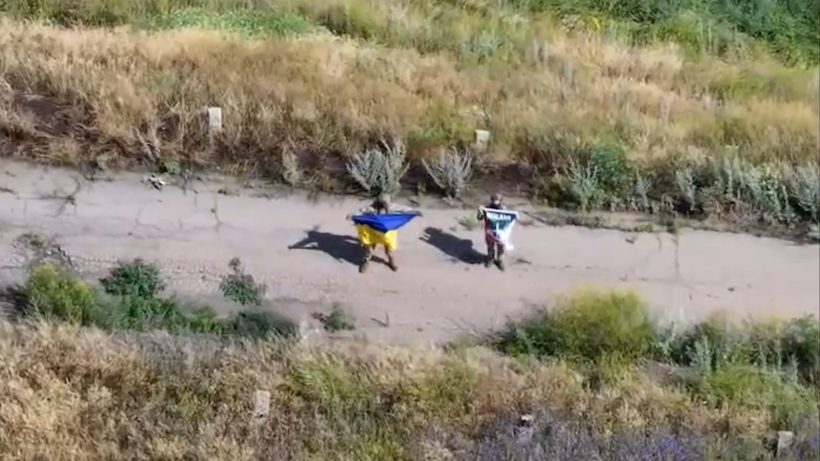
Ukraine's 3rd Army Corps deployed ground robots and interceptor drones during Operation Vivaldi, an offensive that began in spring 2026 and ended in the autumn and that the Ukrainian army says recaptured nearly 280 square kilometres of territory in the Donbass.
The unit's main ground vehicle is a cubic machine on four driven wheels with a metal platform and cameras at the front and rear, steered remotely. Its operator, who goes by the call sign Barman, compares the controls to driving a small remote-controlled car. The robot's principal job is to carry food and ammunition to soldiers cut off on the front line by Russian drones that saturate the sky. It can haul a 450 kg load.
The same machine evacuates wounded men to the rear, pushing through brush. Barman says he has saved the lives of about 40 of his comrades. The corps also fields turret robots fitted with automatic weapons or grenade launchers, used for reconnaissance or to kill enemy soldiers, and against drones lying in ambush and against mines once they appear on the operator's screen.
Vivaldi marked several firsts. The 3rd Corps used demining drones inside an offensive for the first time, and it sent in kamikaze robots that drive into Russian positions before detonating. No military operation since the start of the war has counted so many robots on the ground.
Barman plays down the scale of the change. "Robots will not totally replace men on the battlefield," he says, adding that they can help with certain tasks and that the essential aim is to preserve soldiers' lives. Ukraine uses them to offset a shortage of soldiers available on the front.
Air cover for the advance came from the 1030th Air Defence Regiment, known as Aquila. Zakon, 28, the battalion's chief of staff, says his men were tasked with covering assault troops on the front line, controlling logistics routes, protecting artillery manoeuvres and securing command posts and rear depots. Rockets and artillery proved insufficient, so the regiment now destroys Russian drones with Ukrainian ones. "We realised we could shoot down one drone with another," Zakon says. Teams of three or four soldiers work near the front line with radar or surveillance drones; the interceptor then flies into its target and explodes. Kyiv builds the interceptors in industrial quantities, far cheaper than interceptor missiles.
Sources — how we know this
- PrimaryFrance Info