When the Rain Came for Tbilisi, the Mtsvadi Still Burned
Flooding in the city of my birth is a reminder that Georgian cuisine was always built for endurance — not abundance.

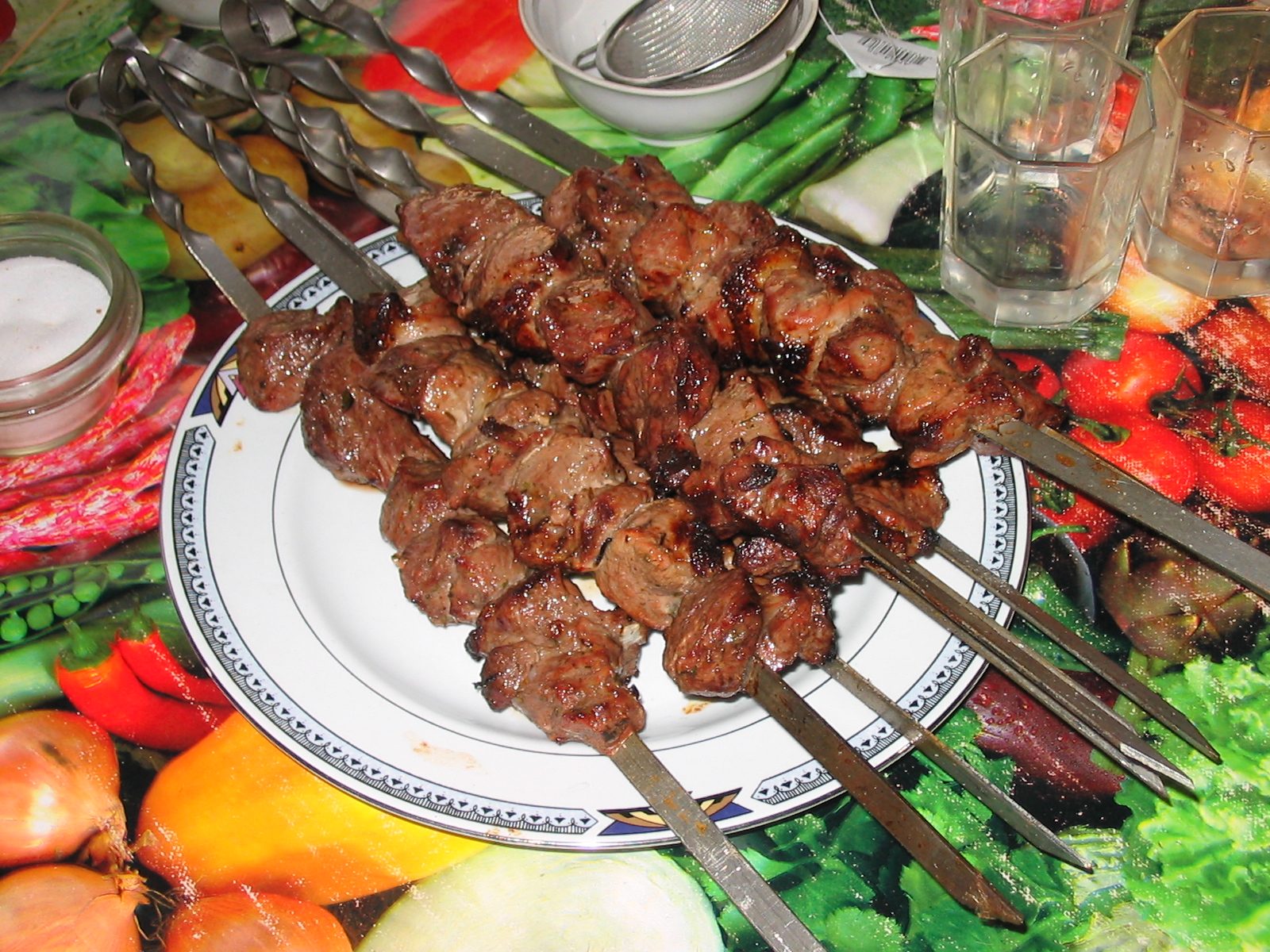
The smoke from mtsvadi reaches you before anything else does. Fat dripping onto live coals, pork or lamb threaded on a skewer of tkemali-pruned wood, the char hitting the back of your throat like a memory you did not know you carried. I have not stood over a mangal in Tbilisi in three years, but on the morning I read that floodwaters had swallowed the metro stations and collapsed the walls of Vake and Isani, that smell came back so hard I had to sit down.
Heavy rain fell on the city late on the fourteenth of August — prolonged, the reports said, the kind that does not ask permission. Roads flooded. Basements filled. Homes and underground stations went under. Soil gave way. It is the city where I was born in 1984, and it is still the city I taste first when I think of the word 'food.' Not a restaurant, not a chef. A courtyard. A fire. Someone's grandmother turning skewers with the indifference of a woman who has done this ten thousand times.
Georgian cooking was never built for comfort in the soft sense. It was built for the conditions: the altitude of Svaneti, the wet winters of Adjara, the limestone heat of Kakheti in summer. When you understand this, you understand why the dishes last. Not because they are nostalgic objects. Because they solved real problems.
Take lobiani — kidney bean paste baked into a round of yeasted dough, the bread of Georgian mountain villages when meat was unavailable or unaffordable. My grandmother Nino made it every Friday, not for ceremony but because beans were cheap and she had four children and a husband who came home hungry. She would cook the beans the night before — red kidney, soaked overnight and then simmered with onion, a generous handful of dried fenugreek leaf, a spoonful of ground coriander, black pepper. She mashed them not to smoothness but to texture, something that pushes back a little when you bite. The dough was simple: flour, water, a small amount of active yeast, a pinch of salt, left to rise covered in a damp cloth near the warmth of the stove. She rolled it thin, spooned the bean mixture across one half, folded and sealed it, then baked it directly on the floor of the oven for twelve minutes until the crust blistered and bronzed. You ate it warm, pulling it apart with your hands over newspaper because there was no better plate.
I have made lobiani in Rome, in London, in a rented apartment in Beirut where the oven barely reached temperature. Each time something changed on the road. In Beirut I used dried barberries instead of fenugreek because the market near Hamra did not carry it, and the tartness opened something in the filling I had not expected. My grandmother would have used what was there. That is what translation means in a kitchen — not compromise, but listening to where you are.
The flooding in Tbilisi is not an isolated event in a world where drought is emptying European rivers and heat is reordering what grows where. Georgian cuisine will have to keep translating, as it always has. The wild herbs that define western Georgian cooking — the nettles, the jonjoli, the wood sorrel gathered above Kutaisi — depend on specific rainfall, specific temperature windows. When those shift, the women who know where to find them will adapt before any government policy tells them to. They always have.
I keep thinking about the courtyard in Saburtalo where my aunt Tamara made chakapuli every spring — lamb with tarragon and tkemali, sour and green and almost violently alive, a dish that exists only in the narrow weeks when tarragon is young and the first cherry plums are barely ripe enough to press. The seasonality was never precious. It was structural. The dish only worked because the window was small.
That precision — not the precision of a recipe card but the precision of someone who has watched the tree for forty years — is what floods put at risk. Not the restaurants. The courtyards. The women who know which week.
My column is not about disaster. It is about what a city tastes like when you love it, and what you feel in your chest when rain takes a piece of it. Tbilisi will dry out. The mangals will smoke again. Someone's grandmother, I promise you, already has beans soaking.