When the Red Carpet Goes Dark: Gulf Glamour in a Season of Closed Straits
War in the Gulf has reshaped the celebrity circuit faster than any stylist could pivot — and the dresses are already telling us who is hedging.

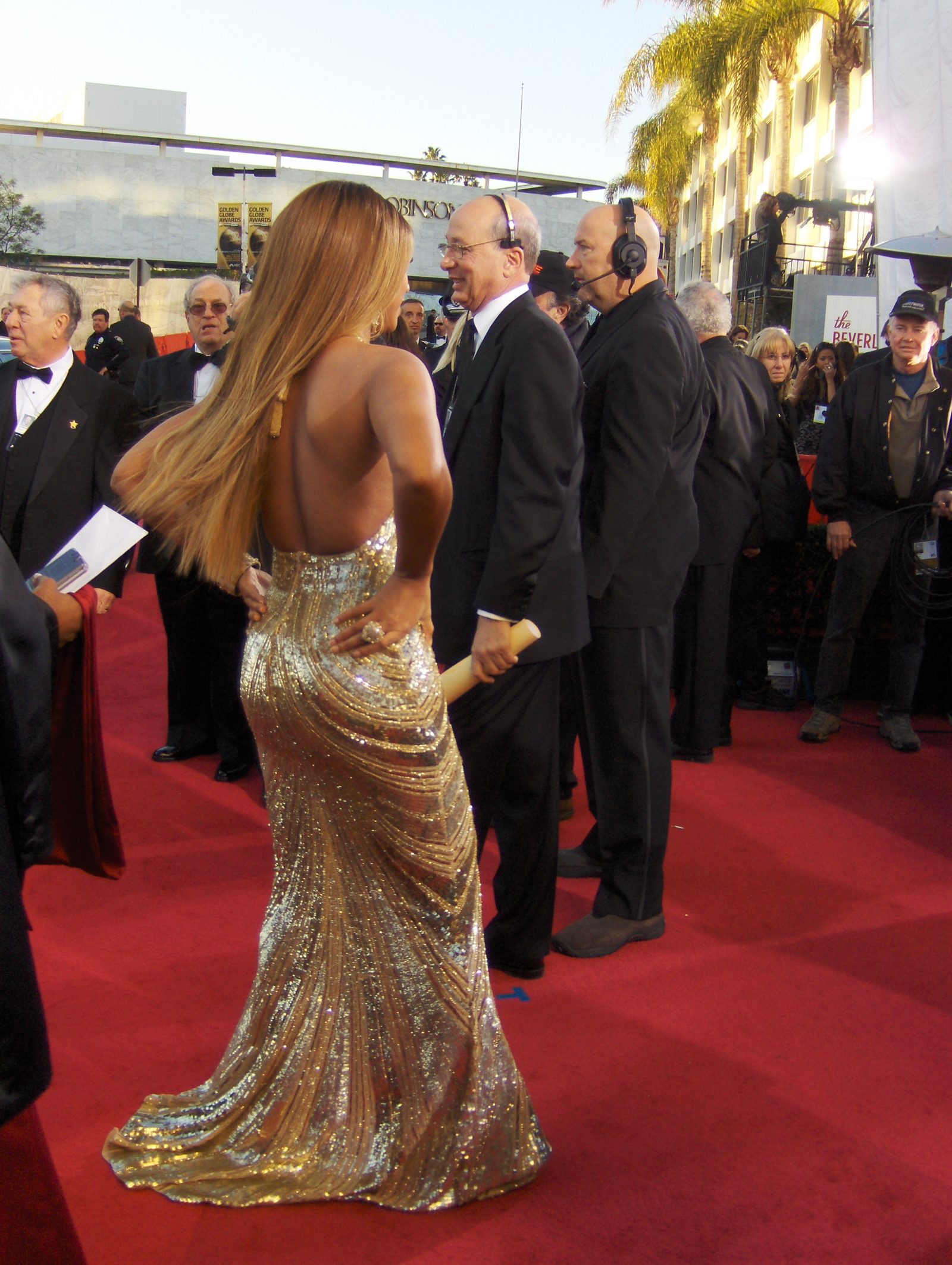
A gown arrives at a fitting and it carries a politics. This is not metaphor — it is logistics. When the Strait of Hormuz closes, the freight routes that move Milanese fabric, Emirati gold thread, and Parisian atelier samples through the region seize up like a fist. The parties do not stop. But they change shape.
The reports circulating this week confirm what anyone watching the Gulf celebrity circuit has felt in their bones since the summer began: war in the region has weakened two of America's Arab allies in ways that matter far beyond the diplomatic cable. It matters to the social economy of the Gulf — the galas, the brand activations, the royal appearances, the photo calls that are the visible surface of enormous commercial and political machinery. When that machinery grinds, the surface shudders.
Consider what a 'season' means in this context. For the last decade, the Gulf — and here I mean the full arc from Riyadh to Dubai to Abu Dhabi to Doha — built itself into a genuine parallel circuit to Cannes and Milan. Royal families who once attended European events as guests began commissioning them as hosts. Fashion weeks, film funds, art fairs, music festivals: all of it assembled with the understanding that stability was the silent co-sponsor of every invitation. Stability is no longer silent. It is conspicuously absent from the conversation, which is itself a statement.
What happens to celebrity culture when its Gulf anchor wobbles? The first casualty is the international talent deal. Actors, musicians, and athletes who signed multi-event regional contracts are watching those commitments become legally creative. Sources close to several entertainment agencies — none of whom will go on record, because discretion is the first luxury the Gulf has always sold — describe renegotiation conversations happening at a pace nobody planned for. The Hormuz closure is not just an energy story. It is a hospitality story, a fashion story, a red-carpet story.
Turkey, meanwhile, is moving. Reports that Ankara is exploring whether its Mecca defense pact could be widened to include Egypt suggest that the regional realignment is accelerating, and Egypt — itself a country whose celebrity class, from film stars to pop royalty, has always orbited Gulf money — is watching closely. Cairo's entertainment industry has for twenty years been funded, distributed, and socially legitimized through its Gulf connections. An Egypt drawn into a new security architecture alongside Turkey and Gulf states is an Egypt whose cultural economy will be reorganized by that architecture. The stars will follow the money, as they always do. The question is where the money is going.
In practical terms, what we are seeing on the circuit is a very specific phenomenon: the pivot to neutral ground. Cannes, already the preferred amphitheater for Gulf-adjacent celebrity, becomes even more gravitationally significant when the region itself is turbulent. The same logic that made Monaco useful to a certain generation of European royals applies now. You hold the party somewhere that has no stake in your conflict, and you let the photographs do the diplomatic work.
The dresses in these moments are never accidental. A Gulf royal attending a European cultural event during a regional war is not simply going to a party. She is signaling continuity, projecting normalcy, and — if her stylist is doing the job properly — wearing something that reads as cosmopolitan without reading as escapist. There is a very narrow needle to thread. Too much festivity and the optics are callous. Too much sombreness and you have surrendered the narrative to the conflict. The answer, historically, has been understatement in silhouette, weight in fabric, and an accessory that carries the cultural code of home without announcing it loudly. Elizabeth Taylor understood this when she wore Bulgari through every turbulence of her own life. The jewel does the speaking so the face does not have to.
What is genuinely new in this moment is the speed of the image economy. In 1967, when the previous great Gulf realignment reshaped Arab cultural life, a photograph took days to circulate. Today a stylist's choice is analyzed within the hour. The red carpet has always been a language; it is now a live transmission. The Gulf families who have built their cultural presence most carefully are the ones who understood this first — who hired not just stylists but image architects, people who think in sequences of appearances rather than individual looks.
The column I want to write in six months is the one that maps exactly which brands, which film funds, which festival sponsorships survived this season intact and which were quietly restructured. That column will be the real record of what the war cost the cultural economy of the region. For now, we have the dresses and the absences — and in celebrity culture, a notable absence is always a louder statement than a grand entrance.
Status in our time is not merely accumulated; it must be actively maintained through visible, photographed, reported presence. The moment you stop appearing, the speculation begins. In a season when appearing has become complicated, the management of that speculation is itself a full-time profession.