The Irtysh Is Washing Away the Gusiny Perelet Paleontological Site in Pavlodar
Over 24 years the bank has collapsed by 6-17 meters; Kazakhstan's Ministry of Ecology has set up a working group to develop solutions for reinforcing the shoreline
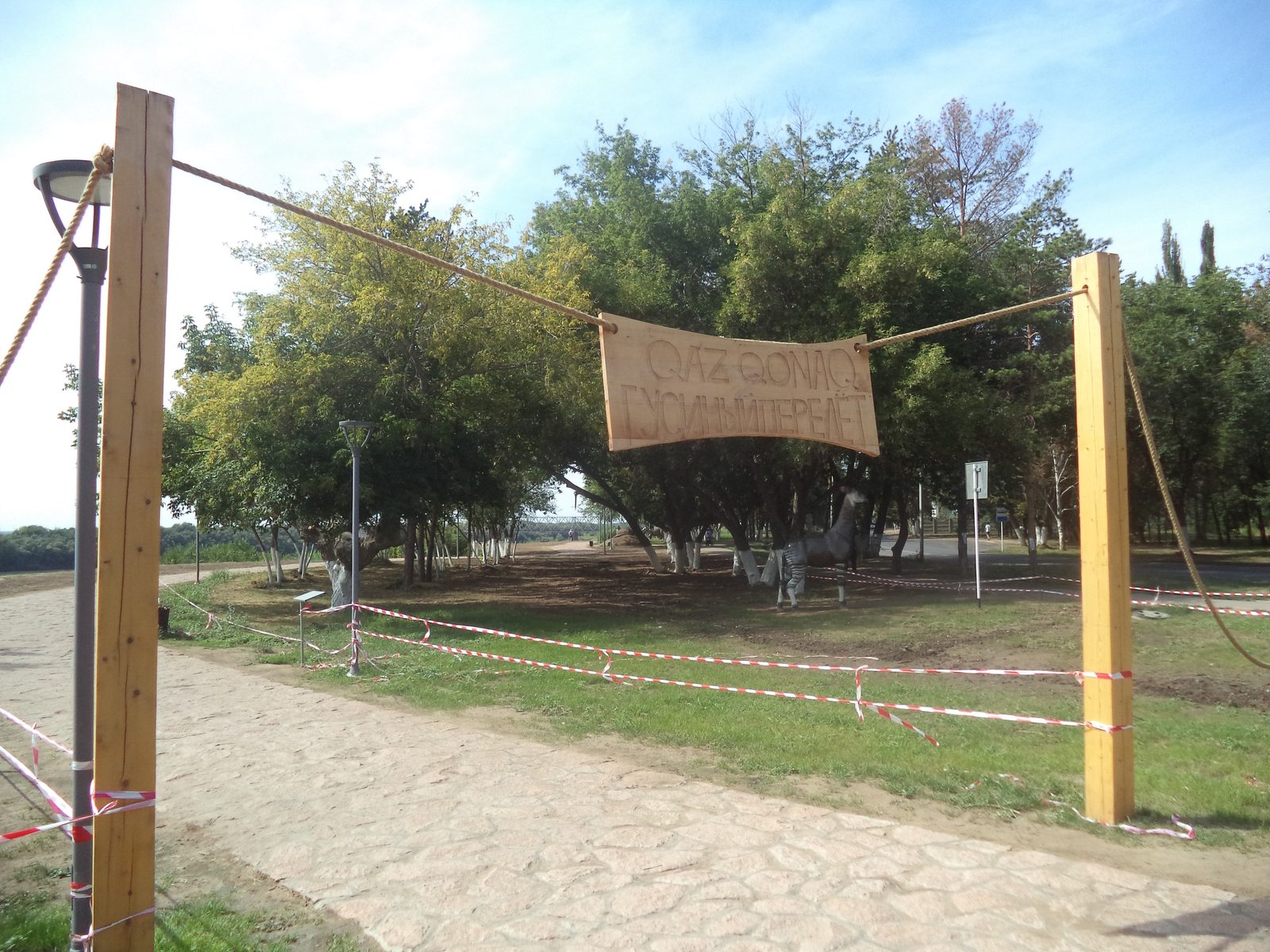
The bank of the Irtysh in Pavlodar, where the remains of three-toed horses, rhinoceroses, giraffes, antelopes, mastodons and sabre-toothed cats lie buried, continues to collapse — and along with it the finds of the Gusiny Perelet paleontological nature monument are being lost.
Valentina Aliyasova, a professor at Pavlodar Pedagogical University named after Margulan, reported that a comparison of a 2002 schematic map with 2024 research showed that over 24 years the bank has collapsed in some places by 6 to 17 meters toward the city. According to her, all the material at depths of 6, 8 and 17 meters has already been lost to science.
Gusiny Perelet is a site of world significance and one of the largest burial grounds of Neogene-period fauna in Eurasia. To halt the collapse of the bank and protect the territory, a special roadmap is now being drawn up. The Ministry of Ecology and Natural Resources (MEPR) has already formed a special working group: it includes local ecologists and members of the regional public council, who are to develop concrete engineering solutions for reinforcing the shoreline.
"The condition of the site is indeed critical," said Yerlan Kutpanbayev, deputy chairman of the MEPR's Committee for Forestry and Wildlife.
The work must be carried out within a tight timeframe: 2028 will mark 100 years since the discovery of Gusiny Perelet. The site on the bank of the Irtysh was discovered in 1928 by Moscow paleontologist Yuri Orlov; during excavations in 1929-1930 alone, several thousand bone remains of the ancestors of modern African animals of the Neogene period were found here. The site received union-level status in 1971 and republican-level status in 2001.
Sources — how we know this
- PrimaryTengrinews