Merz Floats Five-Country Format to Represent Europe at Talks with Russia
The German chancellor named the E3 and the "five" formats as possible options, noting that it is more important to secure Moscow's agreement to joint talks.
ℹ️ Browser-based reading · AI studio voice coming soon
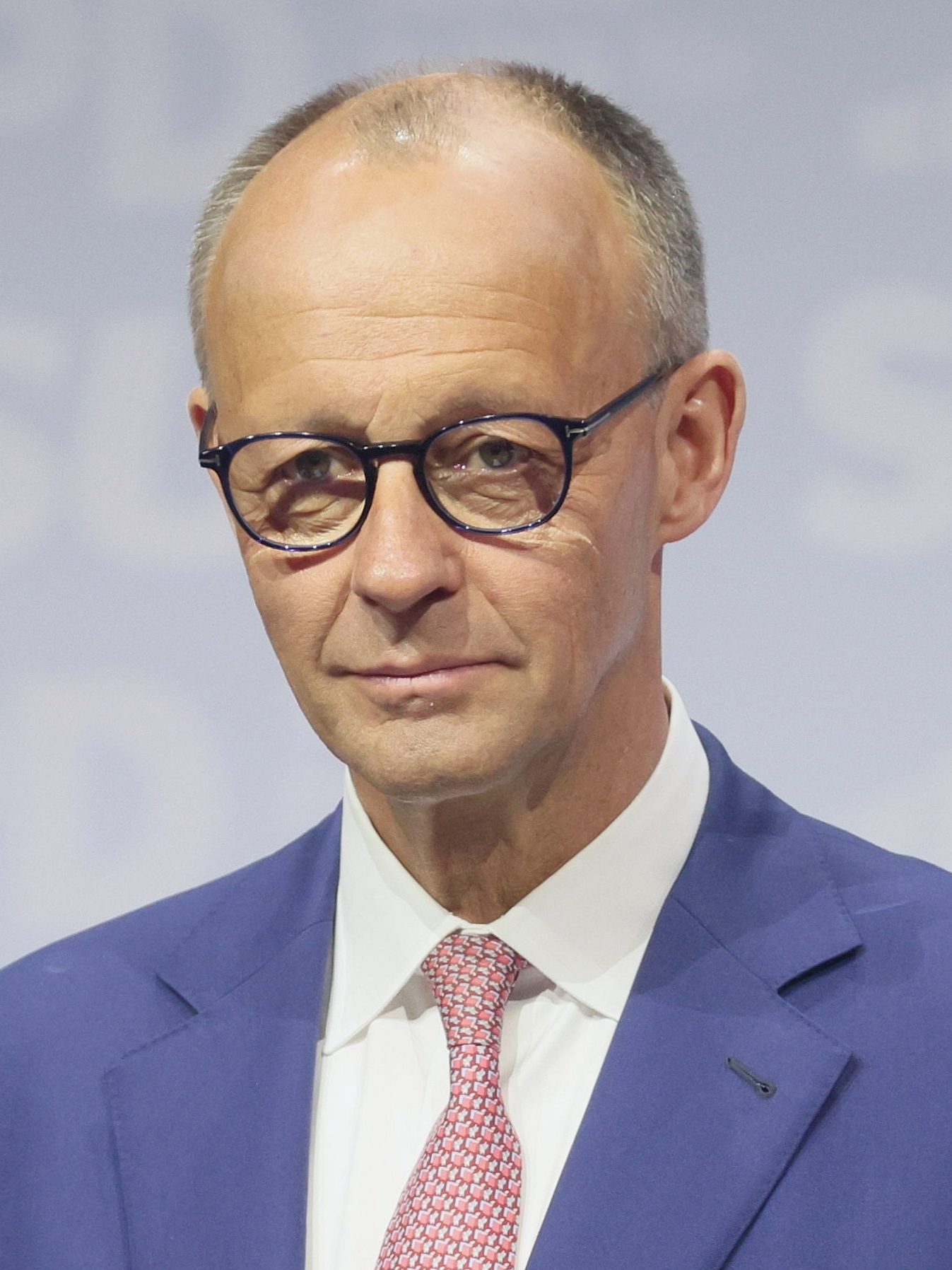
German Chancellor Friedrich Merz said he sees no problem in Europe being represented at future peace talks on Ukraine by a group of five countries — Germany, France, Britain, Italy and Poland. He said this to journalists in Ireland on Thursday, 12 November, on the sidelines of the 9th summit of the European Political Community (EPC) in Dublin.
Merz said work is under way on this issue in a five-country format — Germany, Britain, France, Italy and Poland — and added that "I see no problem here in the future." According to him, the already operating E3 format (Germany, France, Britain) has proven its effectiveness, but a broader group of five countries is also being considered as an option. The question of who will represent the EU at the negotiating table will be decided privately between member states, and there is no final decision yet, the chancellor noted.
In Merz's view, at the current stage it is more important to secure Moscow's agreement to joint talks than to appoint specific representatives. "First of all, I expect that the Russian government, the Russian president will finally agree to joint talks," he said, adding that Moscow appears increasingly inclined toward the view that further talks cannot do without Europe. "Whether this position will hold, we will see. Much will now depend on the talks in the coming days," Merz concluded.
Earlier on Thursday the chancellor said he does not rule out a meeting with Russian President Vladimir Putin if he comes to the G20 summit in Miami in December. The Kremlin, for its part, signaled readiness for direct contact between Putin and Merz and other EU leaders.
Before meeting with US special envoys Jared Kushner and Steve Witkoff in Dublin, Ukrainian President Volodymyr Zelensky held a meeting with national security advisers of the E3 countries — Britain, Germany, France and Italy — as well as with representatives of the European Commission and the European Council. In a statement following the meeting, Zelensky said the participants discussed recent meetings in Brussels and Abu Dhabi. "We all assess the resumption of talks positively," he said, adding that any path to ending the war must be realistic and pragmatic, and Europe must be involved "to the maximum possible extent."
Witkoff and Kushner confirmed that the Europeans will join the next round of trilateral talks after their meeting with Putin in Moscow. "They are our partners, and it is important that they are involved," Witkoff said.
Russian presidential aide Yuri Ushakov, by contrast, said European governments first need to decide whether they want peace or a continuation of the war, and that their actions so far point to the latter. Kremlin spokesman Dmitry Peskov accused European leaders of undermining their own calls for peace by signaling readiness to send troops to Ukraine; according to him, this leads to an "expansion of the war."
At the same time, Britain, France, Germany, Italy, NATO and the European Commission held separate consultations with Kyiv and Washington, while Europe was sidelined from the main talks in Abu Dhabi on 10-11 November. Russian Foreign Minister Sergei Lavrov then suggested that European officials "stay in the hotel." On 5 November, Italian Prime Minister Giorgia Meloni warned that Europe risks becoming irrelevant in the Ukraine talks if EU leaders do not agree on who will represent the bloc.
Sources — how we know this
- PrimaryKyiv Post