This story is currently available in Englisch only — a translation isn't ready yet.
Beijing's Half-Loaf: What Šefčovič Actually Brought Back from China
A handshake on hybrids, a vague promise on rare earths, and a January rendezvous. Read the communiqué, not the mood music.

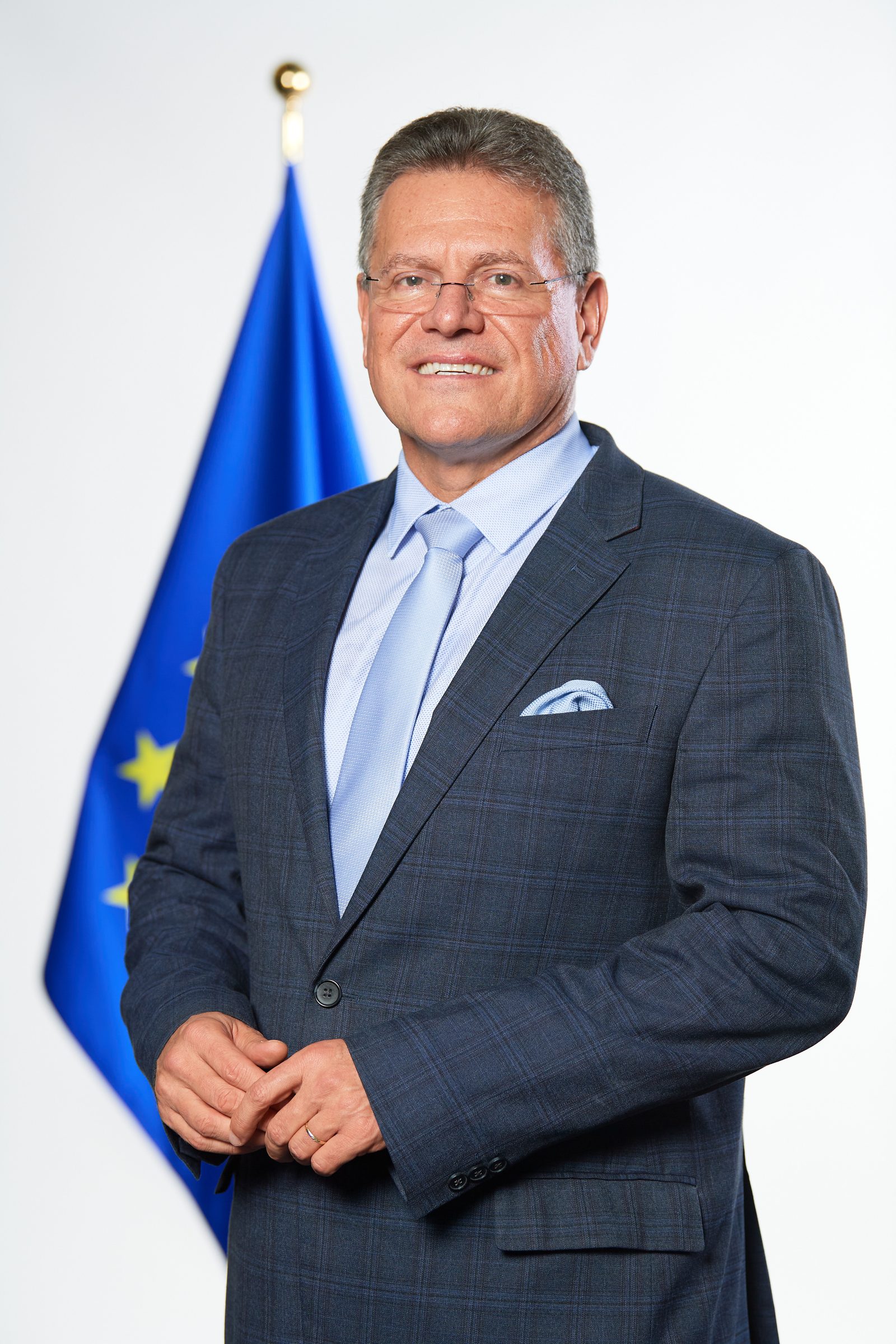
The Chinese Ministry of Commerce chose the verb carefully. After two days of talks in Beijing with Trade Commissioner Maroš Šefčovič, the two sides, Chinese officials announced, had reached a « common understanding » on hybrid vehicles, « in line with WTO rules ». Note what the sentence does not contain. It does not contain the word agreement in the binding sense a trade lawyer would recognise. It does not contain a figure. It does not contain a date of entry into force. It contains, instead, a diplomatic register designed to be read two ways in two capitals, which is precisely what Beijing wanted and precisely what Brussels was willing to accept this week.
The commissioner himself was more specific on the social platform owned by the American entrepreneur we are all tired of naming. The understanding, he wrote, covers a halving of HEV and PHEV exports to the European market, improved access for European firms to the Chinese market, and a smoother licensing regime for rare earth exports. The three deliverables are not of equal weight. The first is a quantitative restraint on Chinese shipments, which is the headline Berlin and Paris wanted. The second is the perennial European ask that has been reiterated at every EU-China summit since the Juncker Commission. The third is the one that actually matters for the European industrial base this winter, and it is also the one phrased most softly.
Trace the compromise. The automotive file arrived in Beijing because Berlin needed it to. The countervailing duties of up to 35 percent that the Commission imposed on pure battery-electric vehicles in October 2024 left hybrids outside the perimeter, and Chinese exporters did what any rational producer would do: they pivoted. Hybrid imports from China surged. Volkswagen, having clawed back some share on pure EVs, found a new front opening on its flank. The German government, which never fully reconciled itself to the 2024 duties in the first place, had every incentive to push for a negotiated ceiling rather than a second round of tariffs. Paris, which drove the 2024 file through the Council over Berlin's abstention, had every incentive to let Berlin own the ceiling this time. Hence a « common understanding », not a regulation.
Which brings us to the enforcement question, as it always must. A voluntary export restraint negotiated between the Commission and a third country has no direct legal effect in the Union's customs code. It must be converted into something — a surveillance mechanism under the Trade Barriers Regulation, a monitoring clause attached to the existing anti-subsidy proceeding, or, if Beijing's figures slip, a fresh investigation under Article 5 of the basic anti-subsidy regulation. Each pathway has a different legal base, a different timeline and a different political cost. Until the Commission tells us which instrument will carry the ceiling, the ceiling is a press release. The twenty-seven heads of state and government who meet in Brussels on Thursday will have to decide whether they want to know the answer before they bless the outcome, or after.
The rare earths line is the one I would watch. « Further facilitation of licensing procedures » is the softest possible verb for what European manufacturers actually need, which is predictability of supply through the winter and into the spring production cycle. Beijing has learned that the licensing regime it tightened earlier this year is the single most effective lever it holds over European industrial policy, more effective than any tariff. It will not surrender that lever in exchange for a hybrid ceiling it was going to accept anyway. The January meeting Šefčovič flagged is the real negotiation. This week was the pre-negotiation.
For the Gulf, the transmission is already visible. Sovereign funds that have taken positions in European automotive suppliers over the last eighteen months are watching the ceiling language because it determines whether those suppliers face a managed decline or a cliff. The rare earths licensing track matters more still: Gulf-based processors who have been quietly courted by European OEMs as a hedge against Chinese dependence have been pricing their offers against the assumption that Beijing's export regime remains restrictive. If Šefčovič's January meeting loosens it, those offers get repriced overnight.
The column I would like to write in February will be about which of the three deliverables survived contact with the Chinese customs service. For now, the honest sentence is the one Šefčovič used himself: a first step. In Brussels, that phrase usually means the second step is where the fight begins.