A weekend in Paris: 1,500 storefronts, 1,000 police officers, one cabinet
Macron chose television over a state of emergency; Lecornu convened a crisis cabinet — what I still don't understand is whether this choice was an act of courage or calculation.
I must begin today with a confession: I have not yet fully understood what happened in France over the weekend. The cables in my hands provide clear facts, and I have before me the text of Macron's Sunday evening television address; but it is still too early to say whether the Élysée's choice of screens over a state of emergency was an act of courage, a calculation, or an admission of having no other options. Today I want to write about this uncertainty itself.
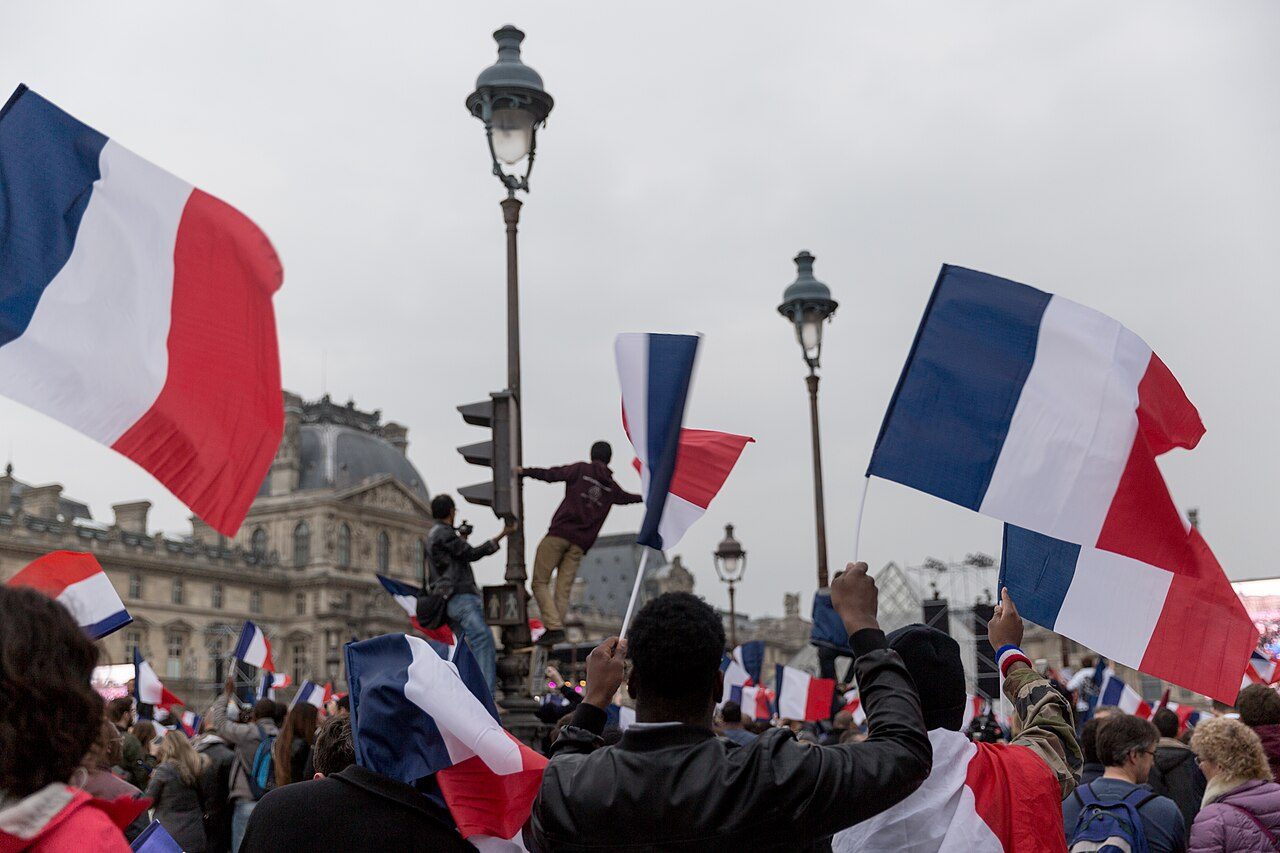
On Saturday, more than half a million people marched in Paris, Lyon, Marseille, Bordeaux, and Lille against the cost of living and the erosion of public services. Most of the demonstrations were peaceful. Then, that scene now familiar in many countries in recent years repeated itself: groups with masked faces and black clothing mixing into the crowds, storefronts smashed, riot police responding with tear gas, water cannons, and batons. The tally in the cables reads as follows: an estimated 1,500 businesses looted or destroyed; 1,000 police officers wounded, seven in serious condition; according to Agence France-Presse's Turkish relay, 1,200 arrests. In Bordeaux, Louis Vuitton and Apple stores were looted on Rue Sainte-Catherine, the city's main shopping street; another Apple branch was hit in Lille, Hermès was stripped in Marseille. A 174-year-old tourism advisory building at Bellecour Square in Lyon caught fire. The targets were not only luxury brands: pharmacies, supermarkets, and clothing stores bore their share as well. So on Monday morning in France, there were some fifteen hundred shopkeepers who could not open their shutters; an equal number of police officers' families waiting by hospital phones.
On Monday before noon, Prime Minister Sébastien Lecornu convened his crisis cabinet. Macron, meanwhile, addressed the nation from the Élysée on Sunday evening. The choice before him was clear: a curfew or a state of emergency. He chose neither. Instead, he gave prefects, working together with mayors, the authority to protect cities, public buildings, and commercial areas — if necessary, to ban certain gatherings — while calling on all parties and unions to "openly condemn violence and call for calm." He said Lecornu would meet with these representatives and request an "open and publicly announced position." In other words, instead of a single emergency decision from the center, a framework that distributed responsibility to local administrators and political actors.
My reading is this: Macron's choice looks like a show of strength attempting to hide the weakness of the tools at his disposal. Declaring a state of emergency might actually crowd the streets more than calm them in today's France; I believe Macron knows this too. But I could be wrong here — perhaps in the coming days, if local bans come in quick succession, the Élysée's strategy will actually be to implement the state of emergency piecemeal, without naming it. I remember the Yellow Vests days of 2018–2019: then too the first reflex was not harshness but buying time; then a long listening ritual called a "great national debate" came into play. This is a comparison, not proof; that is how I read it then, and that is still how I read it now.
In a Russian relay coming through TASS, Macron is quoted describing the violence as "unbridled violence by far-left radical groups"; the text cuts off at the point where he mentions 2027 elections, so from this package I cannot confirm exactly what the president said about the electoral calendar. One must be careful here. That same weekend, Italy saw similar scenes in Milan, Turin, and Bologna — 161 wounded, 141 of them security personnel, 28 arrests, damage exceeding one million euros. It is tempting but premature to place the two countries within a single "European wave" framework from today; I have no material before me showing the mechanism — a common call, common organization, common financing. For now these are separate stories; if a connection is to be drawn, the coming days will draw it.
The promise I made last Sunday remains open: the Istanbul 33rd Heavy Penal Court's interim ruling in the İmamoğlu case was to be announced no earlier than today, Tuesday, October 20, and would extend his detention. As of this morning, there is no word from the courtroom; the Dollar/TL closed yesterday at 49.51, today at 49.54, meaning it is in the middle of the 49.40–49.65 band. The promise continues to wait until Tuesday evening; the accounting will be settled tomorrow.
Looking ahead: on Tuesday, October 20, the output of Lecornu's crisis cabinet meeting — a government statement or written instructions to prefects — will not include a nationwide curfew or declaration of a state of emergency; the text will remain within the framework of local empowerment, specific protest bans, and judicial proceedings. If the opposite comes to pass, then Macron's Sunday evening choice was not a strategy but a delaying move that did not last 48 hours.
**Notes from the region**
**Middle East** — The Egyptian Parliament, at President el-Sisi's request, is meeting in extraordinary session to discuss granting military support to Saudi Arabia against Houthi attacks. The Supreme Council of the Armed Forces announced a "firm stance" alongside Riyadh; Sisi reiterated that Saudi security is "inseparable" from Egyptian security. What is missing from the official texts: the form, scale, and deployment mechanism of the support. Political assurance is high, operational content is absent — the real question lies there.
**Eurasia** — Ukraine's Foreign Minister Sybiha announced that 76 attacks on energy infrastructure were carried out within a week, using approximately 2,700 drones, 1,700 guided bombs, and 66 missiles; she says Moscow is not observing the "energy ceasefire" Trump announced. Zelenski reported that the U.S. has resumed intelligence sharing that had been interrupted for a period. The Russian side did not respond to the claims; with winter approaching, energy and air defense are on the same table.
**Europe** — On Sunday in Italy, cost-of-living demonstrations hardened in Milan, Turin, and Bologna: according to figures the Anadolu Agency attributes to ANSA, 161 were wounded, 141 of them security personnel, 28 arrests — 12 of them minors — and damage exceeding one million euros. Small groups gathered again today around the Duomo in Milan. That it coincides with the same weekend as France is noteworthy; I have no material before me showing a common organizational mechanism.
Dollar/TL stands at 49.54 today; over the last ten days, it has moved in a narrow corridor between 49.26 and 49.54. This flatness should be read not as the absence of story, but as the market waiting for a decision.