The Hunger Gap: What Fasting Science Is Getting Wrong About Muslim Women
New research keeps finding that intermittent fasting 'works' — but it keeps studying the wrong people in the wrong context.

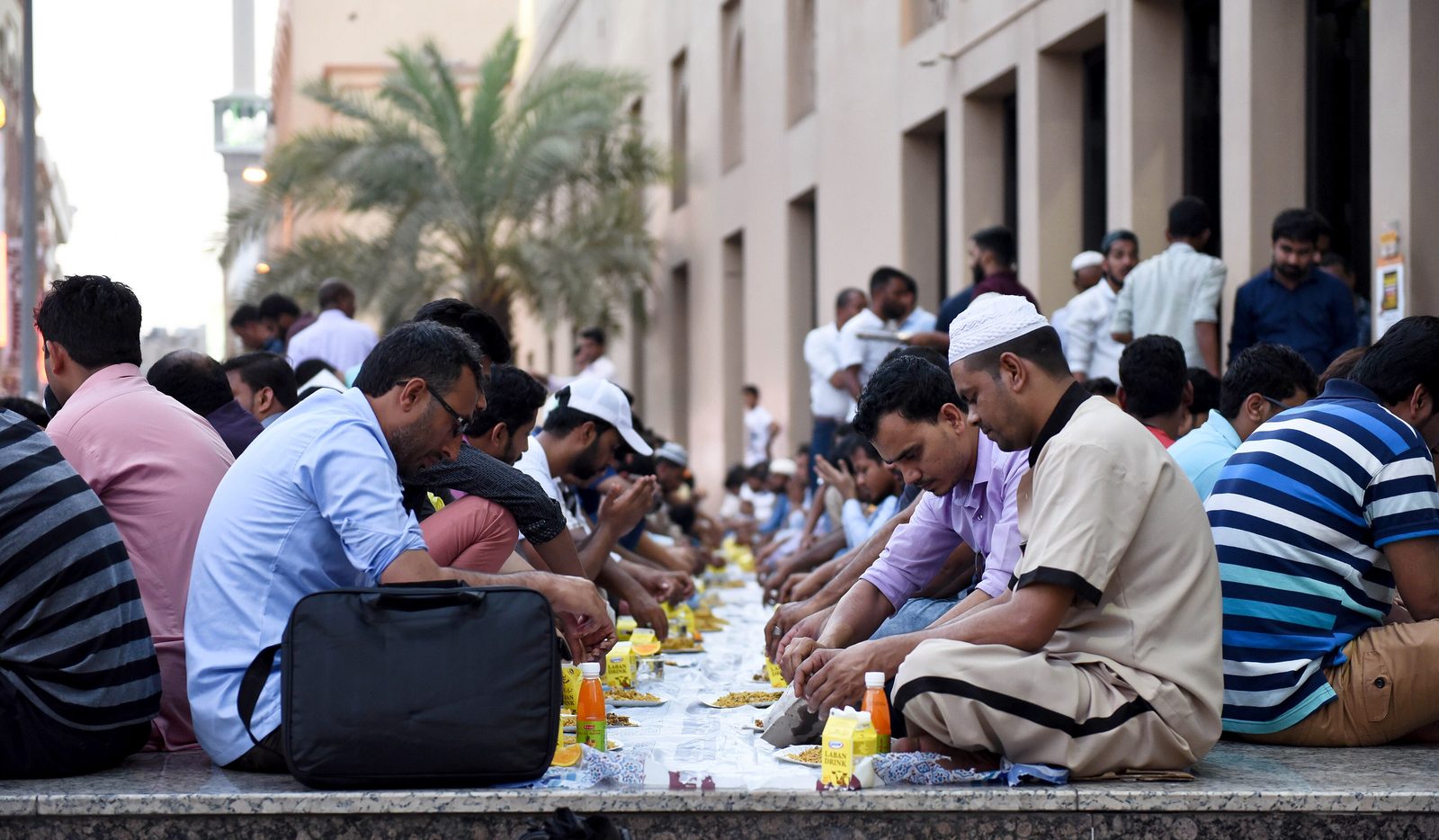
Here is a number worth sitting with: the overwhelming majority of intermittent fasting trials published in the last decade enrolled participants who were either non-fasting controls or people doing short, elective 16:8 protocols in clinical settings. The population doing the longest, most socially complex fasting on the planet — Muslim women observing Ramadan, managing households, nursing children, navigating gendered expectations about who eats last and who fasts regardless — barely appears in the data. When they do appear, the studies often treat Ramadan as a confounding variable to be controlled away rather than a phenomenon worth understanding on its own terms.
This is not a small gap. It shapes every piece of fasting advice that circulates in wellness spaces, including the kind that ends up on your feed dressed in Arabic typography and a crescent moon.
So what does the actual evidence say?
The research on Ramadan fasting and metabolic health is genuinely mixed, and that honesty matters. Some well-designed observational studies find modest improvements in fasting glucose and lipid profiles across a month of dawn-to-sunset fasting. Others find no significant change, or find that any gains reverse within weeks of Eid. The effect sizes, where reported, tend to be small — shifts of a few percentage points in LDL or fasting insulin, not transformations. A handful of studies specifically looking at women find that hormonal disruption — irregular cycles, disrupted cortisol rhythms — is more common than the generic fasting literature acknowledges. The mechanism is not mysterious: prolonged caloric restriction intersects with the hypothalamic-pituitary-ovarian axis in ways that a 16-hour male-centric fast simply does not replicate.
None of this means Ramadan fasting is harmful. For most healthy adults, it is not. What it means is that the confident claims — that fasting 'resets metabolism', that it produces consistent fat loss, that it improves inflammation markers reliably — rest on a foundation that was not built with you in mind if you are a woman, if you are fasting for more than sixteen hours, or if your fast involves social labor that clinical trials do not measure.
The honest position, given the current evidence, is this: Ramadan fasting is a spiritually and communally meaningful practice that has some metabolic effects, the direction and size of which vary considerably by individual, by what you eat in the non-fasting window, and by how much sleep you are actually getting. That is not a disappointment. That is a real finding.
What tends to matter more than the fast itself, in the studies that bother to look, is what happens between iftar and suhoor. A large, rapidly digested meal at iftar followed by a suhoor of little more than dates and tea sets a very different metabolic context than an iftar built around protein, slow-releasing carbohydrates, and adequate hydration. The fasting window is the frame; the food is the painting.
Here is a practical test you can run without a lab. For one week of any fasting period — Ramadan or otherwise — track not what you eat but when you feel most cognitively flat. If that flatness consistently arrives in the two hours before iftar, dehydration is the most likely culprit, not glucose depletion. Before the fast begins, try increasing your fluid intake at suhoor by one full additional glass of water and note whether the timing of the flatness shifts. It often does. This is not a cure; it is a data point about your own physiology that costs nothing.
On the question of women's hormonal health specifically: if you notice significant cycle irregularity during or after Ramadan — not just the minor shifts that are common, but substantial changes in cycle length or intensity — that is worth raising with a clinician. Not because fasting caused something catastrophic, but because your cycle is one of the most sensitive metabolic indicators available to you, and changes in it carry information worth paying attention to. Treating that signal as irrelevant because the disruption happened during a religious practice, or because disruption is normalized in conversations about fasting, is a mistake the science is only beginning to correct.
Islamic wellness traditions have always been more nuanced about fasting than the contemporary wellness industry gives them credit for. The exemptions built into Ramadan's practice — for illness, pregnancy, nursing, travel, and genuine hardship — are not loopholes. They are an acknowledgment, embedded in jurisprudence over centuries, that the body has claims that fasting must accommodate rather than override. That framing, which does not separate the spiritual from the physiological, is actually more sophisticated than the binary 'fasting good, not fasting bad' logic that dominates wellness content.
You do not need to resolve the science to fast well. What you do need is to stop borrowing your fasting framework from research that was not designed for your body, your hours, or your context. The evidence will catch up eventually. In the meantime, pay attention to your own signals — hunger patterns, energy timing, sleep quality, cycle regularity — with the same seriousness you would give any other health data. That practice of attending to yourself, unhurried and without judgment, is not a wellness trend. It has a rather longer history than that.