Who Holds the Vision When the Founder Leaves?
Natalia Alaverdian's exit from A.W.A.K.E. Mode — and a CEO resignation rattling luxury boards — expose fashion's deepest structural anxiety: cultural authority cannot be inherited.
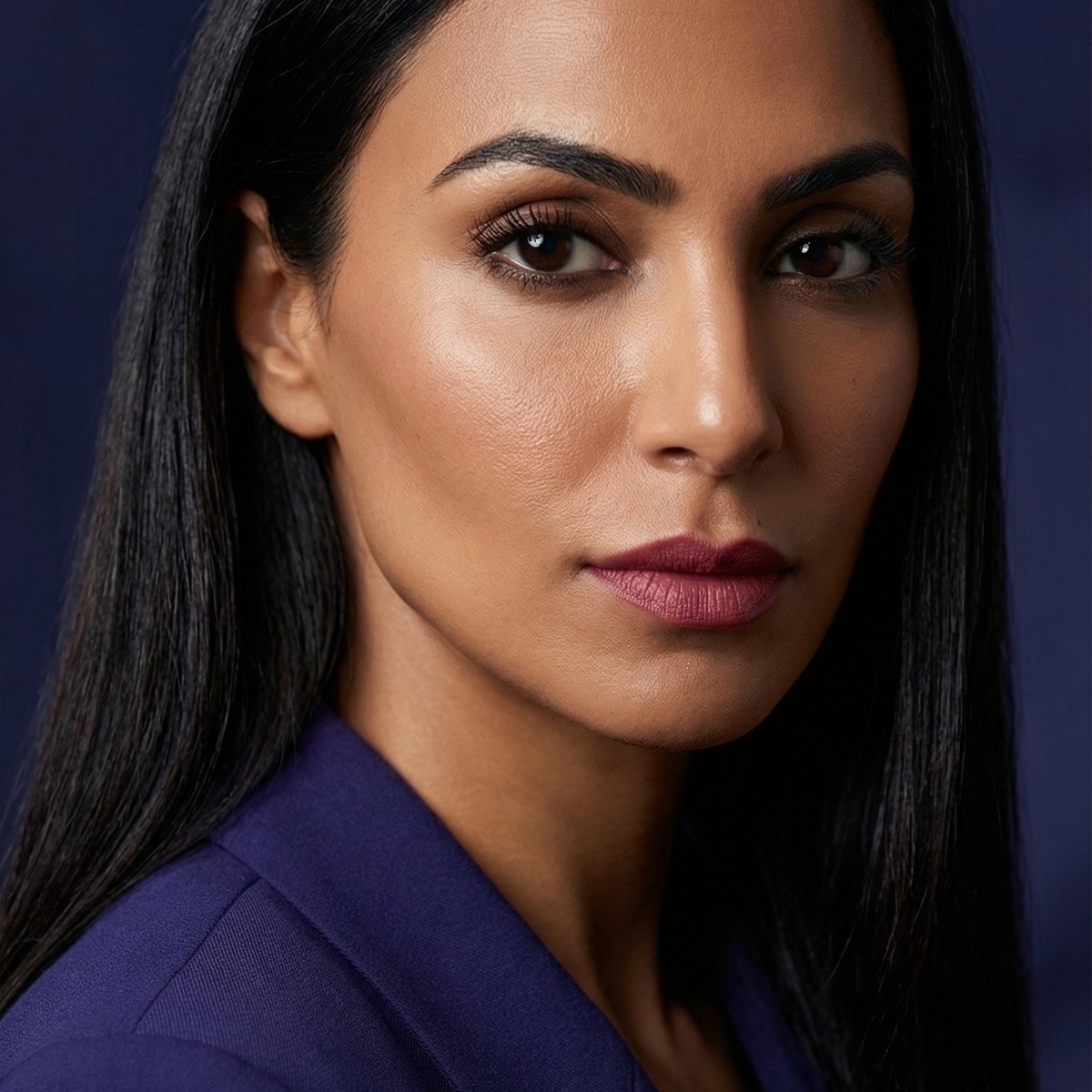

Picture the coat that made A.W.A.K.E. Mode legible to the world — that particular London-label silhouette, angular at the shoulder, almost architectural in its refusal of softness. Natalia Alaverdian built that grammar stitch by stitch across the years since she founded the label in 2012, until the coat and the founder were essentially the same argument. Now she is stepping down as creative director, a year after selling her majority stake to Another Community, to pursue filmmaking and other creative work. The coat stays. The argument, for the moment, is up for grabs.
Her exit lands in a week of peculiar vertigo across the wider fashion economy. When Jensen Huang abruptly resigned as chief executive of Nvidia — a departure whose aftershocks industry analysts are still mapping — executives at the conglomerates must have registered something colder than market anxiety. They registered a question about what happens to cultural confidence when the figure who seemed to embody it simply walks out of the room. The source of the discomfort, as one recent analysis put it, is that Huang was central to an AI boom that fueled the country's unmatched luxury spending, and after his exit, nobody is sure what happens next.
My reading is that both exits are pointing at the same structural fault. Fashion has spent the last decade telling itself that vision is transferable: that a founder's sensibility can be packaged, documented, institutionalized. The acquisition playbook depends on it. You buy a label, you retain the founder for a transition period, you harvest the brand equity they spent years accumulating, and then — in theory — the machine continues. What Alaverdian's departure after exactly that transition period reveals is how fragile that theory remains in practice. Brand equity is not a document that survives transmission intact. It is a live process, performed continuously by the person who invented it.
The commerce mechanism here is worth examining directly. When Another Community acquired the majority stake in A.W.A.K.E. Mode, they were purchasing something that fashion acquirers always undervalue in the spreadsheet: the specific quality of attention a founder pays to her own work. That attention is not reproducible by a new creative director, however talented, without at minimum a full collection cycle of recalibration — during which the loyal customer has every reason to drift. The post-acquisition founder-transition window is fashion's most dangerous seam. The stitching looks clean from the outside, but the tension underneath is under enormous stress.
Alaverdian shifting her focus to filmmaking is, in this light, more than a personal pivot. It is a signal about where creative authority feels sustainable right now. Film does not demand the quarterly collection cycle. It does not require a founder to sign off on a wholesale order while simultaneously conceiving the next visual world. The pace of fashion's production calendar has been quietly hollowing out the conditions under which genuine creative vision can survive institutional ownership — and the people who built their labels on that vision are noticing.
The Nvidia dimension compounds all of this. Luxury's recent spending volumes have been structurally connected to AI-adjacent wealth concentrated in certain markets — particularly the United States, whose luxury appetite Huang's era helped fuel. His exit creates genuine uncertainty about what follows, and that uncertainty is not abstract for a sector that has been reading strong American consumer numbers as a floor under its ambitions. Fashion boards that felt safe behind those numbers are now renegotiating their assumptions.
Meanwhile, at Hugo Boss, Frasers Group — controlled by billionaire Mike Ashley — has effectively cemented its influence over the German label by installing David Epstein, a Frasers executive, as CEO from January 1, 2027, as the company announced on Thursday. That is a different kind of authority transfer: not creative, but structural. The question of who holds the vision becomes almost moot when the controlling interest has its own strategic logic, one oriented toward premium retail expansion rather than the more elusive work of building a coherent cultural identity.
The pattern across all three stories is a compression of the space in which independent creative authority can operate. Alaverdian built something over the years since 2012; institutional logic absorbed it in one transaction and produced an exit within a year of that deal closing. The creative director function — once fashion's most glamorized role — is being quietly renegotiated into something closer to a service relationship with the balance sheet.
What I keep returning to is the coat. The specific coat Alaverdian made, the shoulder it proposed, the kind of woman it imagined in the room. That proposal required a founder who felt free to make it, who was not optimizing against an acquisition metric. The craft is real. The question for whoever steps into the A.W.A.K.E. Mode studio next is whether the institution around them will give them enough silence to hear what the fabric is actually asking to become.
Watch for this in the seasons ahead: will the labels that have recently changed hands double down on the founder's visual vocabulary as a form of brand insurance — producing what amounts to a faithful cover version — or will they permit the rupture that genuine succession actually requires? One strategy protects the asset. The other risks it in order to keep it alive. Both choices cannot be made simultaneously.